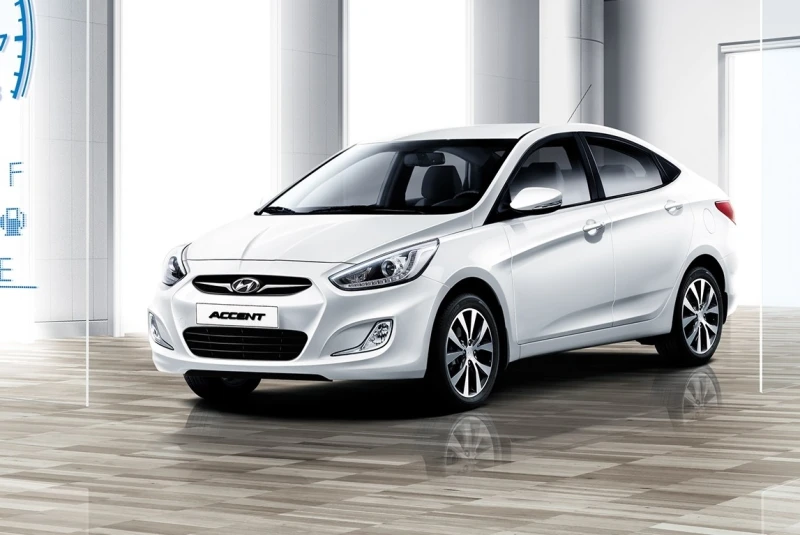
The model attracts buyers with its affordability, but like any used car there are aspects that require attention. This article examines the typical shortcomings and problems owners encounter. Hyundai Accent IV problems, Hyundai Accent 2011–2018 issues, used Hyundai Accent — these searches frequently appear in owner reviews and forums. For a full overview of the generation, technical specifications, and interior, see the other articles in the series.
Key downsides and features of the generation
Owners of the Hyundai Accent IV note several characteristics that affect everyday driving. Fuel economy for the 1.4 MPI engine (G4FA/G4FC) in city driving can reach 21–26 mpg, which feels relatively high for an engine producing 100–107 hp. The 1.6 MPI (G4FC/G4FG, 121–138 hp) achieves 26–34 mpg in mixed driving, but in heavy urban traffic the numbers can climb higher.
Infotainment systems in base trims are limited to simple radios with USB/AUX inputs and lack Bluetooth in early models. Higher-equipped variants after 2015 add a 5–7 inch touchscreen with a rearview camera, but factory navigation is not included and smartphone integration usually requires upgrades. Cabin and wheel-arch sound insulation is average: road noise becomes noticeable above 62 mph, especially on uneven surfaces common on American roads.
Interior material quality matches the budget class — hard plastics predominate and can develop squeaks over time, while glossy trim wears. Maintenance is straightforward thanks to the model’s popularity, but components such as the steering rack or catalytic converter still need regular checks. Parts prices remain reasonable: aftermarket options are widely available, though genuine suspension or transmission components can cost more depending on the supplier.
Versions and years — what to watch out for
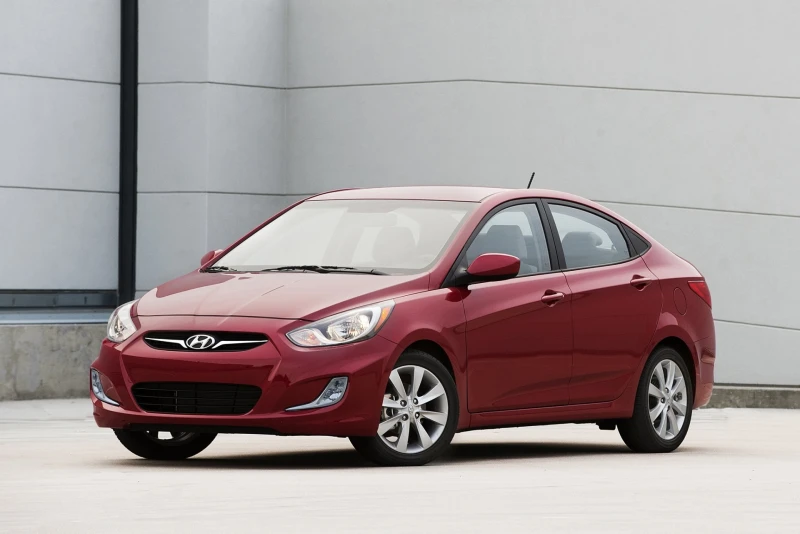
Early 2011–2014 cars more often face issues such as weakening of the clutch pressure-plate fingers in manual transmissions, which shows up as a metallic screech when reversing under load. This was corrected by the manufacturer by 2015. Pre-facelift (RB) versions also tend to overheat due to radiator clogging, and the timing chain can stretch after 62,000 miles.
After the 2015 facelift (RC) sound insulation improved, steering-wheel reach adjustment was added in higher trims, and the more reliable 6-speed automatic (A6GF1) replaced the earlier 4-speed unit. The 1.6 MPI gained power but can still develop oil leaks past the seals. On the US used car market the 2015–2018 models are considered more refined, with fewer early issues, although wheel bearings should still be inspected as they can fail by 10,000–20,000 miles on typical American roads.
Used car market in the United States
On the US used car market Hyundai Accent IV sedans are mostly Korean-assembled (or built for the North American market) with mileages ranging from 60,000 to 155,000 miles. Body condition depends heavily on climate and road conditions: in states that use heavy road salt, corrosion often appears on the wheel arches, sills, and trunk lid. Check carefully for previous accident repairs.
Service history is critical — missing records may indicate odometer rollback, which is common. Real mileage is best verified by wear on the interior, pedals, and steering wheel. Originality of parts matters for electronics and suspension. Many examples were originally sold in the US. Typical listings are 1.6 MPI models with automatic transmission in Comfort or Elegance trims, priced from $4,500 to $12,000 (approximate market price for the United States, depending on condition and mileage).
What can be fixed and budget for solid condition
Many Hyundai Accent IV shortcomings are easily addressed. Adding extra sound-deadening mats to the wheel arches and doors can cut road noise by 20–30 %. Upgrading the infotainment to a modern head unit with Android Auto or Apple CarPlay solves navigation and smartphone connectivity issues.
Worn interior pieces such as seats or plastic trim can be replaced with aftermarket parts or re-covered. Suspension repairs — wheel bearings, ball joints, and bushings — are part of routine maintenance. Corrosion prevention means applying underbody and arch rustproofing, especially on cars without factory protection.
When buying, plan on setting aside 10–20 % of the vehicle’s price for necessary upgrades depending on condition. Approximate costs: rustproofing and routine service run $500–$1,000, while a complete infotainment and sound-deadening upgrade costs $300–$700 (labor not included).
Conclusions and recommendations
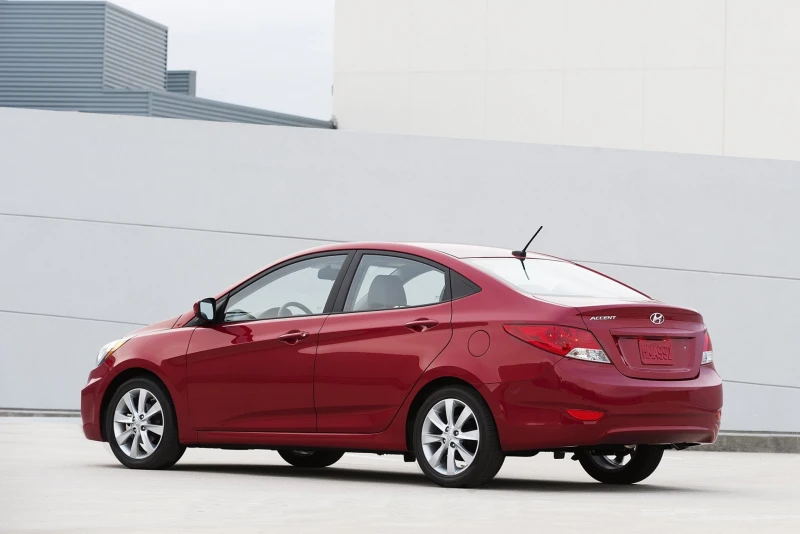
In 2026 the Hyundai Accent IV remains a smart, budget-friendly choice for drivers seeking low-cost urban transportation, provided it passes a thorough inspection. The car works well for daily commuting but is less ideal for long highway trips because of noise and modest performance. 2011–2014 examples need extra scrutiny of the clutch and cooling system, while 2015–2018 versions are generally more polished.
The most desirable configurations are those with the 1.6 MPI engine and 6-speed automatic, which hold strong resale value on the US market. During inspection pay close attention to steering-rack knocks, catalytic-converter condition, suspension wear (especially bearings), and any body corrosion. A proper test drive should include checks for noise, vibration, and real-world fuel economy.