


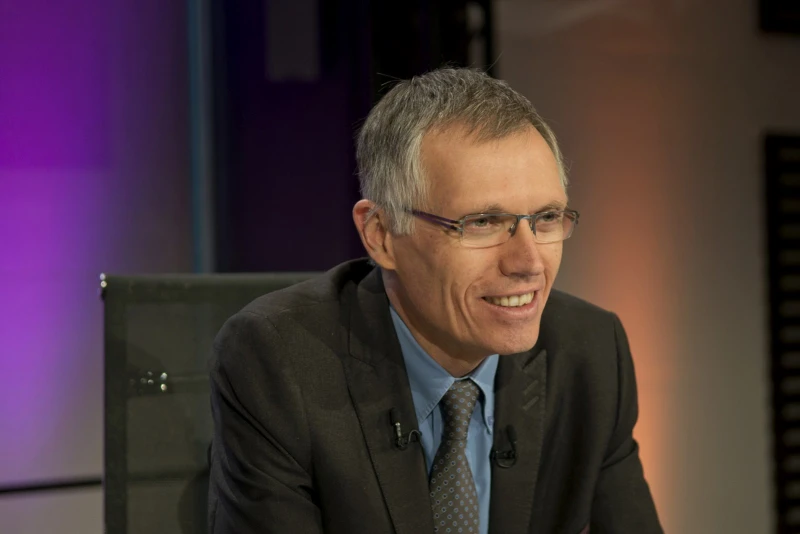
Following his departure from Stellantis, he did not withdraw from public life. Instead, he has actively given interviews and published a book examining the future of the automotive industry. Naturally, the topics of Tesla and its founder Elon Musk were not overlooked.
From Stellantis Executive to Tesla Critic
While leading Stellantis, Tavares alienated both V8 engine enthusiasts and dealers opposed to his aggressive electrification strategy. When he was suddenly dismissed in December of last year, few expressed regret. However, the former top manager shows no intention of retiring quietly and continues to offer his views and predictions.
In a recent interview, he claimed that Tesla may not survive until 2035. “I’m not sure the company will exist at all in ten years,” he said. According to Tavares, Tesla faces two major threats, starting with the rising power of Chinese manufacturers.
Chinese Competition Advances as Musk’s Interests Shift
Chinese brands are developing and producing electric vehicles faster, more affordably, and often at a quality level that rivals or exceeds established players. Their success is rooted in optimized supply chains and low costs, allowing them to offer prices tens of percent lower than competitors. This dynamic is making it increasingly difficult for Tesla to compete, especially amid price pressures both in China and international markets.
The second threat identified by Tavares centers on Elon Musk. He suggests Musk may lose interest in the car business and redirect his attention to robotics, space, or artificial intelligence. Given Musk’s track record of pursuing multiple ambitious projects, this observation carries weight.
Tesla Losing Momentum
In recent years, Tesla has increasingly resembled a technology company more than a traditional automaker. New model launches have slowed: six years have passed since the Model Y debut, and the Cybertruck has underperformed relative to expectations. Without faster innovation, the company’s competitive advantage could continue to erode.
Investors are growing concerned, with much of the company’s valuation tied to Musk’s personal involvement. A shift in his focus could lead to a swift decline in market confidence.
Closing Thoughts
Regardless of how one views Tavares’ comments, several realities stand out: Chinese manufacturers are gaining significant ground, competition in the electric vehicle sector is intensifying, and Tesla no longer appears invincible. As EV prices fall and profit margins tighten, industry leaders including Musk are being forced to adapt their strategies. The automotive landscape in ten years may look considerably different, and Tesla’s position at the forefront is far from assured.