The vehicle in question was reportedly fully developed but never brought to market. Its story illustrates how automakers’ priorities can shift and how major product decisions are made amid uncertain market conditions.
Ford’s EV Push and Strategic Reassessment
Several years ago, Ford was actively expanding its electric vehicle operations, viewing electrification as a central part of its future. The company invested substantial resources and initiated new programs with the aim of securing a meaningful share of the EV market.
By the middle of the decade, however, it had become clear that expectations were not being met. Demand was lower than forecast, while development and production costs were higher. This prompted a strategic reassessment and the cancellation of several programs, including some that had reached advanced stages of development.
A Previously Unknown Vehicle
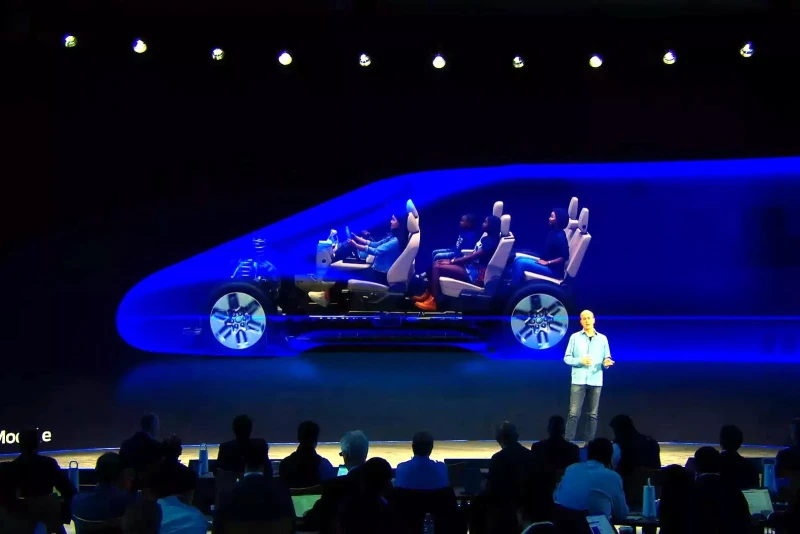
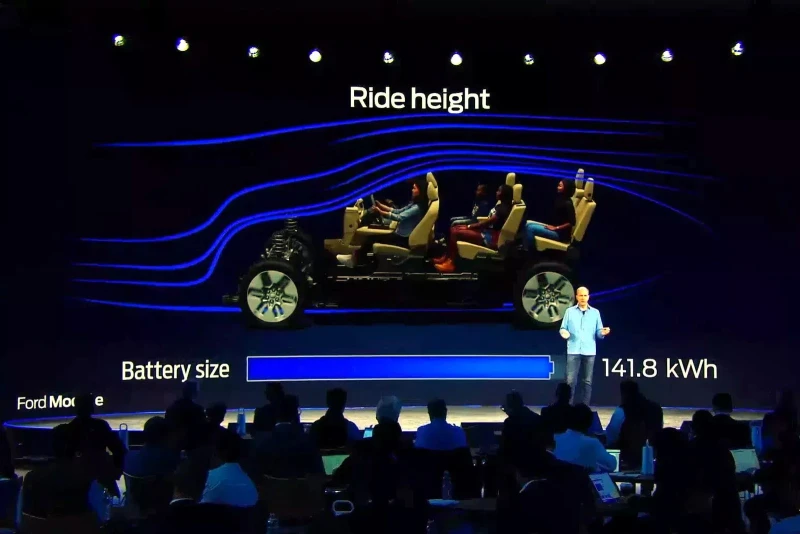
One such project became public only after the departure of the executive responsible for Ford’s electric vehicle division. He shared an image of a model that had never previously been shown to the public. It was later confirmed to be a fully developed seven-seat electric crossover.
The vehicle featured an unconventional layout and combined characteristics associated with several body styles. Its concept centered on versatile family transportation, with a spacious cabin and modern technology.
Concept and Technical Features
The project was intended to deliver a spacious electric vehicle suitable for everyday use. At its core was a battery pack with a capacity of approximately 100 kWh, providing a substantial amount of stored energy.
- seven-seat interior layout
- fully electric powertrain
- high-capacity battery pack
- family-oriented design
At the same time, such a configuration would inevitably increase the vehicle’s cost and could affect its overall practicality, particularly where charging infrastructure remains limited.
Why the Project Was Canceled
Despite its advanced stage of development, Ford decided not to proceed with the model. The main considerations were economic viability and uncertain demand. Amid growing competition and changing market conditions, the vehicle risked being too expensive for mainstream buyers.
In addition, the model’s design and overall concept differed significantly from Ford’s more familiar products, potentially making it more difficult to position within the brand’s lineup.
Reaction and Consequences
The publication of the vehicle’s image was interpreted as a possible indication of internal disagreements. The former project leader appeared to be highlighting the potential of the finished product and emphasizing that the development team had completed its work.
Nevertheless, the final decision remained with Ford’s leadership, which based its assessment on market conditions and financial considerations.
Conclusion
The story of Ford’s canceled electric vehicle reflects the complexity of the automotive industry’s transition to new technologies. Even fully developed projects can be discontinued when their commercial prospects remain uncertain. In such cases, automakers must balance technological ambition with long-term financial sustainability.