This is a vehicle created by a legendary Formula 1 designer for private clients who prioritize absolute track efficiency over homologation for championships. The release of the final version provides insight into how one of the most influential engineers of his era envisions the ideal track car.
From Formula 1 to an Extreme Hypercar
Development of the RB17 proceeded alongside other high-performance road car projects, but this hypercar was designed without regard for racing series regulations or mass-market requirements. Unlike road models, there was no need to consider certification standards, passenger comfort, or versatility.
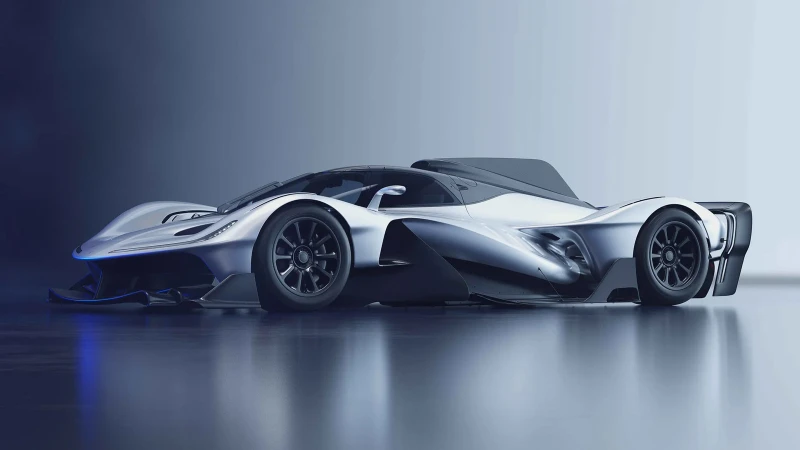
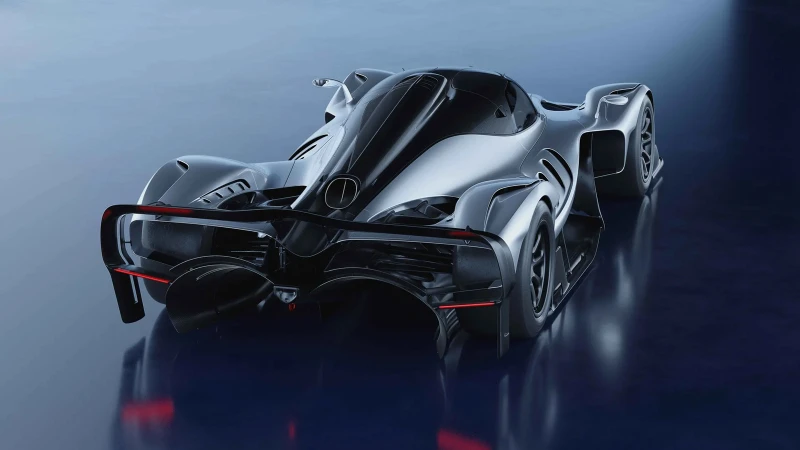
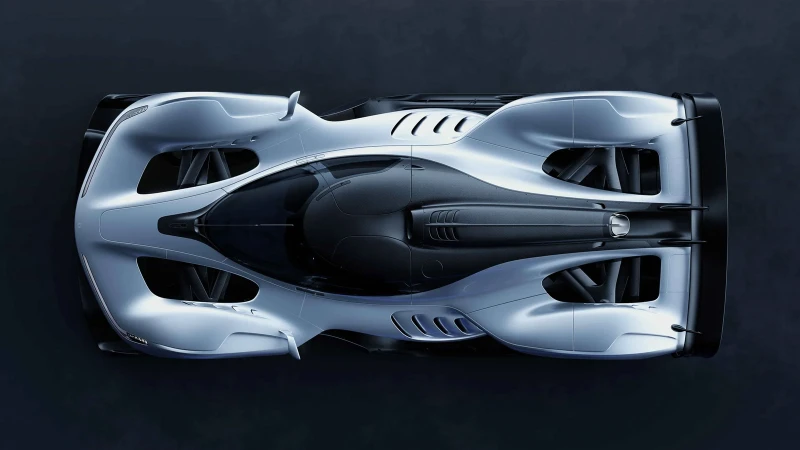
The final design differs notably from the early prototype. The vehicle features a more aggressive aerodynamic shape, enhanced cooling ducts, and a prominent central fin extending from the roof to the rear of the body. The layout is strictly functional and optimized for high-speed performance.
Technical Philosophy and Powertrain
The RB17 is built around the concept of minimal weight and maximum output. The dry weight of the vehicle is approximately 900 kg, an exceptionally low figure for a car of this caliber. The core of the powertrain is a naturally aspirated 4.5-liter V10 engine developed by Cosworth, capable of revving to 15,000 rpm and producing 1,014 hp.
An electric motor integrated into the six-speed sequential transmission provides auxiliary functions, including reverse gear, and adds an additional 203 hp. The combined output focuses on sustained performance under prolonged track loads rather than fuel efficiency.
Interior and Road Compatibility
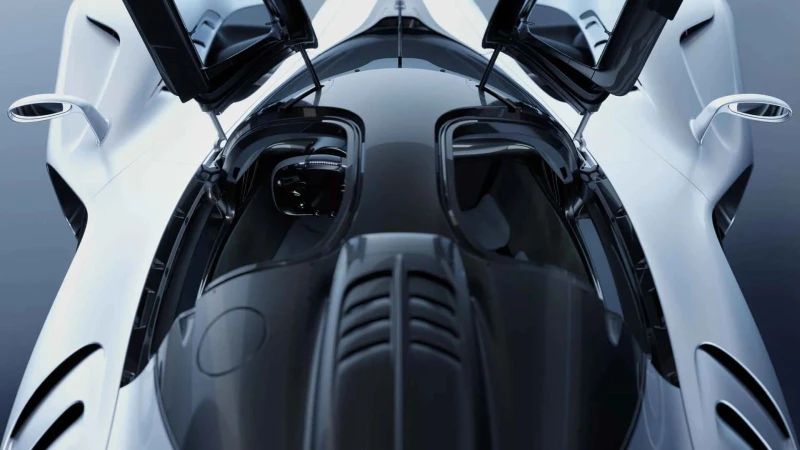
Despite its track-oriented design, the RB17 includes basic elements typical of road vehicles. The body features rear-view mirrors, the windshield is equipped with a wiper, and the front end includes lighting elements. The interior is maximally simplified: physical switches, a minimal instrument cluster, and no multimedia screens.
This combination creates the impression of a vehicle that could theoretically operate on public roads, though its primary environment is closed racing circuits.
Production and Pricing
A total of 50 RB17 units will be produced. Delivery to clients is scheduled for spring of the following year. The cost per unit is approximately 5,000,000 euros, underscoring the project's exclusive nature and its focus on a select group of owners.
Conclusion
The RB17 embodies an uncompromised expression of engineering freedom. It is neither a road sports car nor a traditional racing machine, but a distinct class of vehicle designed to showcase ultimate capabilities. The project represents a logical culmination of the designer's extensive Formula 1 experience, adapted into a format for private use.