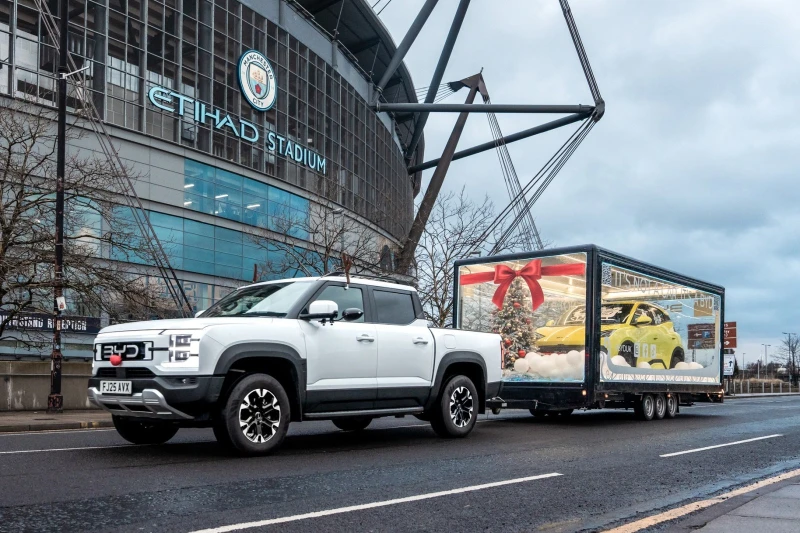
The British new car market has undergone a noticeable transformation in a short period of time. Chinese brands, which until recently were perceived as secondary players, have reached a double-digit market share and begun to overtake traditional European marques. The development of this situation is important not only for the United Kingdom, but also for European Union countries where similar regulatory mechanisms are in place.
Mandatory quotas as the basis of change
The key factor has been the introduction in the UK of the Zero Emission Vehicle Mandate program. It requires automakers to ensure a certain share of electric vehicles in total sales volume. In 2025, this figure reached 28%, with plans to increase it to 80% and higher in the coming years.
For each vehicle with an internal combustion engine sold beyond the permitted limit, substantial fines are imposed — approximately €17,000 per vehicle. However, the legislation allows an alternative: manufacturers can offset the missing electric vehicle share by purchasing so-called "credits" from companies that have sold more electric vehicles than the required quota.
Why Chinese brands are winning
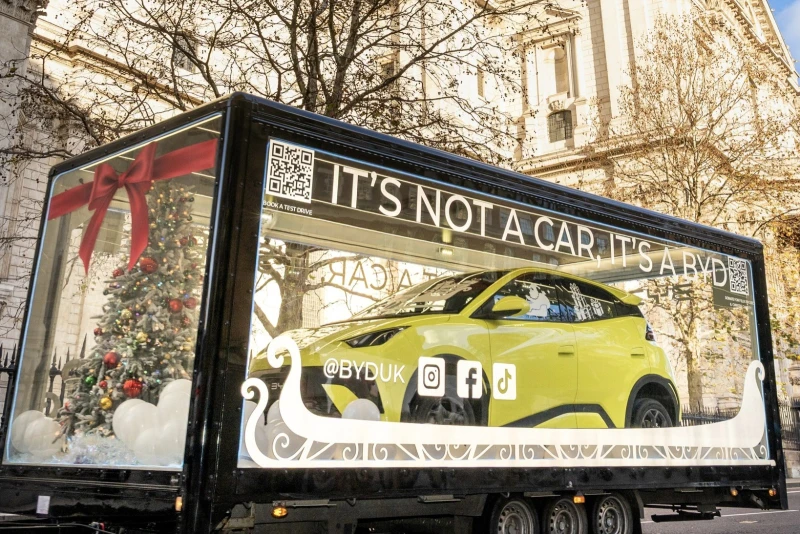
This very system has proven particularly advantageous for Chinese automakers. Their model ranges are originally focused on electric vehicles, which are much easier to fit into the regulations. As a result, these companies not only meet the requirements but also generate additional income by selling surplus credits to competitors.
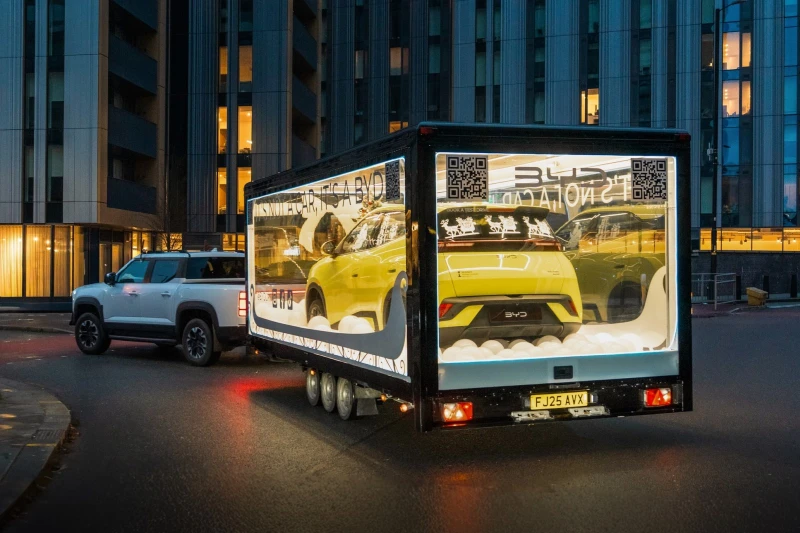
By the end of 2025, the combined market share of Chinese brands in the UK approached 10%. The main contribution came from several major manufacturers and their sub-brands, which achieved tens of thousands of annual sales in just a couple of years. For comparison, some long-established European brands lagged significantly behind in registration volumes.
Challenges for traditional manufacturers
European brands have found themselves in a more difficult position. The majority of demand still comes from gasoline and diesel vehicles, yet meeting the electric quotas requires significant expenditure. As a result, companies are forced either to pay fines or transfer funds to better-adapted competitors.
This leads to a weakening of positions for brands that were recently considered stable leaders of the British market and accelerates the redistribution of market shares in favor of new players.
Open market and its consequences
An additional factor has been the UK's trade policy. Unlike the European Union, the country has not introduced increased tariffs on Chinese electric vehicles. This has allowed Chinese companies to offer competitive prices and expand their presence more quickly.
Parallels with the situation in the EU
Similar processes are already noticeable in EU markets as well. Sales of Chinese brands are growing rapidly, even in countries where they were practically absent until recently. Although the scale differs for now, the overall direction largely coincides with the British scenario.

Conclusion
The UK experience demonstrates that the rapid growth of Chinese automakers is driven not only by the characteristics of their vehicles, but also by the specifics of regulation. Mandatory electric vehicle quotas and the system of financial redistribution create conditions in which new players gain a significant advantage. If the current policy direction continues, similar dynamics may intensify in other European countries as well.