


One such development is the emergence of fully electronic brakes that do not rely on conventional hydraulics. The Chinese company Chery is preparing to introduce this system into series production, which could mark a significant milestone in automotive technology advancement. Understanding the operating principle and features of this system helps assess its role in modern vehicles.
What the Electronic Braking System Entails
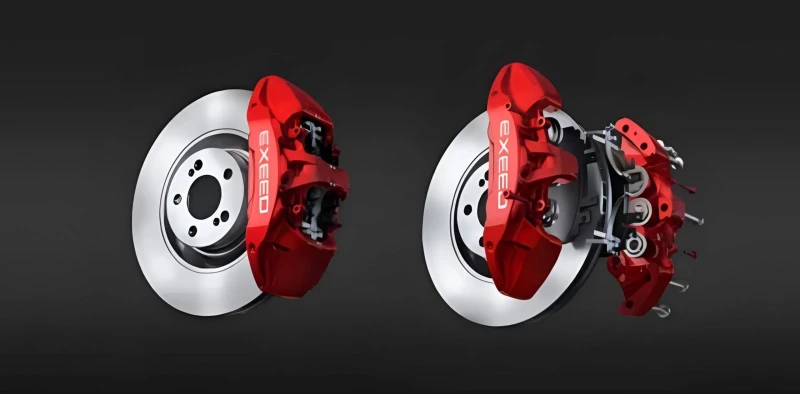
The new technology is called EMB (Electronic Mechanical Braking). Unlike traditional brakes, where force is transmitted through hydraulic fluid, this system uses electronic signals and electromechanical actuators. When the driver presses the brake pedal, the signal is sent to an electronic control unit, which calculates the required braking force and activates electric motors at each wheel.
As a result, the braking mechanisms operate without brake fluid, pipes, or vacuum boosters. This design simplifies the vehicle's architecture and reduces the number of mechanical components.
Reasons for Shifting to Electronic Control
The adoption of fully electronic brakes aligns with the broader evolution of digital vehicle management systems. Modern cars are already equipped with electronic steering, stability, and driver assistance systems. Transitioning to electronic brakes enables the integration of all these functions into a unified system.
Key advantages of this approach include:
- more precise distribution of braking force across wheels;
- rapid system response to changing road conditions;
- reduced weight due to the elimination of hydraulics;
- simplified integration with automated control systems;
- enhanced effectiveness of electronic safety assistants.
Features in Electric Vehicle Applications
Electric vehicles are particularly suited for these technologies, as they already feature complex electronic management systems. Additionally, electronic brakes can interact more efficiently with energy recuperation systems, which recover some energy during braking and return it to the battery.
Chery's new braking complex is planned for installation in the electric crossover Exeed EX7. This vehicle will be one of the first series models to fully abandon the traditional hydraulic braking scheme.
Role of Software and Electronics
The core element of the new system is software that analyzes vehicle speed, brake pedal position, and other parameters in real time. Based on this data, the system determines the optimal braking force for each wheel.
This improves vehicle stability during braking, especially on slippery or uneven surfaces. Electronic control also facilitates the implementation of autonomous driving systems, as brakes can be managed directly through digital commands.
Prospects for Technology Development
The development of electronic braking systems is part of the overall shift toward fully digital vehicles. Such solutions are already used in specific components of modern cars, but a complete departure from hydraulics represents a new phase.
It is anticipated that similar systems will gradually be adopted by other manufacturers in the coming years, particularly in the electric vehicle segment. This is driven by the increasing role of electronics and the need to enhance vehicle management efficiency.
Conclusions
Fully electronic brakes represent a significant technological shift in vehicle design. They enable the elimination of traditional hydraulic components and provide more precise braking control. The implementation of such systems reflects the automotive industry's broader transition to digital technologies and lays the foundation for further advancements in modern transportation.