


The third-generation Dacia Sandero, project code BJI, is a value-focused subcompact hatchback introduced in Europe in 2020 on the Renault-Nissan-Mitsubishi Alliance CMF-B platform. For U.S. readers, the first point to understand is that the Sandero III was never officially sold or certified as a U.S.-market vehicle. That changes the buying equation: the most important concerns are not only reliability and equipment, but also import legality, parts availability and access to model-specific service support.
Key drawbacks and ownership considerations
European-market Sandero III models have generally used simple three-cylinder powertrains, but the exact engine and transmission depend on country and model year. Earlier cars were offered with engines such as the naturally aspirated SCe 65, turbocharged TCe 90 and bi-fuel gasoline/LPG Eco-G 100. In some markets, the TCe 90 could be paired with a CVT-type automatic, while the Eco-G 100 used a 6-speed manual. These are European configurations, not U.S. specifications, and there is no EPA fuel-economy rating for the Sandero III.
Real-world fuel economy should therefore be treated separately from official European WLTP figures. A U.S. road test of a European TCe 90 manual car returned about 38 mpg over one tank, but that result is a single test and should not be read as an EPA estimate. Driving style, transmission, road speed and the LPG-versus-gasoline operating mode can materially change consumption.
Infotainment also varies substantially by trim and year. Early third-generation cars could use the phone-based Media Control system or an 8-inch Media Display/Media Nav touchscreen, depending on specification. Reliability surveys of 2021-and-newer Sanderos have reported some non-engine electrical and infotainment faults, along with warning-light complaints, but these issues should not be treated as universal defects. On any used car, test the screen, Bluetooth/phone integration, USB ports, reversing camera and all driver-assistance warnings before purchase.
The cabin is designed around cost control rather than premium materials. Hard plastics and relatively simple trim are normal for the model, so condition matters more than material prestige. Check high-contact areas, seat bolsters, switches and door trim for wear, especially on cars that have seen intensive urban use.
For a U.S. owner, serviceability can be a larger concern than the car's basic mechanical layout. Dacia has no normal U.S. dealer network for the Sandero III, and model-specific parts may need to be sourced from Europe. Before buying a legally imported example, confirm that a local Renault/Dacia specialist can obtain diagnostic information, routine service parts and transmission or LPG-system components for the exact VIN and powertrain.
Versions and model years — what to check
Cars built from the 2020 launch through the early 2020s used the original third-generation design and powertrain range. The TCe 90 CVT existed in European specifications, so a buyer considering one should verify smooth engagement from a stop, low-speed behavior and documented maintenance. There is not enough evidence to label the CVT a generation-wide weak point, and isolated owner complaints should not be presented as a systemic failure.
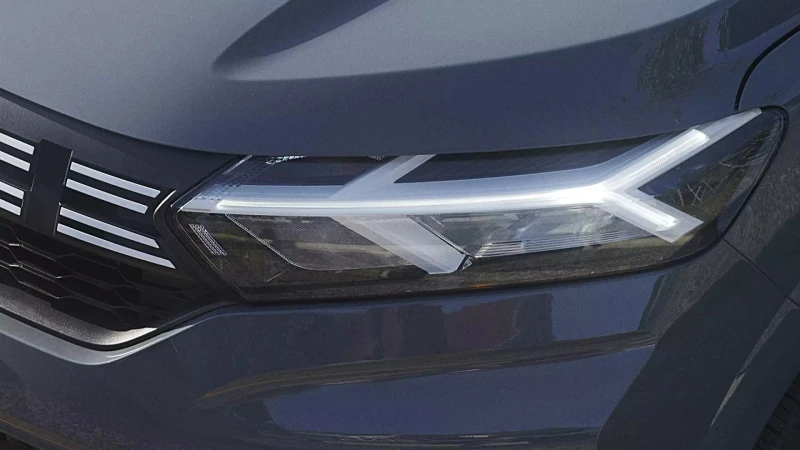
The 2022 change was primarily Dacia's new brand identity, including the redesigned grille, Dacia Link emblem and updated badging; it should not be described as a comprehensive mechanical facelift. In 2024, the European range gained additional safety equipment to meet updated EU General Safety Regulation requirements, including features such as lane-departure warning, lane-keeping assistance, traffic-sign recognition and more advanced emergency braking, depending on market specification.
A much more substantial update arrived for the 2025-2026 period. The standard Sandero gained a TCe 100 gasoline engine in place of the earlier TCe 90 in key European markets, while the new Eco-G 120 moved to a 1.2-liter turbocharged gasoline/LPG engine and became available with either a 6-speed manual or a 6-speed dual-clutch automatic. Updated cars also introduced a 10-inch central touchscreen on relevant trims, replacing the previous 8-inch setup. This means parts, software and drivetrain details can differ meaningfully between early and late Sandero III cars.

Used-car availability in the United States
There is no normal U.S. used-car market for the Dacia Sandero III because the model was not officially sold here. Standard U.S. pricing guides and mainstream listings therefore do not provide a reliable market benchmark comparable with a Corolla, Versa or other officially distributed model. Any U.S.-based example should be treated as a special-case import, not as a conventional domestic used-car purchase.
Import status is critical. A vehicle less than 25 years old that was not originally manufactured and certified to comply with all applicable Federal Motor Vehicle Safety Standards generally cannot be permanently imported without a specific legal path, such as NHTSA import eligibility and use of a Registered Importer. The ordinary 25-year safety exemption will not apply to the earliest 2020-production Sandero III cars until 2045, calculated from the vehicle's actual manufacture date. Temporary and other limited exemptions have separate rules.
Before spending money on a Sandero III already located in the United States, verify its title, import paperwork and VIN history rather than assuming that physical presence means it can be permanently registered for road use. State registration requirements can add another layer on top of federal import compliance.
For cars being evaluated in Europe before any possible move to the United States, obtain a complete service history and check the exact engine, transmission and trim by VIN. European names such as Essential, Expression, Journey and Stepway vary by model year and country, and equipment should not be inferred from the badge alone.
What can be fixed and how to budget
Most ordinary used-car issues—worn tires, brakes, suspension components, interior trim and routine fluids—can be addressed in the usual way, but imported-vehicle logistics may increase downtime. The key question is whether the correct parts and technical information are available in the United States for the specific engine, gearbox and electronic configuration.
Do not apply a generic maintenance interval to every Sandero III transmission. The early TCe 90 CVT, manual gearboxes and later Eco-G 120 dual-clutch automatic are different units and should be serviced according to the factory schedule for the vehicle's original market and VIN. The same applies to LPG-system inspection and service on Eco-G versions.
A fixed percentage such as 15-25% of the purchase price is not a reliable repair budget for a U.S.-based Sandero because import compliance, overseas parts shipping and specialist labor can outweigh normal maintenance costs. A pre-purchase inspection by a technician familiar with Renault/Dacia products is more useful than a generic allowance. For a car that is already legally titled and road-registered, build a reserve based on documented deferred maintenance and parts lead times.
Conclusions and recommendations
The Sandero III's main strengths remain its simple packaging, spacious cabin for its footprint and low-cost European positioning, but those advantages do not transfer directly to the United States. Lack of official U.S. sales, certification and dealer support makes ownership materially more complicated than it is in Europe.
If evaluating an existing legally imported car, focus on the exact model year and powertrain rather than searching for a single "best" version. Earlier TCe 90 manual or CVT cars, Eco-G 100 manuals and the newer TCe 100 or Eco-G 120 models differ enough that parts and service planning should be done individually.
Before purchase, test all electronics, check for warning lights, inspect suspension and body condition, confirm transmission behavior, and verify the complete service record. On Eco-G cars, make sure the LPG system is inspected by someone qualified to work on that equipment. Most importantly for a U.S. buyer, verify federal import compliance and state title/registration status before treating the car as a usable road vehicle.
For U.S. readers, the Sandero III is best understood as a European-market car with unusual import and support constraints rather than a conventional used-car alternative available through normal American retail channels.