


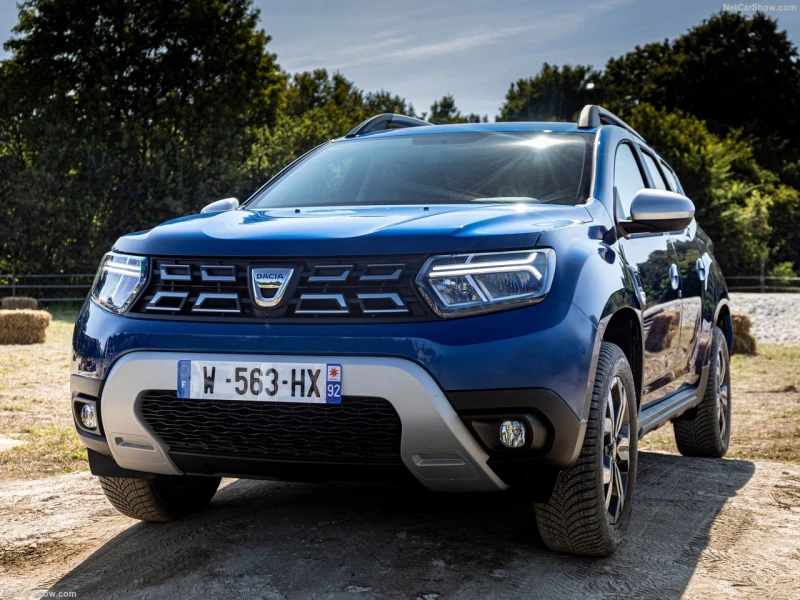
The second-generation Dacia Duster (HM) remains a common used SUV in Europe, but its situation is very different for a U.S. buyer. Dacia did not sell this generation through an official U.S. dealer network, so there was no American-market engine lineup, EPA fuel-economy label, or U.S.-specific trim structure. Any example encountered in the United States should therefore be treated as a non-U.S.-market vehicle whose exact specification depends on its original country of sale. This guide focuses on the issues that matter when assessing a used Duster II while keeping that U.S. context clear.
Key drawbacks and ownership points
The Duster II was designed as a straightforward, value-focused SUV, and that shows in the cabin. Hard plastics are common, particularly on lower trim levels, and used examples can show scuffs, scratches, worn seat fabric, and other cosmetic wear. These are usually condition issues rather than mechanical faults, but they are worth checking because replacement interior parts may not be as easy to source in the United States as they are in Europe.
Infotainment deserves a full test during a pre-purchase inspection. Used-car reliability reporting for the 2018–2024 Duster includes owner complaints about warning lights, infotainment glitches, and other minor electrical issues. Later cars gained updated multimedia hardware, and the 2021 facelift introduced new 8-inch systems with Apple CarPlay and Android Auto capability on applicable versions. Equipment varies by country and trim, so the presence of a particular screen or smartphone-integration feature should be verified on the individual vehicle rather than assumed from the model year alone.
Diesel versions with the 1.5 dCi/Blue dCi engine require extra attention if they have spent most of their lives on short trips. Check for diesel-particulate-filter warning lights, emissions-system faults, and evidence that the car has been serviced correctly. A diesel that has not been allowed to complete normal DPF regeneration can develop expensive emissions-related problems, so a diagnostic scan and a review of the service history are sensible before purchase.
Automatic-transmission cars also deserve a careful road test. The facelifted Duster added a dual-clutch EDC automatic to the range, paired with selected engines and drivetrains depending on market. There is not enough evidence to treat the EDC as a universal failure point on every Duster II, but shifts should be smooth and consistent, with no warning messages, hesitation, or abnormal noises. Because U.S. familiarity with this drivetrain is limited, confirm that a qualified shop can diagnose and service it before buying.
Ride refinement is another area where expectations matter. The Duster prioritizes simple construction, ground clearance, and utility over the quieter, more insulated feel of many mainstream U.S.-market crossovers. Road and wind noise can therefore be more noticeable at highway speeds, especially on coarse pavement or all-terrain tires. That characteristic should be distinguished from abnormal suspension knocks, wheel-bearing noise, tire damage, or loose trim, which require inspection.
Fuel-economy figures need special care in a U.S. article. The second-generation Duster was not EPA-certified as a normal U.S.-market model, so there is no official EPA mpg rating to quote. European versions were homologated under European test procedures such as WLTP, and those results should not be presented as if they were EPA numbers. Actual fuel use will also vary substantially among the TCe gasoline, Blue dCi diesel, ECO-G LPG, front-wheel-drive, all-wheel-drive, manual, and EDC configurations sold in different countries and model years.

Versions and years: what changes matter
The second-generation Duster debuted in Europe in 2017 and entered its main sales period from 2018 onward. Early cars can have a very different powertrain and equipment mix from later examples, depending on their original market. Across the generation, European catalogs included gasoline, diesel, and LPG versions, with both front-wheel drive and all-wheel drive offered in various combinations.
The engine range changed over time. By 2019, several European markets offered TCe 130 and TCe 150 turbocharged gasoline engines alongside Blue dCi 95 and Blue dCi 115 diesels, while other engines were also available depending on country and year. By the 2021 facelift, Dacia’s simplified European range centered on TCe 130 and TCe 150 gasoline engines, Blue dCi 115 diesel, and ECO-G 100 LPG, with 2WD and 4WD depending on engine. The EDC dual-clutch automatic arrived with the facelift on selected configurations rather than being a feature of the earliest Duster II cars.
The 2021 facelift is easy to identify by its revised lighting and grille, but the more meaningful used-car changes are inside. Dacia introduced a redesigned center console and new 8-inch multimedia systems, while continuing to offer both 2WD and 4WD versions. Trim names changed by country and over time, so labels such as Essential, Comfort, Prestige, Expression, Journey, or Extreme should not be treated as universal equivalents.
The third-generation Duster was unveiled in late 2023 and launched in Europe in 2024. That means some 2024 registrations can belong to the outgoing second generation while others are the newer third generation. Verify the generation from the vehicle itself, VIN information, and original registration documents rather than relying on the calendar year alone.
What the U.S. market context changes
There is no normal nationwide U.S. used-car market for the Dacia Duster II comparable with Europe. Dacia did not officially sell this generation in the United States, and mainstream U.S. listings should not be used as if they represented a standard domestic supply of LX-, S-, or other American trim levels. If a seller describes a Duster II as a “U.S.-spec” model, that claim should be checked very carefully because Dacia did not create a regular U.S.-market specification for this generation.
Import status is also critical. U.S. safety and emissions rules are separate. For NHTSA safety requirements, the broad age-based exemption applies when a vehicle is at least 25 years old from its date of manufacture; a younger nonconforming vehicle generally needs an applicable import-eligibility path and, where required, work through a Registered Importer. EPA emissions rules have a separate age provision for vehicles at least 21 years old in original configuration, while younger nonconforming vehicles generally require certification through an Independent Commercial Importer or another applicable exemption. A 2017–2024 Duster II is therefore too new in 2026 to rely on either broad age-based route. Confirm federal import compliance as well as state title, registration, and emissions requirements before paying for the vehicle.
Because there is no Dacia dealer network in the United States, service planning matters more than on a conventional U.S.-market crossover. Before purchase, identify a shop willing to work on Renault/Dacia mechanical and electronic systems, verify diagnostic-tool compatibility, and check how routine and model-specific parts would be obtained. This practical support question can be more important than choosing between two European trim levels.
A complete history is especially valuable on an imported vehicle. Confirm the VIN, original country of registration, engine and transmission specification, documented maintenance, recall completion where applicable, and any accident or structural repairs. Do not rely only on a U.S. vehicle-history report, because part of the car’s history may have occurred abroad.

What can be fixed, and how to budget
Many ownership concerns are condition-dependent. Worn tires, suspension bushings, brakes, damaged underbody protection, scuffed interior trim, and outdated multimedia can all be addressed if parts and competent labor are available. On 4WD versions, inspect the underside carefully for signs of off-road impacts, leaks, damaged shields, or mismatched tires.
For diesel cars, diagnostic checks should include the DPF and other emissions-system components. For EDC-equipped cars, road-test the transmission from cold and warm, check for stored fault codes, and confirm that a specialist can service the unit. For any version, test every electrical feature, the touchscreen, phone connectivity where fitted, climate controls, windows, locks, cameras, and parking sensors.
There is no responsible universal percentage to add to the purchase price for “first repairs,” especially in the United States where parts sourcing can vary dramatically from one imported car to another. A better approach is to obtain a pre-purchase inspection, price any immediately needed parts before closing the deal, and keep a repair reserve based on the findings. A cheap purchase can become expensive if a model-specific component has to be sourced from Europe.

Conclusions and buying checklist
The Dacia Duster II can be a simple and practical used SUV, but a U.S. buyer faces a different decision from a European buyer. Condition, service history, and the exact engine/drivetrain matter, but legal import status and access to parts and knowledgeable service are equally important.
Later facelift cars benefit from the updated 2021 design, revised interior features, newer multimedia options, and the availability of EDC on selected versions. Earlier examples are not automatically poor choices, but they should be judged on maintenance, condition, and specification rather than on broad claims that one model year is universally “good” or “bad.”
On a test drive, listen for suspension or wheel-bearing noise, verify straight-line tracking and braking, check for engine or emissions warnings, test all electronics, and make sure the transmission behaves normally. On diesels, pay particular attention to DPF-related warnings and service use patterns. On 4WD versions, inspect the underbody and confirm that all four tires are appropriate and evenly worn.
For the United States, the most important final check is documentation. Confirm how the vehicle entered the country, whether it is legally eligible for road use, whether it can be titled and registered in your state, and whether you have a realistic plan for parts and service. Those checks should come before comparing European-market trims or chasing a particular engine option.