


A few years ago, manufacturers and policymakers enthusiastically outlined the coming era of clean mobility, lower emissions, and prosperity. Reality has been far more pragmatic: vehicles are sitting unsold on dealer lots, discounts have reached 30,000 euros, and consumer interest remains minimal.
Ambitions Versus the Continent
Australia is a country of vast distances, hot climate, and relatively limited charging infrastructure. This presents a genuine challenge for electric vehicles. On the southeastern coast, charging and route planning are manageable, but beyond urban areas, it quickly becomes difficult: without gasoline, long trips into the interior are feasible, but without electricity, return journeys become uncertain.
Nevertheless, automakers attempted to establish a presence. Peugeot introduced its green lineup with optimism but was soon forced to pause. The company is now concentrating on hybrids and mild hybrids, where the internal combustion engine retains the primary role. Representatives acknowledged that buyer interest in fully electric models has been negligible, placing these vehicles on temporary hold.
Hyundai and the Challenges of Electrification
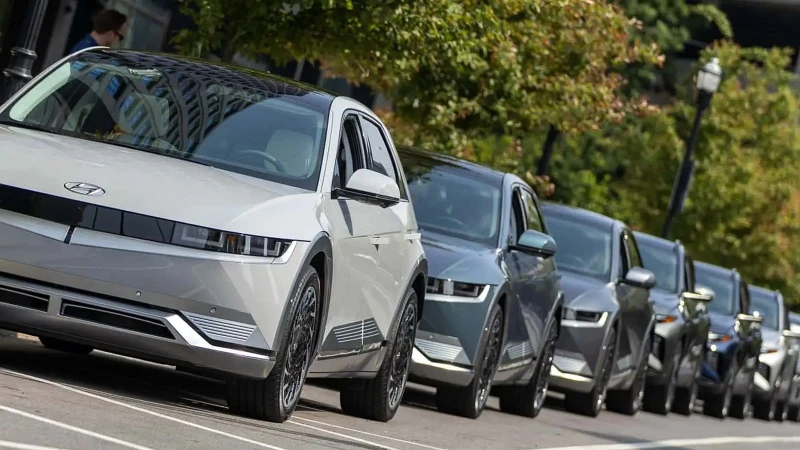
Hyundai persisted with its electrification strategy. However, the Ioniq 6 electric sedan has struggled to attract customers. 2023 models continue to occupy dealer inventory, resulting in discounts of up to 35,000 Australian dollars — roughly 21,000 euros. Demand remains subdued even with these incentives.
Only around one hundred Ioniq 6 units were sold in Australia last year, well short of the thousands anticipated. On a continent defined by long distances and relatively affordable gasoline, battery electric vehicles have not aligned well with typical usage patterns.
Factors Behind the Slow Adoption
- Extensive distances and sparse charging network.
- High vehicle prices, which remain premium even after discounts.
- Practicality issues, particularly for those outside major cities.
Australian consumers often favor durable vehicles suited to long journeys and demanding conditions. Electric cars, with their range constraints and charging dependencies, encounter significant barriers in this context.
Analysis
Australia does not appear ready for mass EV adoption at present. Where travel distances frequently span hundreds of kilometers and charging stations are not widespread, hybrid powertrains represent a more suitable option. Future improvements in technology and infrastructure may alter this picture over the next decade. For now, electric vehicles in Australia remain largely an expensive experiment rather than a mainstream solution.