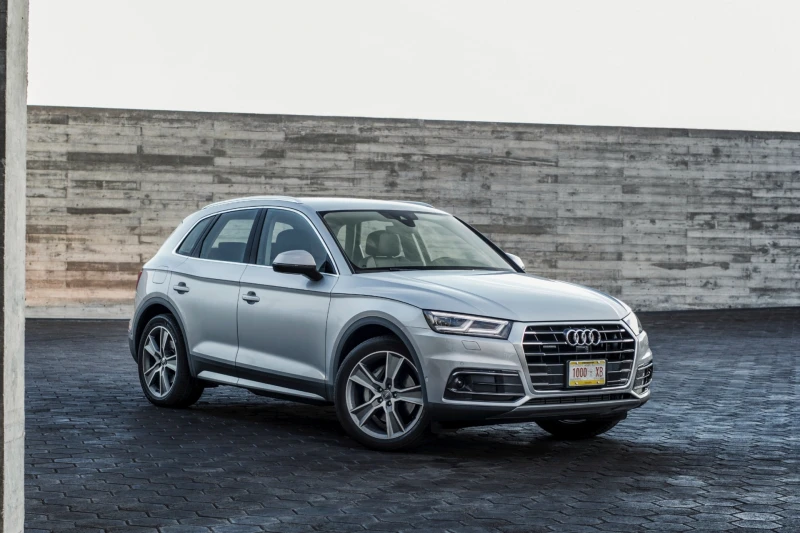
In this guide, we dive deep into the technical specifications of the Audi Q5 II, focusing on the engines available from 2017–2023, transmissions, drivetrains, dimensions, and key ownership considerations. Understanding the powertrain options will help you choose the version that best suits American driving conditions and preferences. Note that exterior design, interior, trim levels, and common issues are covered in other articles in this series.
Engines and Transmissions
The engine lineup for the Audi Q5 2017–2023 in the North American market (which largely defines the used inventory) centered around the turbocharged 2.0 TFSI gasoline engine. All units feature direct injection and turbocharging. Most models come with the 7-speed S tronic dual-clutch transmission and Audi's efficient quattro ultra all-wheel-drive system (with on-demand rear-axle engagement for better fuel economy). Higher-performance variants, such as the SQ5, use an 8-speed Tiptronic automatic with traditional quattro full-time all-wheel drive.
| Period | Engine | Power, hp | Torque, lb-ft | Transmission | Drivetrain | Notes |
| 2017–2020 | 2.0 TFSI | 252 | 273 | 7 S tronic | quattro ultra | Main gasoline version |
| 2020–2023 (facelift) | 2.0 TFSI (45 TFSI) | 245–261 | 273 | 7 S tronic | quattro ultra | With mild-hybrid (MHEV) system |
| 2017–2023 | SQ5 3.0 TFSI | 349–362 | 369 | 8 Tiptronic | quattro | Performance model |
On the US used market, the 2.0 TFSI models dominate, with plug-in hybrid (PHEV) versions being relatively uncommon.
Dimensions and Weight
The Audi Q5 II dimensions remained largely consistent throughout the generation, with only minor increases after the 2020 facelift due to updated bumpers.
| Parameter | Value | Notes |
| Length | 183.6–184.3 in | Slightly longer post-facelift |
| Width (without mirrors) | 74.5 in | |
| Height | 65.3 in | Without roof rails |
| Wheelbase | 111.0 in | |
| Ground Clearance | 7.9–8.3 in | Up to 9.1 in with air suspension |
| Curb Weight | 3790–4300 lb | Depending on engine and equipment |
| Gross Weight | 5290–5620 lb | |
| Cargo Volume | 19.4–54.1 cu ft | With rear seats folded |
The model is about 200 lb lighter than its predecessor thanks to the MLB Evo platform.
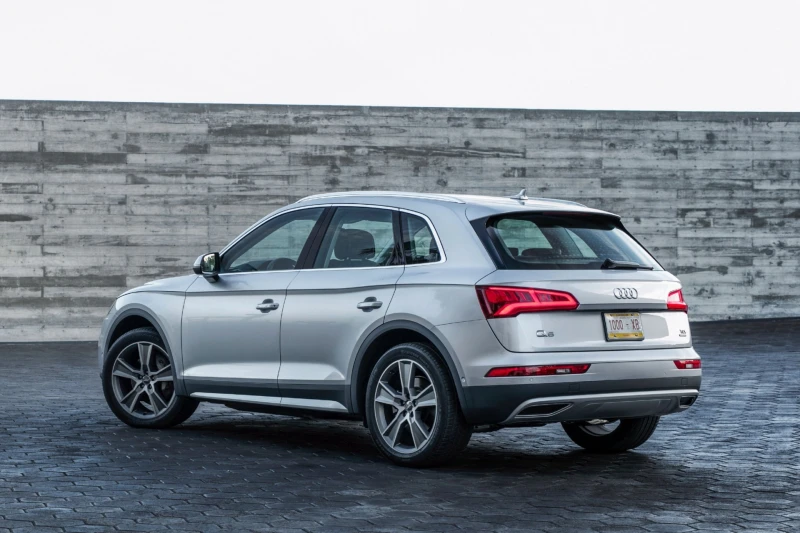
2020 Facelift Highlights
The 2020 facelift brought several updates to the Audi Q5 II:
- Exterior: redesigned headlights (OLED available on top trims), updated grille and bumpers.
- Engines: all four-cylinder versions gained a 12V mild-hybrid system, improving efficiency by roughly 0.5–1 mpg.
- Power: 2.0 TFSI adjusted to 245–261 hp with improved low-end response.
- Infotainment: upgraded MIB3 system with larger touchscreen and connected services.
- Drivetrain and transmission unchanged.
Post-facelift models (2020–2023) typically command higher prices in the used market due to modern styling, improved tech, and mild-hybrid efficiency, while pre-facelift versions (2017–2019) remain more affordable with comparable reliability.
Key Things to Know for Buying & Ownership in the US
The Audi Q5 II scores well for overall reliability, but here are some important points:
- Engines: The 2.0 TFSI is generally robust; early models (pre-2019) may consume up to 1 quart of oil per 1,000 miles due to piston design—always check service history. Facelift versions largely resolved this issue.
- Real-World Fuel Economy (based on US owner reports & EPA): 2.0 TFSI – city 20–23 mpg, highway 27–30 mpg, combined ~24–26 mpg. SQ5 models average 18–22 mpg combined. Mild-hybrid versions improve efficiency noticeably.
- Transmission: The 7-speed S tronic is reliable with fluid changes every 40,000 miles; mechatronic unit repairs can cost $1,000–$2,500. The 8-speed Tiptronic on SQ5 is exceptionally durable.
- quattro ultra: More fuel-efficient than full-time systems; requires periodic rear differential & coupling maintenance. Excellent in rain/snow, but not intended for serious off-roading.
- Parts & Service: Genuine parts are pricey, but quality aftermarket options (Lemförder, Febi) are widely available. Service is accessible in most major cities.
- Potential Issues: Air suspension (if equipped) can be expensive to repair. Electronics are stable but should be scanned during inspection.
Bottom Line: Smart Choice for the US Market
Considering fuel prices, road conditions, and maintenance costs in the United States, the sweet spot is the 2.0 TFSI 45 (2020+) with mild-hybrid tech, 7-speed S tronic, and quattro ultra. It offers an excellent balance of efficiency (real-world ~25 mpg), responsive performance (0–60 mph in ~6 seconds), reliability, and strong resale value.
If you want more excitement, go for the SQ5 – it delivers significantly more power and presence. Skip early high-mileage 2.0 TFSI models without documented maintenance history.
The Audi Q5 II (2017–2023) is a well-engineered premium crossover that, when properly selected, delivers years of enjoyable and relatively trouble-free ownership.