


Another example is the company Novo Energy, which formally continues to exist but has effectively halted operations and laid off all employees. The situation clearly demonstrates the systemic challenges facing the European battery industry.
How the Plant Lost Its Future
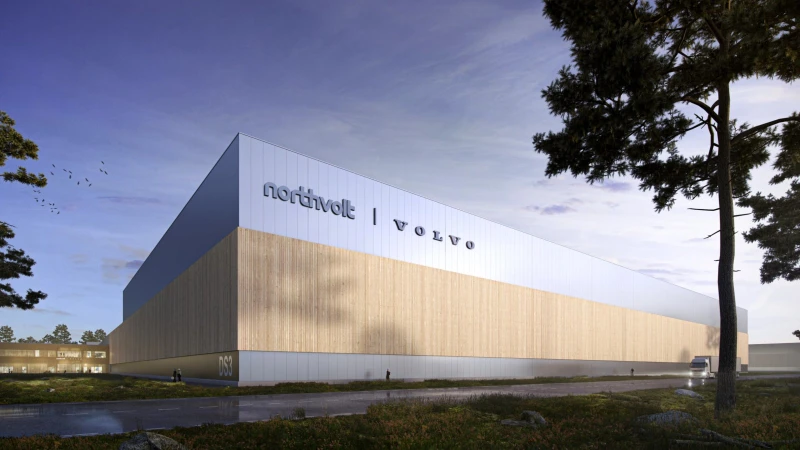
Novo Energy was initially viewed as a strategic project. The enterprise was created to supply the Volvo automotive group with batteries of its own production. Later, the automaker fully acquired the company, taking control of its development and financing.
It was planned that the plant in Gothenburg would reach large-scale production and be able to annually produce batteries with a total capacity of up to 50 GWh. These batteries were intended for Volvo's European plants, as well as potentially for other brands within the Geely group. However, in practice, the project encountered economic constraints that could not be overcome.
Economic Reasons for the Shutdown
Battery production in Europe remains costly. High electricity prices, labor costs, and logistics make European batteries less competitive compared to products from other regions. Even with the involvement of a major automotive group, producing batteries at "European cost" proved unprofitable.
An additional factor was the decline in demand for electric vehicles. Sales of key Volvo electric models have noticeably decreased over the past year, reducing the need for in-house batteries. As a result, the company saw no economic sense in launching a plant whose output could be more expensive than alternative supplies.
Complete Halt of Operations
Throughout the past year, Novo Energy had already been reducing staff, but now a more radical decision was made. All remaining employees received layoff notices. The company describes the situation as a "temporary pause," but the absence of workers and production processes effectively means the project is frozen for an indefinite period.
Union representatives note that hopes for resuming production are virtually nonexistent. The closure of the enterprise has become a significant loss for the Gothenburg region and the western part of Sweden, where long-term jobs and industrial infrastructure development were anticipated.
Broader European Context
The story of Novo Energy is not an exception. Previously, similar difficulties were experienced by other European projects, including larger battery companies. Many of them relied on subsidies and government support, but even substantial financial injections could not compensate for structural issues.
Without a sustainable model capable of operating without constant external support, such enterprises become vulnerable to any market changes. A decline in demand or an increase in costs quickly questions their viability.
Conclusion
The shutdown of Novo Energy shows that establishing competitive battery production in Europe remains a challenging task. High costs and unstable demand for electric vehicles make such projects risky even with the participation of major automotive groups. Without systemic changes, these plants continue to face the same problems.