


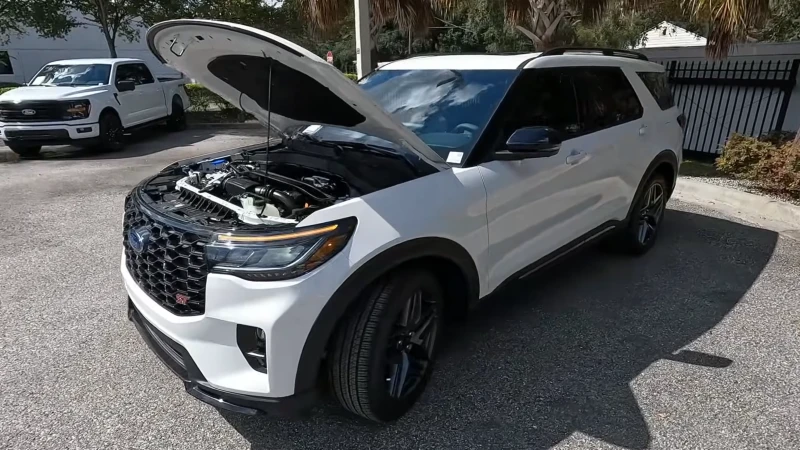
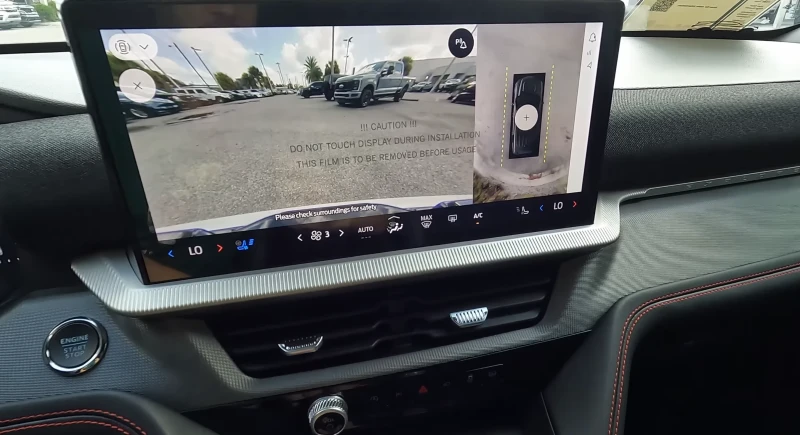
You close the door of the 2025 Ford Explorer and instantly sense its presence: length 198.8 inches, ground clearance 7.9 inches, cargo space 18.2 cu ft expanding to 87.8 cu ft with seats folded. The cabin seats up to 7, with the third row best for kids or extra gear, while the large 13.2-inch infotainment screen running Google built-in handles menus smoothly. The base turbo 2.3 EcoBoost delivers 300 hp and hits 60 mph in about 6.8 seconds, with combined fuel economy around 23 mpg. The top 3.0 V6 in the ST version pumps out 400 hp and 415 lb-ft, pushing top speed to around 143 mph.
On paper, it's a perfect family hauler: spacious, 5,000-lb towing capacity, Intelligent 4WD with Terrain Management System. But owner reports on Edmunds and Reddit tell another story—phantom braking, screen freezes, and multiple NHTSA recalls related to electronics after just a few thousand miles. Let's break down the typical issues based on NHTSA data, Consumer Reports, and real-world feedback, share prevention tips, and help decide if the power and comfort are worth the potential headaches.
Owner Feedback: Praise and Complaints
Edmunds gives the 2025 Explorer around 3.5/5 stars: owners love the performance ("The ST drives like a beast—400 horses are awesome") and roominess, but reliability draws criticism (about 15% report early repairs). Consumer Reports predicts below-average reliability, with 14 NHTSA recalls noted—including issues with headlights, airbags, and more. On Reddit (r/FordExplorer), 2025 owners report better transmission behavior than 2020–2022 models, but still mention BlueCruise glitches and engine vibrations. No hybrid option exists, but gas models achieve 20–27 mpg highway depending on trim. Verdict: great for highway family trips if you stay on top of software updates; otherwise, expect dealer visits every few months.
Engines: Power with Caveats
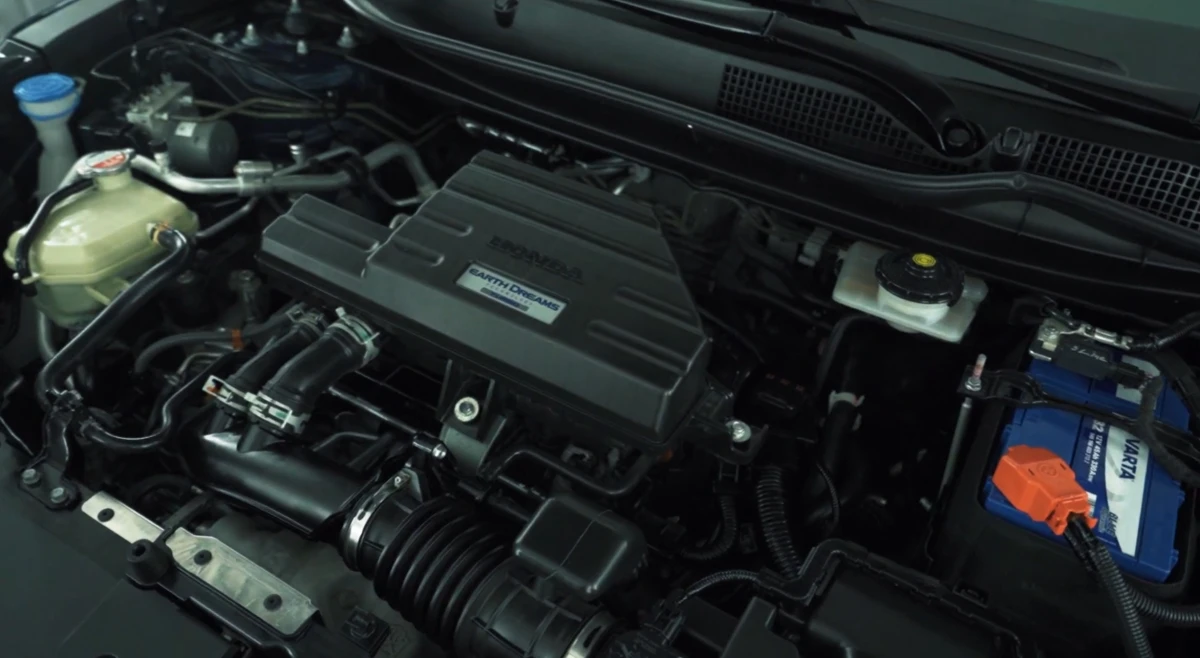
The base 2.3 EcoBoost (300 hp, 310 lb-ft) feels lively, but carbon buildup and minor oil leaks can appear after 12,000–15,000 miles (cleaning $300–$500). The 3.0 V6 in ST/Platinum (400 hp) runs quieter, but fuel economy drops in cold weather or heavy use to around 18–20 mpg combined, with turbos potentially showing signs of wear by 25,000 miles (repairs $1,000–$1,500). Only premium unleaded (91–93 octane) recommended. Head gasket issues rare on the 2.3, though some PCM-related recalls exist in the U.S.; idle vibrations noted by some. Top speed around 143 mph on the V6, but wind and tire noise become noticeable above 85 mph.
Smart Maintenance to Save Money:
- Use 5W-30 synthetic oil every 5,000 miles (~$80–$120), stick to premium fuel to reduce carbon and leaks.
- Turbo inspection every 12,000 miles (~$100–$150), avoid heavy towing without cooldown periods.
- Annual intake cleaning (~$200–$300) can help reach 150,000+ miles reliably.
Transmission: Smooth Shifts or Jerks?
The 10-speed SelectShift automatic is generally refined with a lifespan of 100,000–150,000 miles, but some report harsh shifts in stop-and-go traffic (free software update under warranty often fixes it). ST models add paddle shifters for sporty driving, but heavy towing (up to 5,000 lbs) can overheat fluid (flush every 30,000 miles, ~$400–$600). Intelligent 4WD is solid, though the coupling can warm up in severe conditions (inspection ~$150). No manual option—only RWD or AWD.
Keeping It Smooth:
- Transmission fluid change every 30,000 miles; monitor temps via OBD scanner.
- AWD: annual slip test in wet conditions, coupling lubrication (~$150–$200).
- Avoid hard launches in hot weather—updates resolve most shift complaints.
Suspension: Comfort vs. Road Imperfections
Independent setup (struts front, multi-link rear) absorbs bumps well, but stabilizer bushings wear by 20,000 miles (~$200–$300 pair), and shocks may leak after 40,000 miles with heavy loads (KYB replacements ~$600–$800). ST's sport-tuned suspension is firmer and more stable above 75 mph. 7.9-inch clearance handles light trails, but skid plates or bumpers can drag on rough paths. 255/55 R20 tires generate noticeable road noise.
Strengthening It:
- Check bushings every 15,000 miles; replace proactively.
- Upgraded shocks for family use (~$500–$700) cut vibrations significantly.
- Alignment every 10,000 miles (~$100) extends tire life.
Electronics: Tech Highs and Glitches
The 13.2-inch Google-integrated screen looks great but can freeze in extreme heat (update fixes most cases). Automatic emergency braking triggers falsely at times (some recalls addressed free), BlueCruise hands-free driving struggles on uneven roads. Parking sensors get dirty easily, airbag labeling issues noted in recalls. Battery may drain faster than expected (~$300 replacement), heated steering wheel heats unevenly. 2025 models include Co-Pilot360 Assist+ as standard.
Staying Ahead:
- Check for OTA updates every few months—dealer handles recalls free.
- Test battery in winter; use trickle charger for long sits with BlueCruise.
- Clean sensors after washes; recalibrate if false braking occurs (~$75–$100).
Body and Interior: Durability Challenges
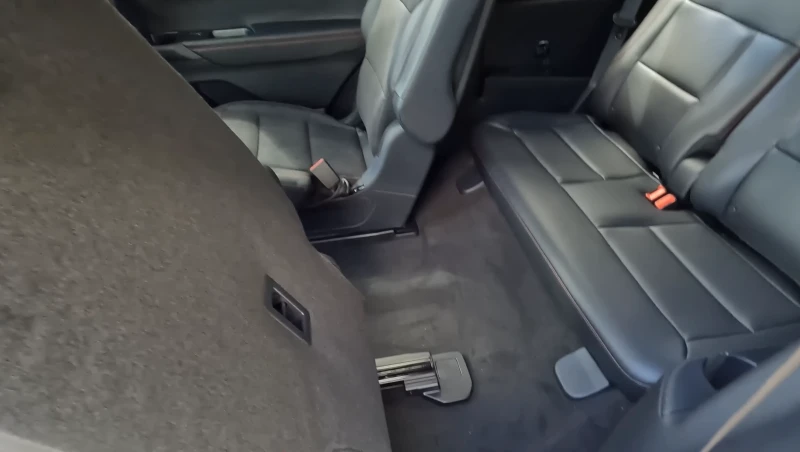
Galvanized body resists rust well, but paint chips easily on the hood (protective film ~$800). Rockers can corrode from road salt (undercoating ~$600). Cabin is roomy (119.0-inch wheelbase), but sound insulation is average—tire roar noticeable at highway speeds. Seat leather wears by 30,000–40,000 miles, plastics can creak in heat, third row tight for adults. Power liftgate occasionally sticks from dirt.
Long-Term Protection:
- Apply underbody protection to wheel arches (~$700) for quieter ride and fewer chips.
- Door sound deadening (~$500) drops highway noise by several dB.
- Regular detailing and seat covers protect leather/fabric twice a year.
If the Explorer Turns You Off: Strong Alternatives
Worried about recalls? Consider these instead:
- Chevrolet Traverse: More spacious, stronger transmission reliability, though less exciting to drive.
- Jeep Grand Cherokee: Excellent 4WD for light off-road, upscale interior—higher fuel use.
- Toyota Highlander: Legendary durability, hybrid available, more conservative styling.
- Honda Pilot: Better efficiency, tough suspension, longer warranty coverage.
- Kia Telluride: Loaded features, impressive 10-year warranty, simpler AWD.
Final Verdict: Gamble or Solid Choice?
The 2025 Ford Explorer delivers serious power and room (around 20–24 mpg combined, 5-year/60,000-mile warranty), earning strong safety ratings. Drawbacks like electronics quirks, recalls, and noises are manageable with regular maintenance (typical service ~$300–$500 every 6,000–10,000 miles) and vigilance. If rock-solid dependability matters most, look at Highlander or Pilot. But for highway cruising and family duties—especially the ST—the Explorer can reach 100,000+ miles reliably with care, though dealer trips should be expected. Approximate market price for the 2025 Ford Explorer in the United States ranges from $40,000 for base models to $55,000+ for loaded ST versions.