However, in practice, it often provides limited benefits. The phone tends to overheat, charge slowly, and shift position during abrupt maneuvers, potentially sliding off the pad. This results in inconvenience rather than the intended ease of use.
Why Most Solutions Fall Short
The issue is generally consistent across implementations: the phone is not securely fixed in the vehicle. The car accelerates, brakes, and corners, while the inductive pad behaves as if the vehicle is stationary. At best, the smartphone slides and stops charging; at worst, it falls and impacts the interior.
In some cases, the situation reaches impractical levels. Consider high-performance vehicles designed for significant lateral forces. There, the charging pad often proves to be the weakest element of the interior. The vehicle may handle precisely, but the phone on the pad does not stay in place. This is notable, as resolving the issue technically has been feasible for some time.
Nissan Implements an Effective Solution
Nissan, a company not typically associated with recent technological advancements, has introduced a refined wireless charging system. In the 2026 model year Pathfinder and Murano, the system incorporates Qi2 with magnetic attachment.
The approach is straightforward: the charging pad includes a magnetic ring to which the smartphone adheres securely. This eliminates sliding, bouncing, or the need to retrieve the phone from the cabin floor. The device remains in position even during dynamic driving.
Cooling and Speed as Additional Benefits
Furthermore, Nissan is the first automaker to integrate active cooling into the wireless charging system. An embedded fan monitors the temperature of both the charger and the smartphone, preventing overheating and maintaining charging efficiency.
The system delivers 15 watts of power, which is substantial by automotive standards. Previously, charging from 10% to 90% could take nearly four hours; now, it requires approximately one and a half hours. This difference is significant for long-distance travel.
Compatibility and Considerations
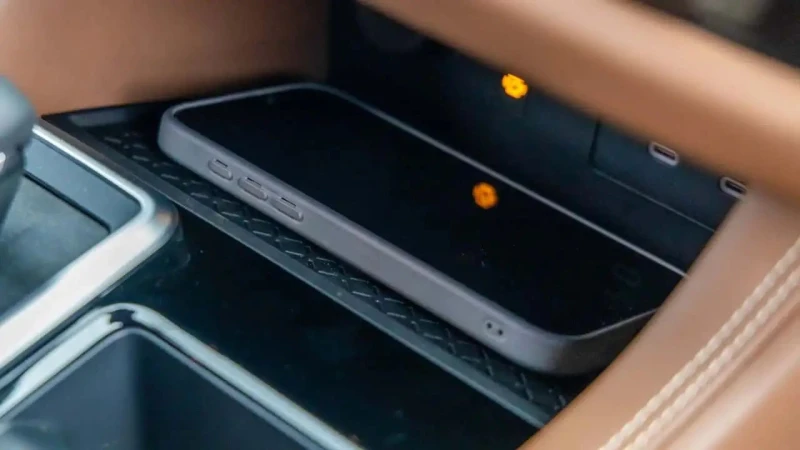
However, Qi2 compatibility is not universal. It supports iPhones starting from the 12 model, recent Google Pixel devices, and Android phones with compatible magnetic cases. The pad is located at the base of the center console, with charging status indicated clearly.
Why the Delay in Adoption?
A logical question arises: why have automakers delayed the implementation of magnetic charging. The concept is not new; Apple employed MagSafe in laptops in the mid-2000s and introduced it to smartphones in 2020. In vehicles, it remained largely conceptual until now.
The technology has now reached production vehicles. It remains to be seen when Nissan will announce pricing and extend this feature to European models. This development may establish a new standard in the industry.