


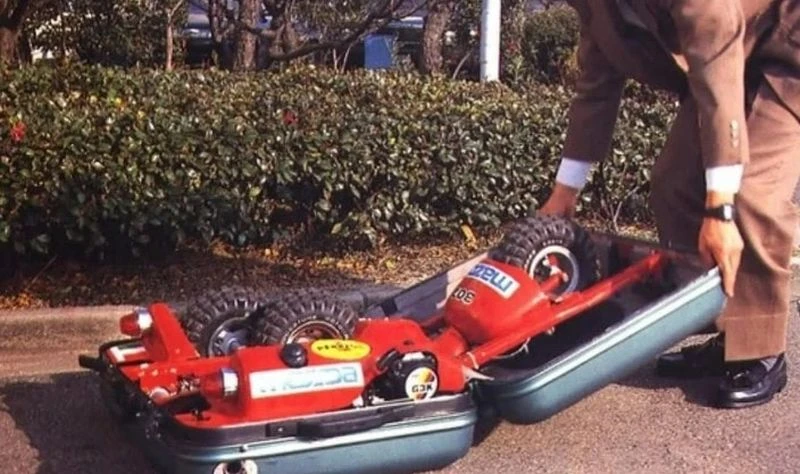
Here's the catch: tucked inside that suitcase is... a fully drivable vehicle. And no, this isn't a prank or some trade-show gimmick. In the early 1990s, Mazda actually built a car you could check as luggage.
When Engineers Were Given Free Rein to Dream
Back then, Mazda ran an internal competition called Fantasyard. The rules were straightforward yet daring: employees could pitch any idea as long as it was roadworthy. No common-sense restrictions applied. It was in this atmosphere of total creative freedom that one of the weirdest vehicles in Mazda's history was born.
The concept came from engineer Yoshimi Kanemoto. He traveled frequently for work and hated the hassle after landing—waiting for shuttles, transfers, wasted time. One day he thought: what if you could just bring your own car along?
A Suitcase That Actually Drives
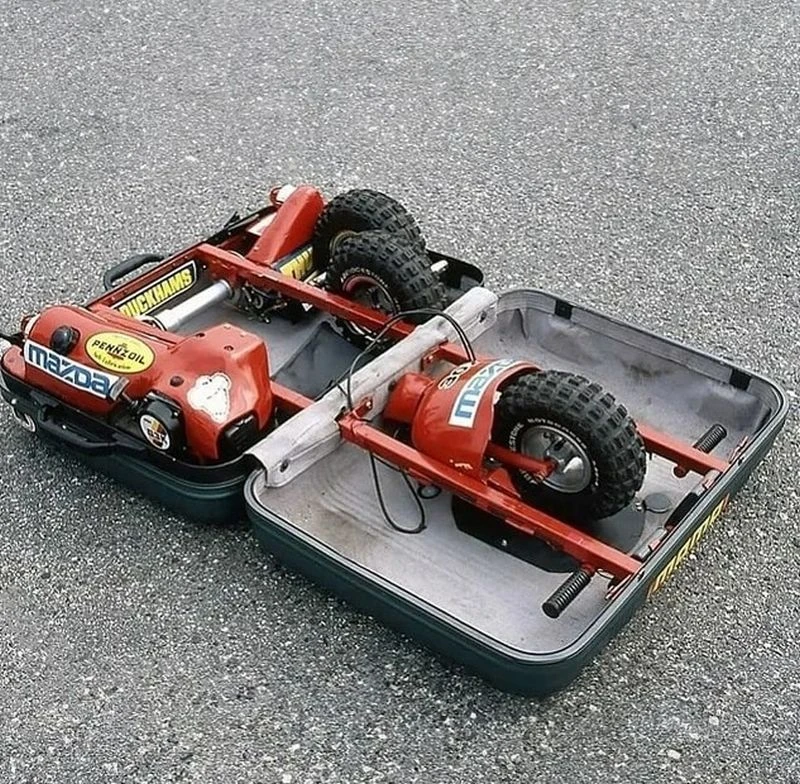
The team started with a standard Samsonite suitcase roughly 22 × 30 inches. They reinforced it—not for durability, but to fit a tiny 33cc two-stroke engine producing 1.7 horsepower. It sounds ridiculous until you grasp the sheer audacity of the idea.
Everything fit inside:
- small engine
- fuel tank
- seat
- steering handle with front wheel
- rear axle
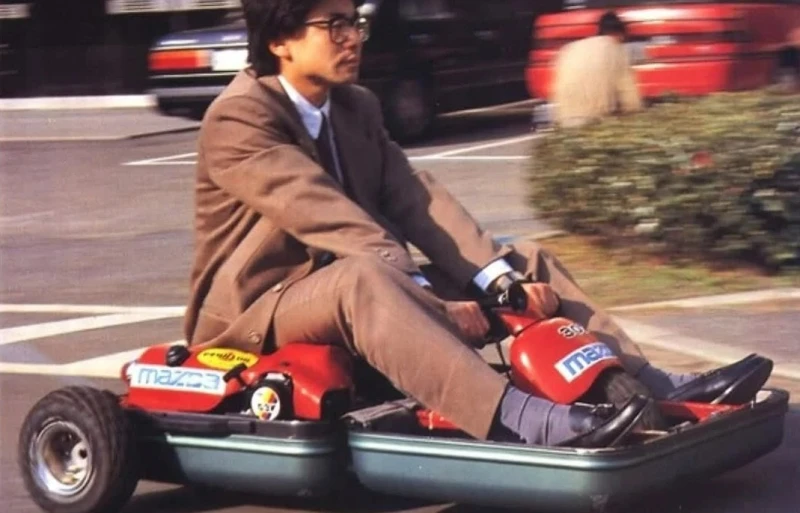
Folded up, it looked like normal luggage. Assembled, it became a tiny three-wheeler capable of reaching about 19 mph. Best part? It took around a minute to set up—no tools required.
Almost Production-Ready, But Way Too Out There
The project was such a hit that it won the contest. Mazda built two more examples: one for the U.S. and one for Europe. Those versions got proper upgrades—headlights, turn signals, a horn, and even a differential for slightly better handling.
Unfortunately, it never reached production. The original prototype was accidentally destroyed, the European version vanished, and only the American example survives today. Mazda last showed the "suitcase car" publicly in 1994—on The Oprah Winfrey Show.
Why Something Like This Couldn't Happen Today
Truthfully, even if Mazda wanted to revive the idea now, getting it road-legal would be nearly impossible. Modern safety regulations would kill it before it left the drawing board.
Yet the concept still captivates. A car you could take on a plane captures the pure, unfiltered engineering imagination of the 90s. Sure, today it would probably only be useful for zipping between airport terminals, but its very existence proves one thing: when you give engineers true freedom, incredible things happen.