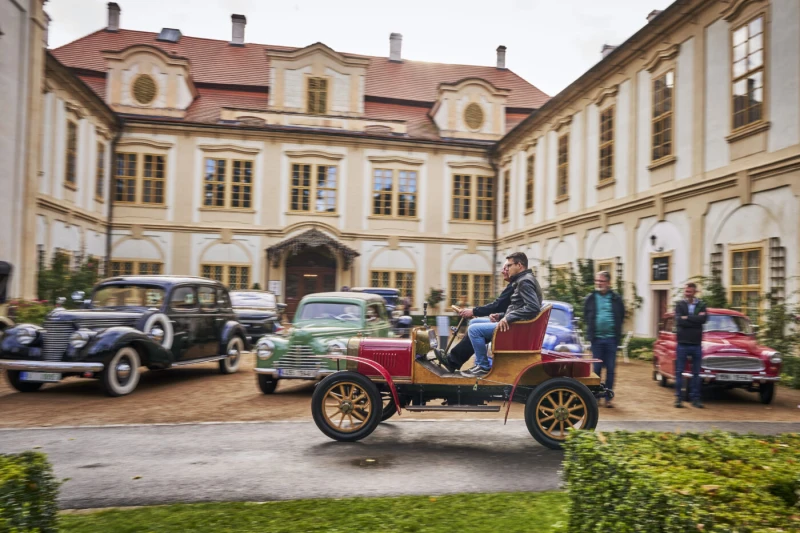
But Skoda stands out in that elite group — it’s now 130 years old. Of course, back then it was known as Laurin & Klement and started not with cars, but with bicycles and motorcycles. Automobiles arrived in 1905, and the familiar Skoda name came in 1925 after joining an industrial conglomerate. Long before the Volkswagen era, the brand already had a remarkably rich — and sometimes downright quirky — history.
When Luxury Meant Raw Engineering
Diving into the past starts with models that feel prehistoric by today’s standards. Take the massive Superb 3000 from the late 1930s. No power steering, no trace of modern comfort. Yet the rear bench feels like your living-room sofa, and the six-cylinder engine delivers a refined, unhurried growl. Driving one is a skill in itself — almost like a theme-park ride these days.
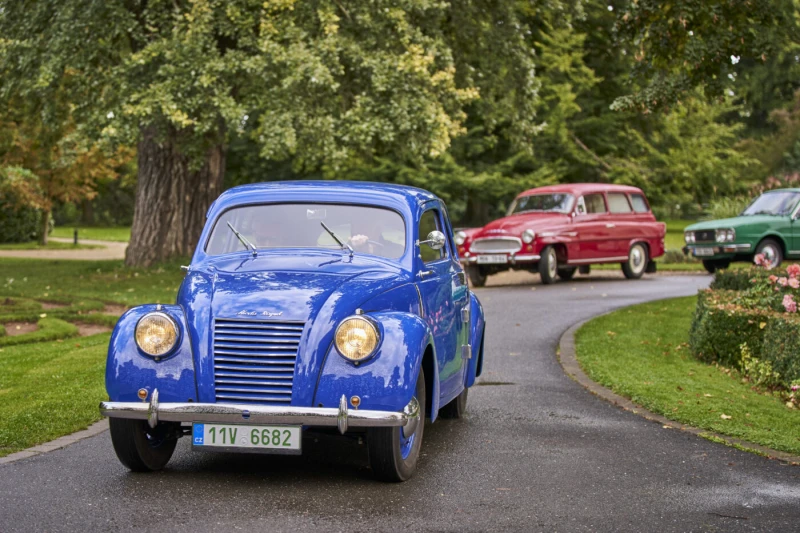
A bit later came the Skoda Rapid of the 1940s. Suicide doors, double-clutching required for every shift, and straight-line stability more of a suggestion than a guarantee. But the emotions it delivers are raw and authentic.
From Practical Wagons to a Kiwi Off-Roader
In the 1950s and ’60s, Skoda’s lineup was surprisingly diverse. The Felicia convertible — light, stylish, and elegant. The Octavia Combi — the practical ancestor of today’s station wagons that could still be willful even when unladen. It was clear even then: Octavia had personality.
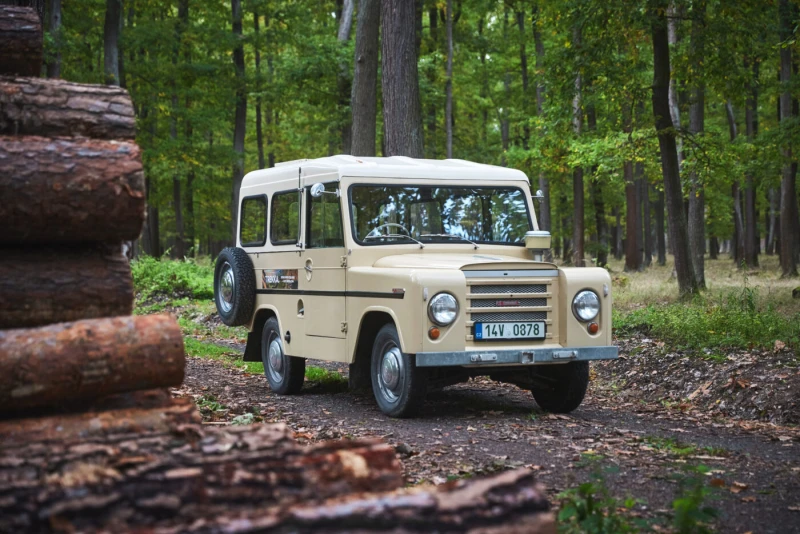
Then there’s the Trekka — an off-roader built specifically for New Zealand. Boxy, brutally simple, complete with rifle mounts. It looks like a brick on wheels and drives much the same, but that’s exactly where its charm lies.
The Last Truly Independent Skoda
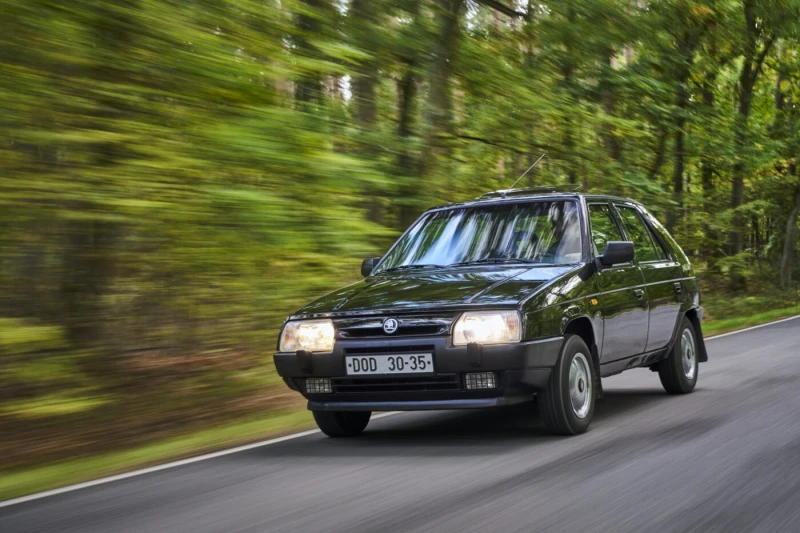
Fast-forward to the late 1980s. The Favorit was the final model developed without Volkswagen’s involvement — and, surprisingly, a real success. Light, compact, and nimble to drive. Even today it doesn’t feel like a museum piece, and the special Black Line version with its bold interior and sunroof still looks cheeky.
The “Eastern European Porsche”
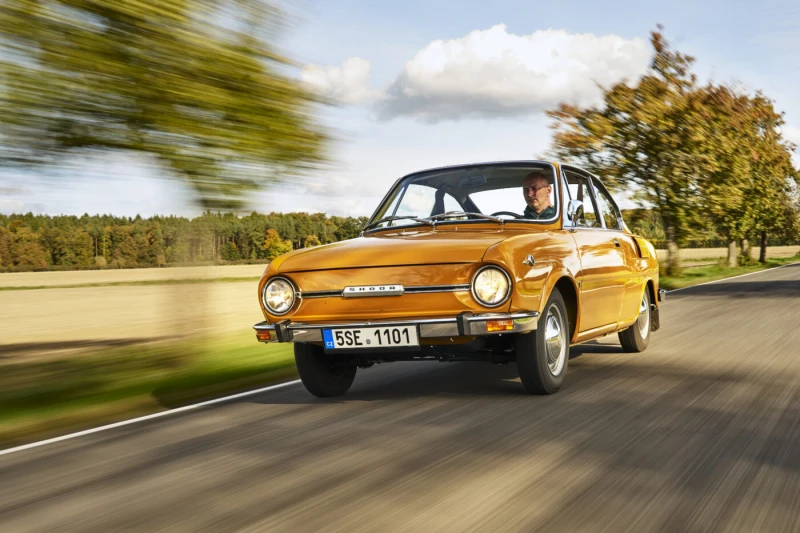
The real love affair, though, happens with another car — the early-1970s Skoda 110 R. A rear-engined coupe with modest power and a featherweight curb weight of around 1,760 lbs. On paper, nothing special. Behind the wheel — pure driving joy. It sounds lively, responds eagerly, and captures that youthful sense of freedom that cars were invented for in the first place.
Yes, the seats offer zero lateral support, and everything is stripped to the essentials. But it’s exactly these cars that keep automotive history alive. No wonder Skoda is now one of Europe’s best-selling brands. Beneath the practicality, there’s always been soul.