


The 2013–2018 Toyota RAV4 cabin was designed with family use in mind: generous space, comfortable seats, abundant storage cubbies and shelves, and most importantly — proven long-term build quality. Even today, the RAV4 interior holds up impressively well against many newer competitors, though it lacks the premium feel and large modern screens found in current models.
Materials & Design
The fourth-generation interior can be divided into pre-facelift (2013–2015) and facelift (2016–2018) versions. Before the facelift, the upper dashboard was covered in soft-touch plastic with a pleasant texture, while the lower sections used hard but very durable plastic that rarely creaks even after 150,000–190,000 miles. The signature shelf above the glovebox became an iconic feature of this generation — perfect for holding a phone, wallet, documents or gloves.
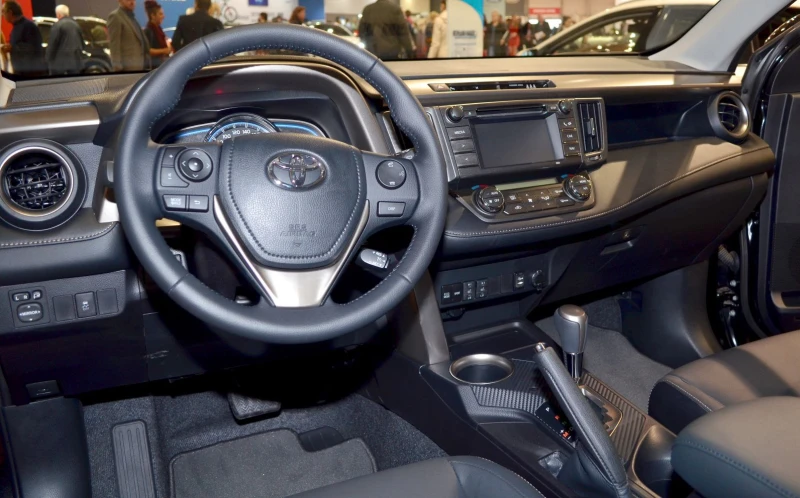
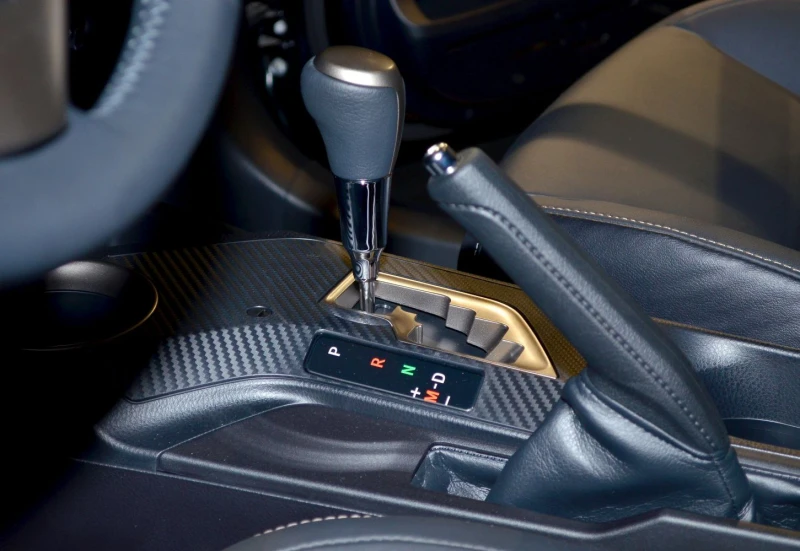
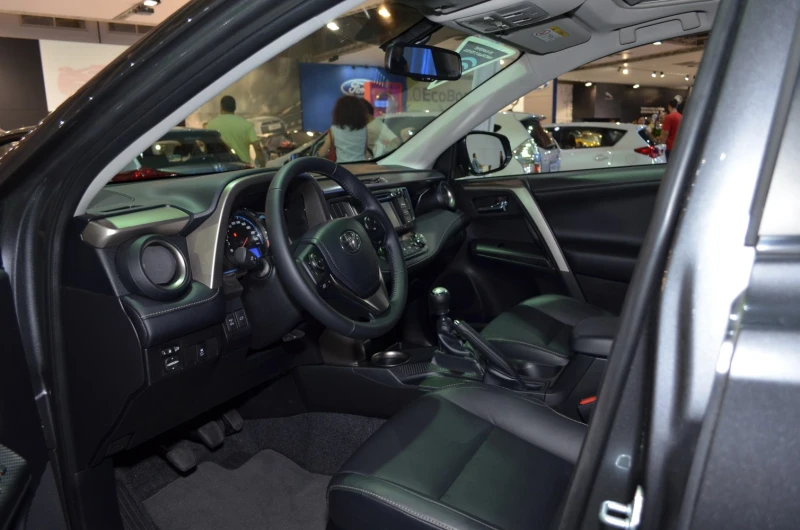
The center console is angled slightly toward the driver, and the shifter sits high for easy reach. The instrument cluster is analog with a color 4.2-inch trip computer display in higher trims. The three-spoke steering wheel feels good in hand, with logically placed audio and cruise control buttons.
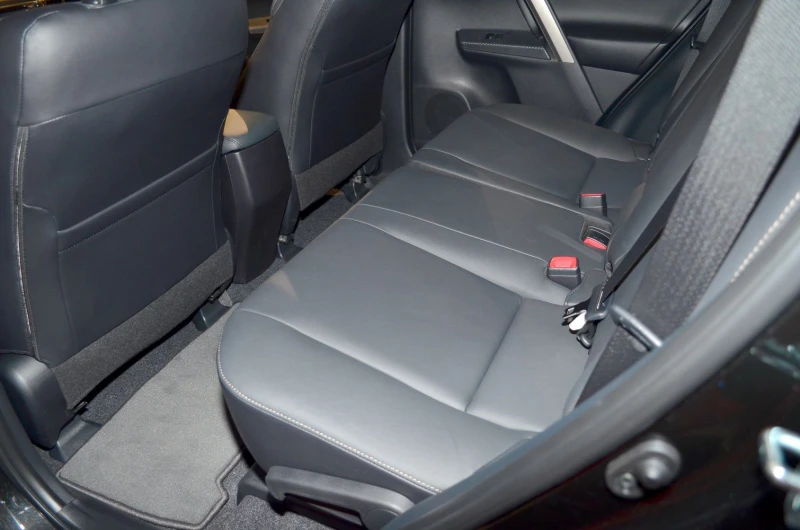
Driver seating position is high and classic Toyota — upright like sitting on a stool, yet offering excellent forward and side visibility. Front seats are wide with solid side bolstering in XLE and Limited trims; cushioning is medium-firm — comfortable even on 500–600-mile road trips. Rear legroom is among the best in class (thanks to the 104.7-inch wheelbase). Three adults fit comfortably with an almost flat floor.
Cargo space is one of the RAV4’s strongest points. It offers 38.4 cu ft behind the rear seats (38.9 cu ft in hybrids due to different floor height), expanding to 73.4 cu ft with seats folded — nearly flat floor. The spare tire is located under the cargo floor, which allowed for a handy double-deck cargo shelf system that can be configured in two levels or removed completely. There’s a 12V outlet, hooks, nets, and good lighting. Perfect for road trips, grocery runs, or weekend gear on Route 66 or Pacific Coast Highway.
Trim Levels on the US Market
On the current used market in the United States you’ll mostly find North American-spec examples, with some Canadian and occasional Japanese imports. Most common trims:
- LE / XLE (base & mid-level) — cloth upholstery (black or ash), manual driver seat adjustment, single-zone or dual-zone climate control, 6.1-inch touchscreen audio, Bluetooth, USB, 4–6 speakers, 17-inch steel or alloy wheels. Heated front seats and windshield wiper de-icer usually present.
- XLE / XLE Plus — the most popular choice on the used market (roughly 50–60% of listings). Dual-zone automatic climate, rearview camera, auto on/off headlights & rain-sensing wipers, keyless entry & push-button start, leather-wrapped steering wheel & shifter, 17–18-inch alloys, power-folding mirrors, rear privacy glass.
- Limited / Limited Platinum — leather upholstery (black or cinnamon), power driver seat (sometimes with memory), heated steering wheel, power liftgate, panoramic moonroof (with or without power sunshade), optional JBL GreenEdge premium audio (11 speakers), blind-spot monitoring, rear cross-traffic alert.
- Hybrid Limited / Hybrid XLE (2016–2018) — usually loaded: available heads-up display, adaptive cruise control, perforated leather, ventilated front seats (rare), unique 18-inch wheel design.
The sweetest used examples right now are 2016–2018 facelift models in XLE or Limited trim with panoramic moonroof and full Toyota Safety Sense package.
Interior Updates by Year
The major refresh came with the 2016 model-year facelift:
- Completely redesigned dashboard — the signature shelf was removed, replaced with a cleaner, full-width soft-touch surface
- Noticeably improved material quality — significantly less hard plastic, new carbon-look or piano black trim accents
- Toyota Touch 2 infotainment upgraded to 7-inch screen (from 6.1”), faster response, still no Apple CarPlay/Android Auto but MirrorLink support in some markets
- Improved sound insulation — added mats in doors and floor; cabin became 3–4 dB quieter
- New upholstery choices: black leather with brown stitching, attractive (but high-maintenance) beige leather
- Redesigned steering wheel with chrome accents
- Rear seat heating added in top trims (rare on used examples)
Facelifted 2016–2018 models feel significantly fresher and more modern inside — the difference is noticeable the moment you sit in.
Interior Drawbacks
Despite its overall reliability, several typical issues appear, especially relevant for American driving conditions:
- Hard plastic on doors and lower dash scratches easily — after 60,000–90,000 miles it can look worn
- Steering wheel and driver’s seat leather (especially bolster areas) cracks and peels after 90,000–125,000 miles, worse if the car sat in the sun a lot
- Beige interiors get dirty quickly — especially noticeable on dusty roads or with kids/pets
- Wheel arch and tire noise is noticeable — especially on winter tires or coarse pavement (many owners add aftermarket sound deadening)
- Pre-facelift multimedia system feels slow, screen reflects in sunlight, no CarPlay/Android Auto
- Rear seat backrest angle is quite upright, center armrest is small
- Rear visibility is average — thick rear pillars and small rear window
- Some interior creaks in very cold weather (more common in pre-facelift models)
Conclusion
In 2025 the Toyota RAV4 IV interior no longer feels cutting-edge — it lacks giant tablets, ambient lighting, and ultra-premium materials found in the fifth generation and newer competitors. But it remains one of the most practical, comfortable and long-lasting cabins in the $12,000–$20,000 used crossover price range.
Best buy in the US market in 2025: a 2016–2018 facelifted example in XLE or Limited trim with leather interior (preferably black), panoramic moonroof, and full suite of safety features. These typically range from $16,000–$20,000 and deliver excellent value and comfort for the money.
When shopping, always check:
- Condition of the steering wheel and driver’s seat leather (reupholstered wheel = $300–$600 value drop)
- Functionality of all buttons and the infotainment screen
- Absence of heavy scuffs on door plastic
- No musty/smoke odors inside the cabin
- Proper operation of power liftgate and panoramic roof (repairs can be expensive)
If budget is tighter — go for a facelifted XLE with cloth seats: easier to maintain and more practical than leather in daily use. The 2013–2018 Toyota RAV4 interior is about reliability, space and everyday usability — not wow-factor. And for most American families, that’s exactly what matters.