


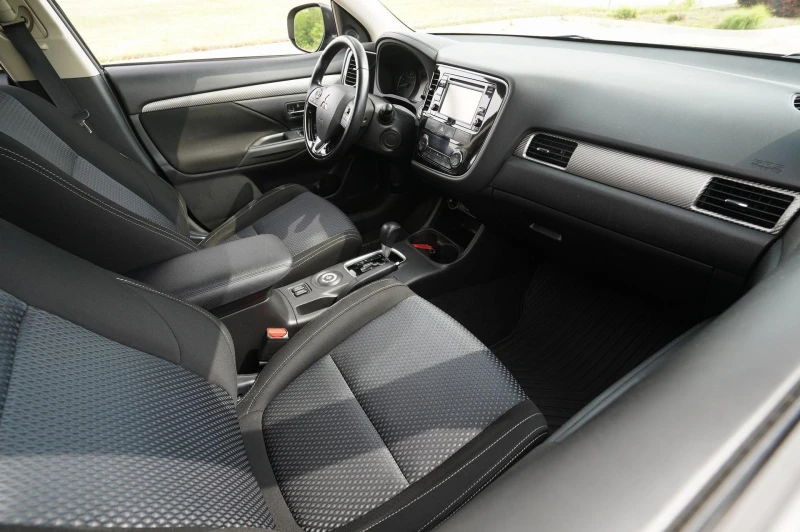
The Mitsubishi Outlander 2013–2021 cabin was built around versatility: available in 5- or 7-passenger configurations, loaded with clever storage solutions, comfortable ergonomics, and one of the largest cargo areas in its segment. In 2025, the Outlander interior still compares favorably to many new entry-level crossovers, even if it doesn’t match the upscale materials and tech of the current generation or top competitors like Toyota and Honda.
Materials & Design
The third-generation cabin went through three distinct phases: pre-facelift (2013–2015), first facelift (2015–2018), and second facelift (2018–2021). Early models feature soft-touch plastic on the upper dashboard with a nice texture, while lower areas use hard but very durable plastic that stays quiet even past 150,000–190,000 miles. The wide shelf above the glovebox remains a favorite — easily holds a phone, wallet, sunglasses, or paperwork.
The tall, driver-oriented center console places the shifter exactly where you want it. Gauges are classic analog with a 4.2-inch color driver-information display in upper trims. The three-spoke steering wheel feels solid and the controls are logically placed. The 2015 facelift brought big improvements: soft-touch material now stretches across the full dash, the shelf was removed, and fresh aluminum-look or piano-black trim pieces appeared.
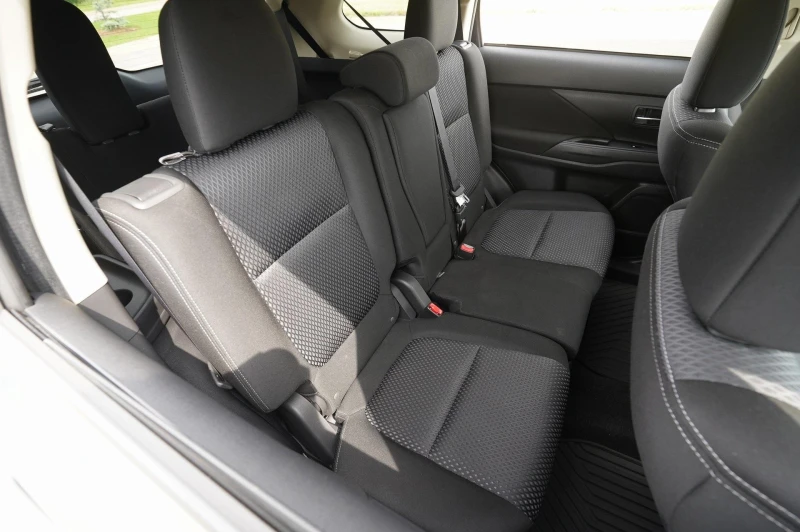
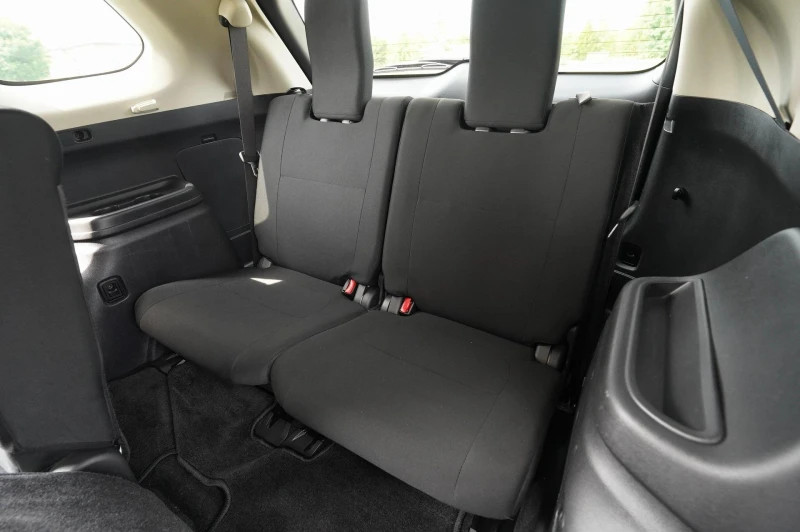
The driving position is high and commanding — great all-around visibility. Seats are generously sized with good side support in Intense/Instyle grades; the cushioning strikes a nice balance — comfortable for long hauls across states like California to Nevada. The second row is class-leading: 105.1-inch wheelbase delivers excellent legroom even for tall adults, near-flat floor, and adjustable seatback angle. The optional third row is best for kids or short trips and folds completely flat.
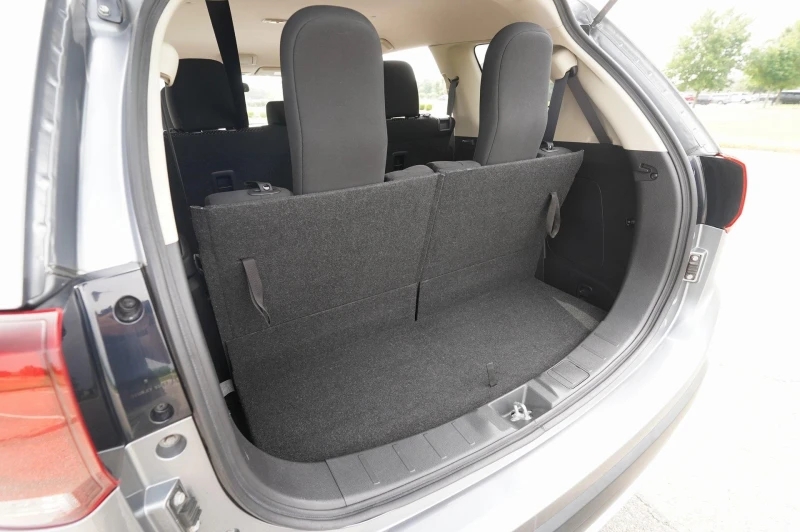
Cargo capacity is outstanding. In five-seat form you get 16.6–47.2 cubic feet (depending on second-row position), expanding to 63.3 cu ft with everything folded in the seven-seat version. Dual-level floor conceals a compact spare or tire repair kit, plus 12V power, tie-down hooks, and good lighting. Power liftgate became available from 2015 onward. Perfect for family road trips, weekend adventures on Route 66, or hauling gear to the lake.
Trim Levels in the U.S. Market
On the American used market you’ll mostly find U.S.- and Canadian-spec models, along with some Japanese imports. The most common trims are:
- ES / Base — entry level, fairly rare: cloth seats (black), manual A/C, basic 6.1-inch touchscreen audio, Bluetooth/USB, 4–6 speakers, 16–18-inch steel wheels, heated front seats and windshield wiper park (very common in northern states).
- SE / SEL — the sweet spot and most frequently listed (about 50–55%): dual-zone automatic climate, rearview camera, auto on/off headlights/rain-sensing wipers, leather-wrapped wheel & shifter, 18-inch alloys, upgraded 7-inch multimedia, heated steering wheel, power-folding mirrors.
- GT / SEL — leather upholstery (black or beige), power driver seat, heated steering wheel and rear seats (less common), panoramic sunroof, premium Rockford Fosgate 9-speaker audio + subwoofer, keyless access & start, power tailgate.
- GT / PHEV Premium — flagship versions (especially plug-in hybrids): perforated leather, ventilated front seats (very rare), head-up display, adaptive cruise control, blind-spot monitoring, 360° camera system, ambient interior lighting.
The most sought-after used examples are 2018–2021 facelifts in GT or higher trim with panoramic roof, leather interior, and full safety suite.
Interior Updates by Year
The two major facelifts brought the biggest changes:
2015 Facelift:
- All-new dashboard design with soft-touch material across the entire upper surface
- Improved material quality — less hard plastic, fresh trim accents
- Faster, better-looking 7-inch SDA multimedia system
- Noticeably better sound insulation (extra mats in wheel wells & doors — roughly 4–5 dB quieter)
- Revised steering wheel and shifter design
- New beige leather options with stitching
2018 Facelift:
Post-2018 models feel significantly more modern and upscale — the difference is immediately noticeable.
Common Interior Drawbacks
Typical issues seen on American roads:
- Wheel-arch noise on coarse pavement or with winter tires — many owners add aftermarket sound deadening ($600–$1,000)
- Lower door panels and dash trim scratch relatively easily — shows wear after 90,000–110,000 miles
- Steering wheel and seat leather can wear through after 75,000–110,000 miles, especially in sunny states
- Beige interiors get dirty fast in dusty conditions
- Pre-2018 multimedia feels sluggish, screen glare is noticeable, no native CarPlay/Android Auto (aftermarket units common)
- Third row is tight for adults — low roof and limited legroom
- Rear visibility is average due to thick pillars
- Plastic rattles in very cold weather (more common in pre-facelift cars)
- Seat heaters are relatively weak and slow to warm up
Bottom Line
In 2025 the Mitsubishi Outlander III interior no longer feels cutting-edge — it lacks giant vertical screens, sophisticated ambient lighting, and ultra-premium materials found in current-generation models and 2024–2025 competitors. Still, it remains one of the most practical and family-friendly cabins available in the $15,000–$25,000 used crossover range.
Best pick for the U.S. in 2025: 2018–2021 facelift models in GT or higher trim with leather (preferably black), panoramic roof, and full power accessories. These typically range from $21,000–$28,000 and deliver the best combination of comfort, features, and value.
For budgets of $17,000–$21,000, look for 2016–2018 SEL or GT models with the sunroof and rear camera — excellent balance of price and equipment.
Checklist before buying:
- Condition of steering wheel and driver’s seat leather (wheel re-wrap costs $200–$400)
- Function of all buttons, touchscreen, and power liftgate
- No excessive wear on door panels or console trim
- No musty or smoke odors inside
- Panoramic roof / sunroof operation (repairs can run $800–$1,200)
- Third-row folding mechanism (if equipped)
The Mitsubishi Outlander 2013–2021 cabin is all about space, smart design, and long-term durability — not wow-factor luxury. For most American families with kids or an active lifestyle, that’s exactly what matters most.