The car premiered in October 2008 at the Paris Motor Show and remained in production until 2016. Sales in Europe began late 2008, and the model quickly gained fans for its blend of sharp styling, reasonable running costs and versatility. Globally, over 3.5 million units were sold, making the Megane III one of Renault’s biggest successes.
The Renault Megane review starts with its foundation: the all-new C-platform (Renault-Nissan B/C segment architecture) brought a 20% increase in body rigidity and noticeably sharper handling. The 5-door hatch measures 4299 mm long (+60 mm over its predecessor), 1804 mm wide and 1471 mm tall, with a 2640 mm wheelbase. Trunk capacity stands at 405 liters (expandable to 1240 liters), while the Grandtour estate offers up to 1604 liters. Body styles included 5-door hatch, 3-door coupé, estate and CC convertible.
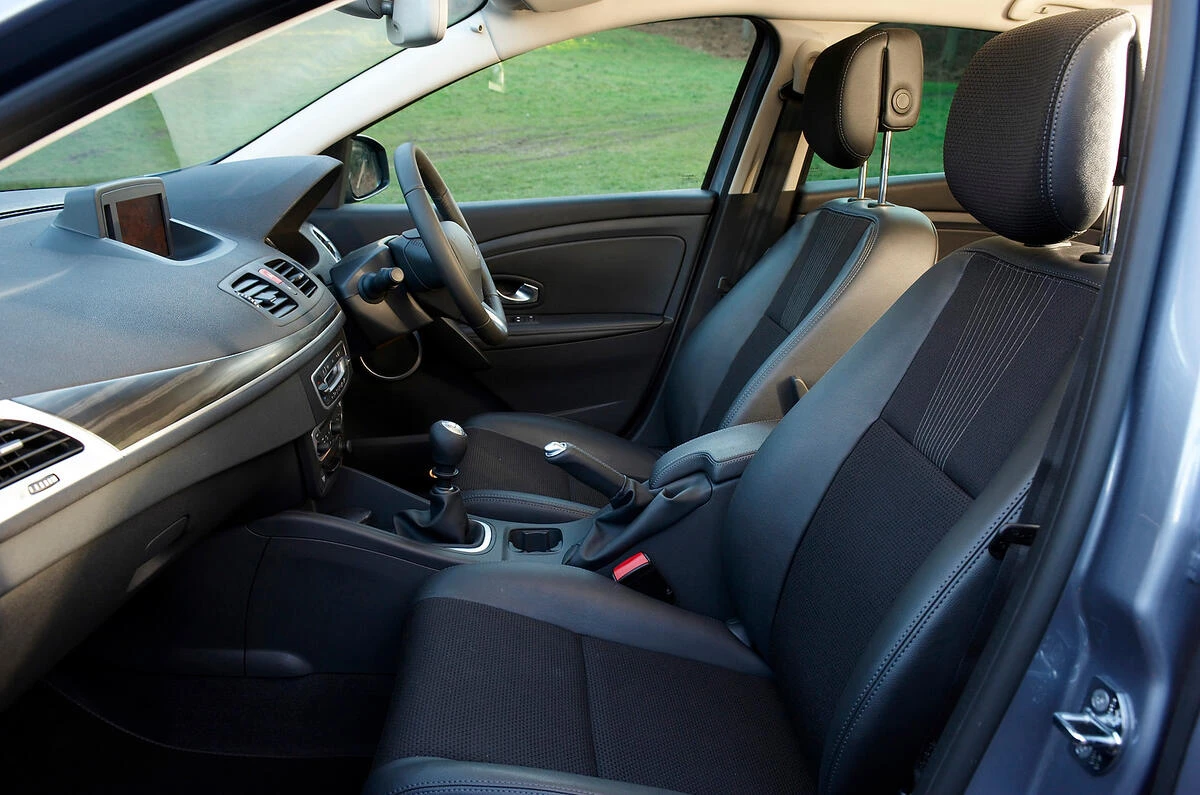
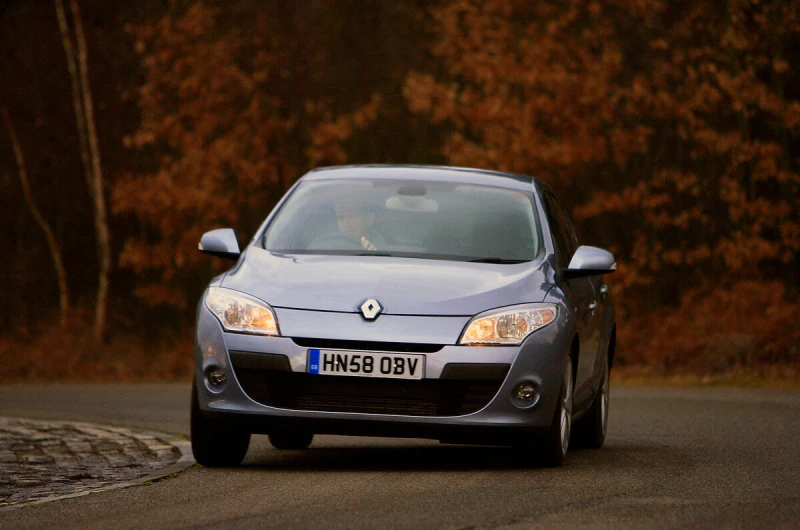
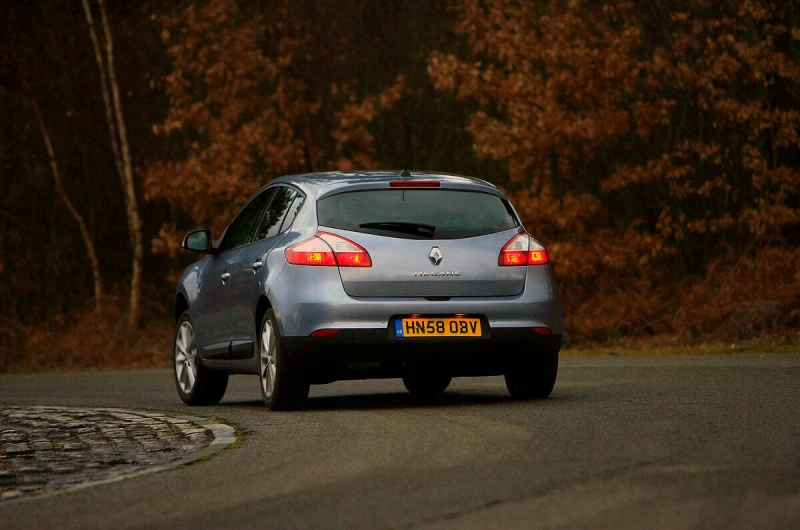
Signature design elements of the Renault Megane III generation come from Mathieu Lehanneur’s team: the signature "floating" rear deck, boomerang-shaped lights and flowing side creases that create a strong sense of motion. The cabin felt contemporary with soft-touch materials, an optional touchscreen, and supportive seats. Powertrain choices were wide: gasoline engines from the 1.2 TCe (100 hp) up to the 2.0 (140 hp), plus 1.5 dCi diesels (85–110 hp) and 2.0 dCi units (150–160 hp). Gearboxes ranged from 5/6-speed manual to 4-speed classic automatic or the 6-speed EDC dual-clutch. Safety earned 5 Euro NCAP stars, with six airbags, ESP and ABS standard.
Overall, the Renault Megane III marked an evolution from the bold, quirky second generation toward a more mature, comfortable and refined compact – perfectly suited to American buyers looking at well-kept European imports.
What’s new compared with the previous generation
The jump from Megane II to III was substantial. Where the previous model was an edgy, avant-garde design statement, the third generation adopted smoother, more polished lines while packing far more technology. The new C-platform stretched the wheelbase by 100 mm, improving rear legroom by roughly 10%. Body stiffness rose 20%, the suspension tuning became more comfort-oriented (with optional adaptive damping), and the center of gravity dropped 15 mm for better stability.
Styling moved from angular aggression to flowing elegance – floating trunk lid, available full-LED lights, drag coefficient improved to 0.28. Inside, hard plastics gave way to soft surfaces, while higher trims gained a 7-inch R-Link touchscreen with navigation, Bluetooth and USB. Cabin quietness improved markedly (+15 dB better sound insulation), front seats could be had with massage function, and dual-zone climate control became common. Engine lineup featured the new Energy family – the 1.2 TCe delivered similar power with ~20% lower fuel consumption, late dCi diesels met Euro 6 with AdBlue, and the EDC dual-clutch replaced the old torque-converter automatic. Active safety jumped from 4 to 5 Euro NCAP stars with standard side-curtain airbags, blind-spot monitoring and ESP.
Compared with the 2002–2009 model, the Megane III was more fuel-efficient (average consumption down ~1 L/100 km), roomier and structurally more durable. On the used market it remains appreciated for long-distance cruising and family practicality.
U.S. used-car market in 2025
In 2025 the Renault Megane III remains a niche but interesting used import, especially on the coasts where European cars are more common. Most examples are 2010–2016 gray-market imports from Western Europe with 90,000–160,000 miles. The 1.5 dCi diesel variants are prized for 45–55 mpg highway figures, while the Grandtour estate appeals to buyers needing serious cargo space.
Approximate market price range (U.S. West/East Coast private sale, early 2026):
- Early 2009–2010 models (1.6 petrol, manual): $5,500–$7,500
- Mid-range 2011–2013 (1.5 dCi, EDC): $8,000–$10,500
- Well-kept 2014–2016 facelift models (1.5 dCi): $10,500–$13,500
- GT Line or loaded Grandtour examples: $12,000–$16,000
The 1.5 dCi (90–110 hp) accounts for the majority of desirable imports thanks to excellent fuel economy (annual maintenance roughly $400–700). Hatchbacks dominate (~70%), estates ~25%. Cars usually sell within 30–60 days when priced realistically, but a thorough pre-purchase inspection is essential – roughly 25–30% of imports have taxi or fleet history.
Main trims & specifications commonly seen in the U.S.
Most Megane III examples reaching the United States arrived in one of these typical trim levels (adapted from European spec):
- Authentique / Expression (base) – manual A/C, front power windows, basic audio, ABS+ESP, six airbags, 15-inch steel wheels. Simple and durable.
- Dynamique / Confort – auto climate, cruise control, multifunction steering wheel, 16-inch alloys, rain/light sensors, Bluetooth, rear power windows. The sweet spot for value.
- Privilege / Luxe – dual-zone climate, rear parking sensors, xenon/LED headlights, leather steering wheel, 17-inch alloys, R-Link navigation. Often includes heated seats and washer jets.
- GT Line / flagship (from 2012) – sport body kit, firmer or adaptive suspension, panoramic roof, Bose audio, keyless entry/start. Rare in the U.S. but highly sought after.
On the used market the most common desirable combination is a Dynamique-spec 1.5 dCi with full power equipment and navigation. Grandtour models in Privilege trim are ideal for small families thanks to the huge cargo area and roof rails.
Final verdict
The Renault Megane 2008–2016 remains an attractive used buy for buyers who want European character at an accessible price:
- Families – spacious cabin, huge estate load area, 5-star safety rating.
- City & suburban drivers – compact 14 ft length, agile handling, 35–50 mpg depending on engine.
- Long-distance cruisers – frugal diesels can easily cover 900+ miles per tank.
For $8,000–$12,000 you can get a comfortable, well-equipped compact that undercuts equivalent-year Golf or Focus models while offering lower routine maintenance costs (parts typically 40–60% less than VW). In 2025/2026 the model still holds up well for fuel savings and decent resale when properly maintained.
Pre-purchase checklist:
- 1.5 dCi diesels – check turbo and EGR for smoke, verify service records (timing belt & DPF history critical).
- EDC dual-clutch – test for jerky shifts (clutch pack / mechatronic repairs ≈ $1,000–$2,000).
- Body – inspect sills and underbody for rust (especially salt-belt cars), check accident history with Carfax / thickness gauge.
- Electronics – R-Link system can glitch (software update usually ~$150).
With a clean example and proper due diligence, the Renault Megane III delivers distinctive French style, strong comfort and excellent economy – still a clever choice in the compact used-car segment.