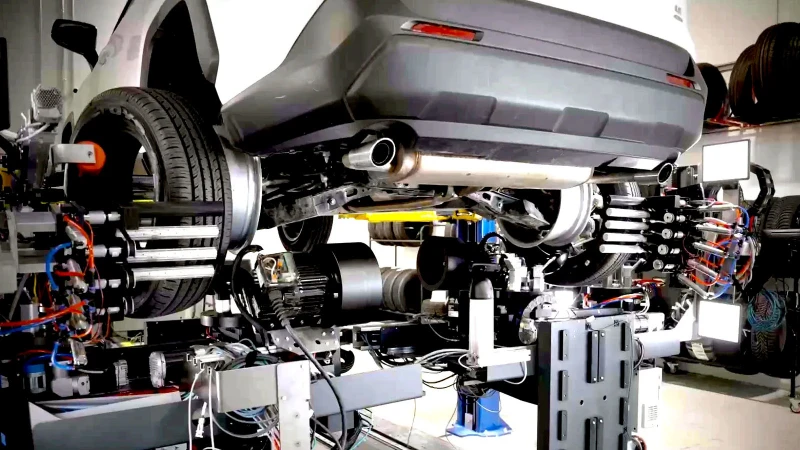
One of the latest examples is the SmartBay complex developed by Automatic Tire Inc. The system is designed for automatic tire replacement and wheel balancing with minimal human involvement.
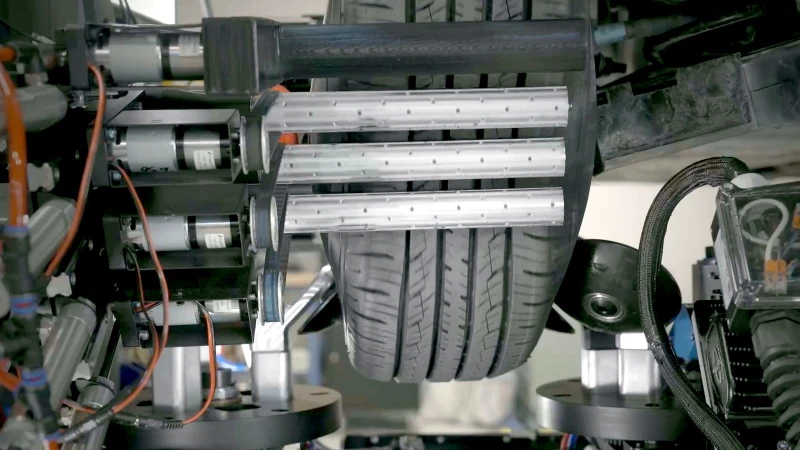
The key feature of the technology is the robot's ability to perform most operations without removing the wheel from the vehicle. This approach is intended to reduce service time and increase the productivity of tire service centers.
How the SmartBay System Works
The operating principle of the complex differs from traditional tire service. The vehicle is placed on a lift, after which the system independently begins work on the tire. At the same time, the wheel rim remains secured to the hub.
In the standard procedure, a mechanic removes the wheel, loosens the fasteners, dismounts the tire, performs balancing, and then reinstalls everything. SmartBay automates the majority of these actions.
The main functions of the system:
- tire removal and installation without removing the wheel from the vehicle;
- automatic balancing;
- monitoring the condition of the brake system;
- inspection of suspension components;
- diagnosis of certain additional faults.
The complex uses software incorporating elements of artificial intelligence. The system analyzes vehicle parameters and selects the optimal service algorithm for different types of wheels and tires.
Service Speed and Productivity
According to the developers, the full vehicle service cycle takes approximately 30 minutes. During this time, the robot performs replacement of all tires, balancing, and basic diagnostics.
At the same time, the company focuses not only on the speed of a single operation but also on the potential for scaling. One operator can simultaneously oversee the work of three SmartBay complexes.
In theory, this allows for a significant increase in the service facility's throughput. With round-the-clock operation, several units can service dozens of vehicles per day without the need to expand the mechanic staff.
The developers note that the technology is aimed primarily at improving the efficiency of service centers where there is a shortage of qualified personnel.
Project Economics
Automatic Tire Inc. offers the system not for sale but on a subscription model. The rental cost of one complex is approximately $4,900 per month.
For small service centers, such an amount may prove significant, especially considering additional expenses for premises, personnel, and equipment maintenance.
However, large tire service center chains may benefit from high productivity and reduced customer service times.
Automation in the Automotive Service Sector
Tire service is considered one of the most suitable areas for implementing automated systems. The procedure involves repetitive operations that are relatively easy to standardize.
At the same time, a complete replacement of automotive mechanics remains unlikely for now. Modern vehicles consist of numerous complex systems, and the diagnosis of non-standard faults still requires experience and specialist involvement.
Nevertheless, individual processes are already gradually transitioning to automated solutions. Such technologies can be used not only to increase work speed but also to reduce the load on personnel.
What May Change in the Future
The emergence of such systems shows that automation of automotive service maintenance is reaching a new level. If the technology proves economically viable, similar complexes may begin to be used in large tire centers and dealership service centers.
At the same time, the development of artificial intelligence allows robotic systems to gradually expand their range of functions — from tire replacement to diagnosing the technical condition of the vehicle.
At this stage, SmartBay remains specialized equipment for a specific type of work; however, the trend itself indicates a gradual change in conventional processes in automotive service.