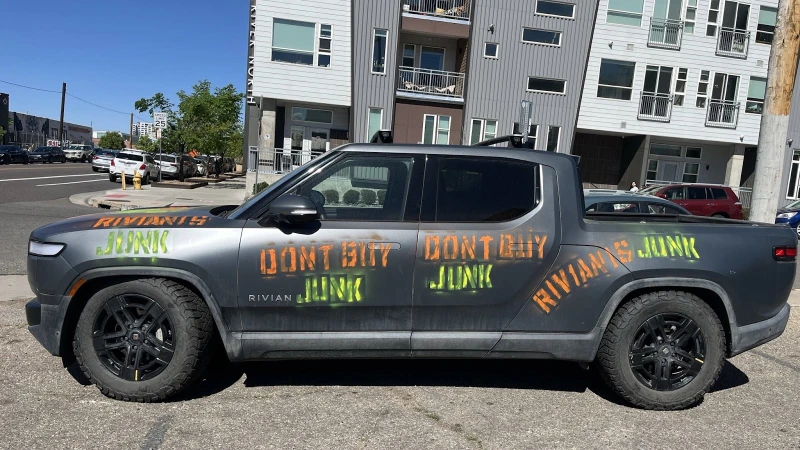
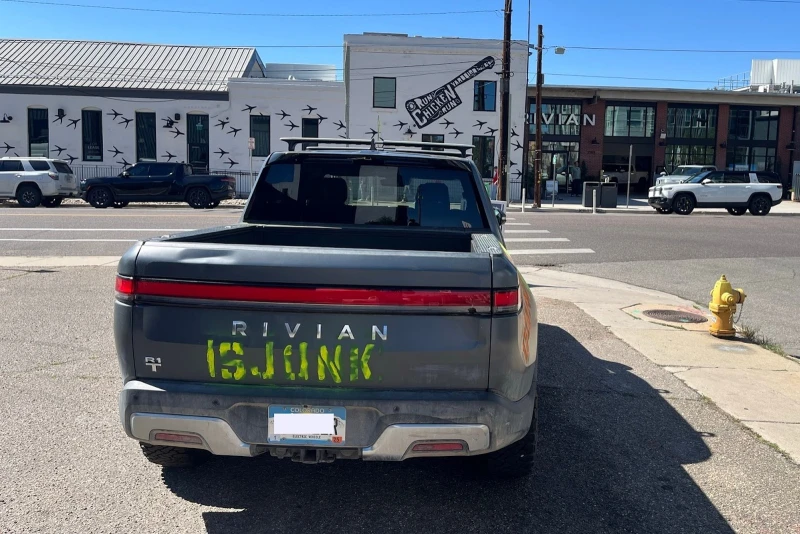
The matter extends beyond technical faults to include the manufacturer’s handling of customer complaints. The situation drew widespread public attention after the owner placed large warning messages on the vehicle’s body and launched a dedicated website documenting the issues.
Why Vehicles from Startups Carry Additional Risks
Rivian is one of the newer automotive companies that entered the market through the development of electric vehicles. Such manufacturers frequently introduce innovative solutions, contemporary design, and unconventional packaging. At the same time, the buyer effectively becomes an early user of a still-maturing technical platform.
These brands generally have less experience with high-volume serial production than established automakers, and their service networks are less extensive. As a result, even a relatively minor fault can develop into a significant problem: authorized centers are not available in every location, not all independent workshops are prepared to service such vehicles, and work performed outside official channels may affect warranty coverage.
What the Rivian R1T Represents
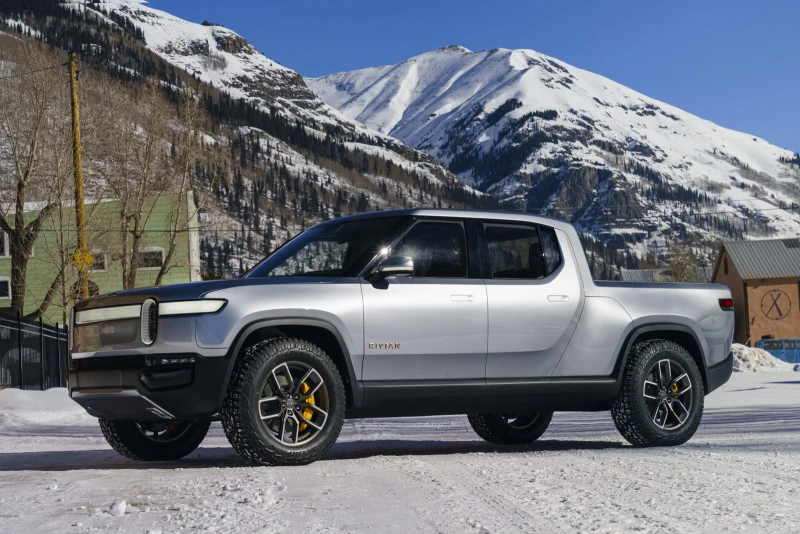
The Rivian R1T was the company’s first production model. This electric pickup truck was offered with multiple powertrain configurations, ranging from two to four electric motors. One of the model’s distinctive features is the transverse storage compartment located behind the rear doors and spanning the full width of the body.
This layout gave the vehicle a recognizable profile but also added complexity to the body structure. The rear section features an unconventional side-panel design, meaning even minor damage can lead to costly repairs. For owners this is particularly relevant, as the range of available service solutions remains considerably narrower than for mass-market brands.
Problems Described by the Owner
Central to the story is owner Jake Brans, who purchased the Rivian R1T approximately two years ago. He stated that he initially received the vehicle in a configuration that did not fully match his order but agreed to accept it. A series of technical and operational issues followed.
Among the reported faults, the owner lists unusual noises from the powertrain, interior trim components coming loose, rusting tow eyes, vibrations in the steering wheel and body, as well as instances of the automatic emergency braking system activating without an apparent cause.
A separate point of contention involved the 12-volt battery. According to the owner, after its failure the manufacturer quoted approximately $1,000 for replacement, attributing the issue to the vehicle having remained stationary for 15 days.
Why the Dispute Became Public
The main factor that escalated the conflict was problems with the steering system. The owner maintains that these issues rendered the vehicle unsafe to operate, leading him to leave the pickup at a dealership in Denver in the summer of 2025. Rivian, he stated, did not agree with his assessment of the vehicle’s condition.
Afterward, the owner applied warning inscriptions to the body advising against purchase and created a website with a detailed account of his experience. Because the pickup remained visible to the public, the situation attracted media coverage. The owner continues to make payments on the vehicle, which has resulted in legal proceedings.
Reputational Implications for Rivian
For Rivian such cases are particularly sensitive. As a young brand, it depends on customer trust, and the quality of its early production models directly affects its reputation. Additional context is provided by reliability evaluations: Consumer Reports assigned the R1T a low predicted-reliability score of 18 out of 100.
Furthermore, the R1T pickup and the related R1S SUV have drawn the attention of the U.S. regulator NHTSA over reports of mechanical issues. This increases the weight of individual complaints, as they cease to be merely private disputes between owner and manufacturer.
Connection to Volkswagen
The situation carries relevance beyond Rivian itself. The Volkswagen Group has made substantial investments in its partnership with the American company and plans to utilize its software and technical solutions. Public disputes over Rivian’s quality and service may therefore also have implications for the brand’s partners.
Conclusion
The Rivian R1T case demonstrates that purchasing a vehicle from a young automotive brand can involve not only technical advantages but also additional risks. For the buyer, design, range, and power are important, yet so are build quality, service accessibility, and the manufacturer’s approach to resolving contentious situations. In this instance, the combination of reported faults and the subsequent conflict over servicing transformed a private complaint into a visible reputational issue.