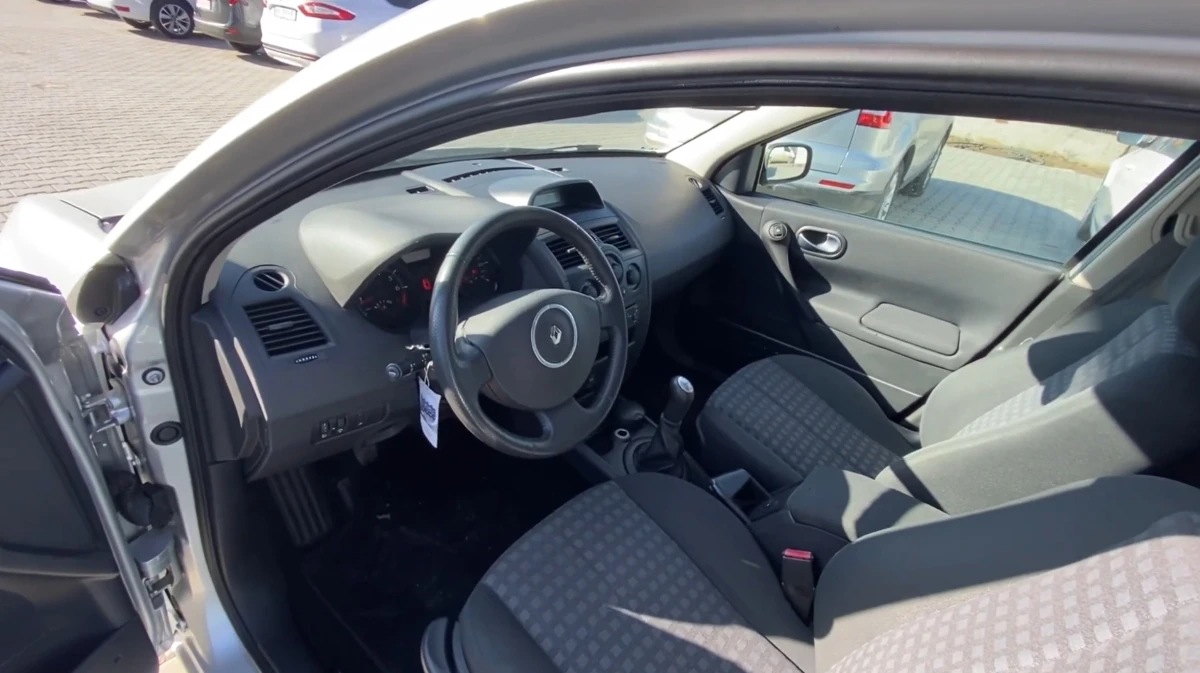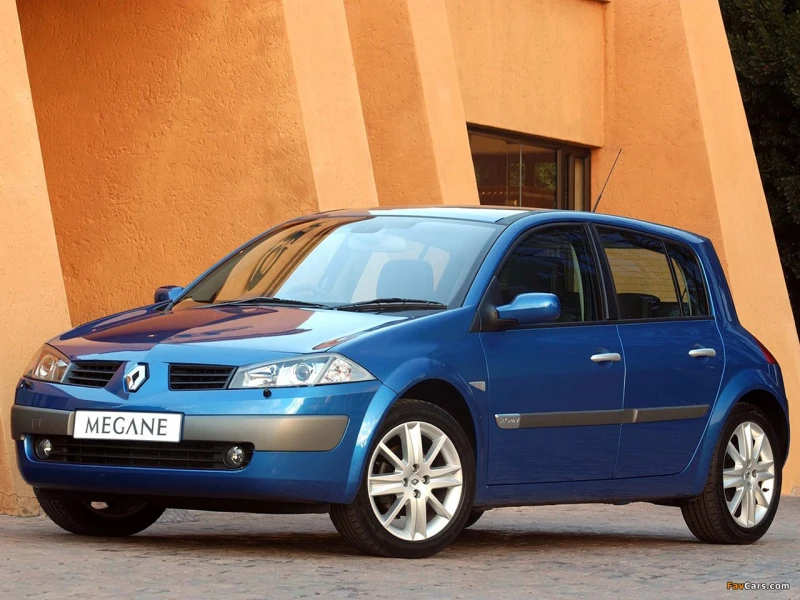
This generation, known internally as Mk2 or Typ X84, was unveiled at the 2002 Paris Motor Show and remained in production until 2009, receiving a significant facelift (Phase 2) in 2006.
Built on the innovative Nissan C platform (shared across Renault and Nissan models), it offered markedly improved handling, better interior space and a more rigid structure. Body styles included 3- and 5-door hatchbacks, a notchback sedan (from 2003), the spacious Grandtour wagon, and the innovative CC retractable hardtop coupe-cabriolet. The avant-garde exterior — sharp angles, dramatic rear haunches, and unique “eyebrow” headlights — made it one of the most polarizing and instantly recognizable cars of the early 2000s. It came with front-wheel drive, a wide range of gasoline and diesel engines, and earned a maximum 5-star Euro NCAP crash rating.
While primarily a European model, examples (especially post-facelift diesels) have found their way to the United States through gray-market imports and enthusiast channels. In 2003 the Megane II was named European Car of the Year, underlining its bold design and technical advances.
What Changed Compared to the First Generation
The jump from Mk1 (1995–2002) to Mk2 was massive. Gone were the soft, rounded shapes — replaced by edgy, architectural lines and a distinctive “big butt” rear end (especially on the 5-door hatch). Love it or hate it, no one forgot it.
The wheelbase grew (up to 2686 mm on the sedan), trunk capacity increased (520 liters in the sedan), and the cabin felt noticeably roomier. New features appeared: rain-sensing wipers, automatic headlights, cruise control, bi-xenon lights, and optional navigation. Noise insulation, material quality and ergonomics all took a big step forward.
Safety became class-leading: 5 Euro NCAP stars (vs 4 for the previous model), stronger body, up to 8 airbags, and standard ABS + EBD. Engine lineup included gasoline units 1.4–2.0 L (98–136 hp) and modern common-rail diesels 1.5–1.9 dCi. Transmissions were 5/6-speed manuals or the 4-speed DP0 automatic (later known for overheating issues when not serviced properly).
Used Market in the United States – Late 2025 / Early 2026
Renault Megane II remains a rare, enthusiast-oriented find in the U.S. used market. Most examples are gray-market imports, particularly the post-2006 facelift cars with the 1.5 dCi or 2.0 gasoline engines. Availability is limited compared to Honda Civic, Toyota Corolla or VW Golf of the same era, but prices reflect the scarcity and condition.
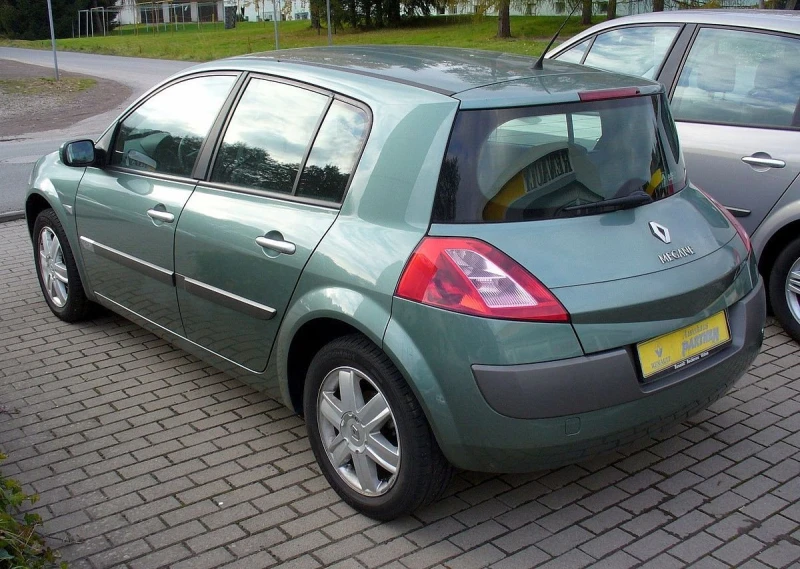
Approximate market price range (U.S. listings, imported examples, early 2026): $4,500–$7,500 for average-mileage, fair-to-good condition cars → $9,000–$13,500 for clean, lower-mileage, well-equipped facelifted models (especially diesels or wagons). Average realistic transaction price sits around $6,000–$9,000. The frugal 1.5 dCi diesel (often 40–48 mpg highway) and practical sedan/wagon variants attract the most interest among importers and Euro-car fans.
| Body Style | Approximate Price Range, USD | Popularity |
|---|---|---|
| Hatchback | $4,500–$8,500 | Moderate |
| Sedan | $5,500–$10,000 | High (practical) |
| Wagon (Grandtour) | $6,500–$11,500 | High (family) |
| Coupe-Cabriolet (CC) | $7,000–$13,000 | Low (rare) |
Common Trims & Equipment Seen in the U.S.
Most U.S.-market examples are European-spec cars in mid-to-high trims: Expression / Dynamique / Privilege / Extreme (post-facelift).
Base models usually have: air conditioning, power windows, ABS, 2–4 airbags, basic audio.
Mid/high trims typically add: climate control, alloy wheels, cruise control, rain/light sensors, parking sensors, bi-xenon headlights, leather, premium audio. The 1.5 dCi diesel + Dynamique / Extreme packages with good equipment are especially sought after for their balance of economy and features.
Final Verdict
The Renault Megane II remains an intriguing, characterful choice for buyers looking for something different in the used compact segment. It offers sharp looks, comfortable ride (classic French suspension tuning), excellent safety credentials, and — in diesel form — impressive fuel economy.
Strong points: 5-star safety, spacious interior (especially wagon/sedan), low running costs on diesel, unique design. Watch out for: DP0 automatic transmission issues (if equipped), electrical gremlins, timing chain / injector problems on some gasoline engines, diesel EGR / injector wear, rust on neglected examples, and parts availability (often requires European suppliers or specialists).
With proper maintenance history and realistic expectations, a well-kept Megane II can still be a rewarding, affordable daily driver or weekend classic in 2026.