However, the company has decided to move toward full electrification. While the direction appears ambitious, its practical outcome raises several important considerations.
The End of the Gasoline Boxster and Cayman Era
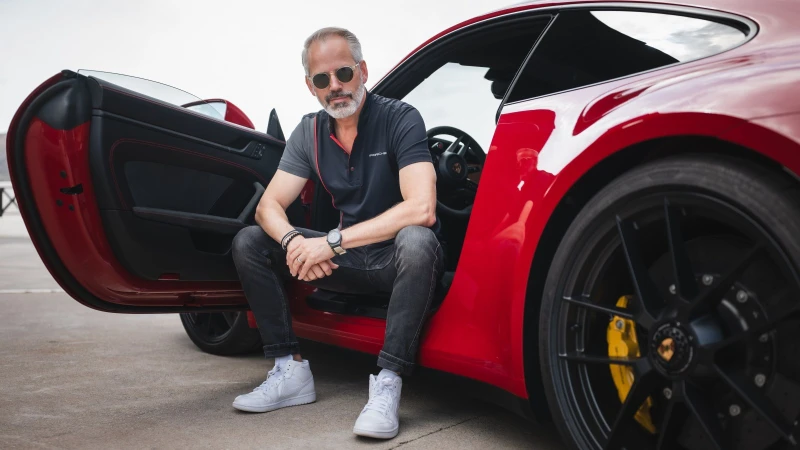
Porsche has officially announced that production of the classic Boxster and Cayman versions will cease. They will be succeeded by electric models. Development of these new vehicles has encountered challenges, with premiere timelines postponed on multiple occasions. At Zuffenhausen, there appears to be ongoing uncertainty regarding the exact timing of the final presentation. Nevertheless, management has expressed confidence that the resulting vehicles will be standout models, as stated by Frank Moser, who oversees development of the 911 and 718 model lines.
The Primary Challenge: Weight and Batteries
Light weight and dynamic performance remain defining qualities of a sports car. Electric vehicles do not always achieve this combination. For reference, the compact Fiat 500e weighs 1,440 kg with a 42 kWh battery. This capacity is roughly equivalent to 11 liters of fuel and yields a range of approximately 300 km under relaxed driving conditions. A Porsche model would require considerably more energy.
A battery pack in the 100–200 kWh range may seem attractive but would add substantial mass to a compact coupe. Without lightness, the vehicle loses a core element of its sports car identity. Engineers have indicated an optimal weight-to-power balance, yet achieving it will be critical.
Sound and Driving Experience
Dynamics are essential, but Porsche has long been associated with emotional engagement. The sound of the boxer engine and its characteristic vibrations form part of the brand’s DNA. Electric vehicles do not produce these characteristics. Synthetic sound can be generated through speakers, yet it remains a simulation. Enthusiasts may view this as an incomplete substitute.
Pricing Considerations
Some expect electric vehicles to be more affordable. In practice, the cost of batteries suggests the new Boxster and Cayman will command higher prices than their gasoline predecessors. Pricing continues to be a significant factor in this segment. Comparisons with hypercars such as the Rimac Nevera are not directly relevant, given differing target audiences and price sensitivity. For mainstream sports cars, the economics carry greater weight.
Artificial Intelligence in Development
Porsche made extensive use of artificial intelligence during development of the electric Cayenne. Virtual testing reduced the number of physical prototypes by approximately 120 and accelerated the process by 20 %. The resulting gains in time and resources are clear. The question remains whether digital modeling can fully replicate the sensations of actual vehicle control. The comparison is akin to a robot describing the taste of cake — technical details can be conveyed, but the complete experiential dimension may differ.
What This Means for Sports Cars
For SUVs this methodology may be acceptable, as buyers are typically less focused on subtle nuances. For the Boxster and Cayman, reliance on virtual development could be more consequential, given the emphasis on precise steering feedback and throttle response.
Conclusion
Porsche is undertaking a major transition with its electrification strategy. The company is phasing out established gasoline-powered sports cars and positioning electric models as the new direction. Driving emotions have historically been central to the Porsche experience, frequently outweighing specification data alone. Whether a floor-mounted battery system can provide a comparable level of engagement will be determined in the years ahead.