


The development focuses on more efficient utilization of energy that is partially lost in modern engines, despite their high level of technical sophistication. This involves not cosmetic refinements, but a reevaluation of the fundamental approach to managing excess exhaust gas energy.
The Issue of Excessive Turbocharging Efficiency
Modern turbochargers can generate pressure exceeding the optimal limits for stable and durable engine operation. To prevent overloads, engineers must artificially reduce turbocharging efficiency. As a result, a significant portion of the energy in exhaust gases remains unused and is simply dissipated.
This approach not only lowers the overall efficiency of the powertrain but also limits the potential for further development of gasoline and hybrid engines, particularly under tightening environmental regulations.
Expander Instead of Energy Loss
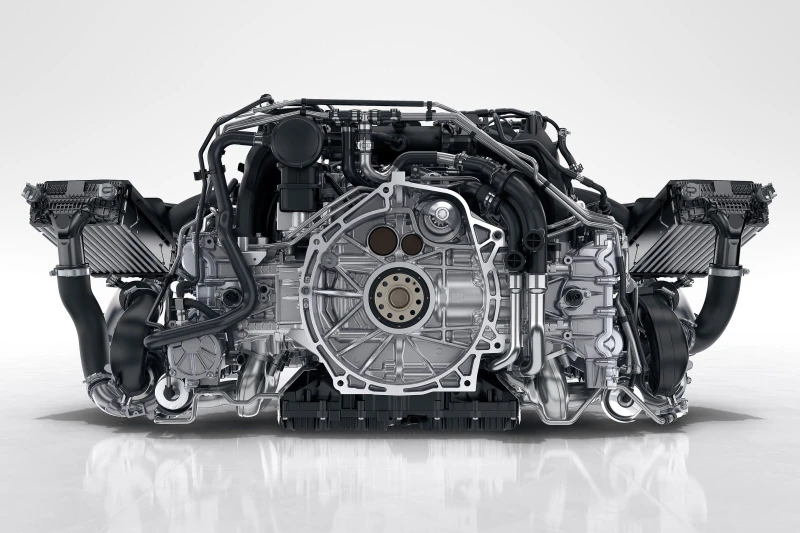
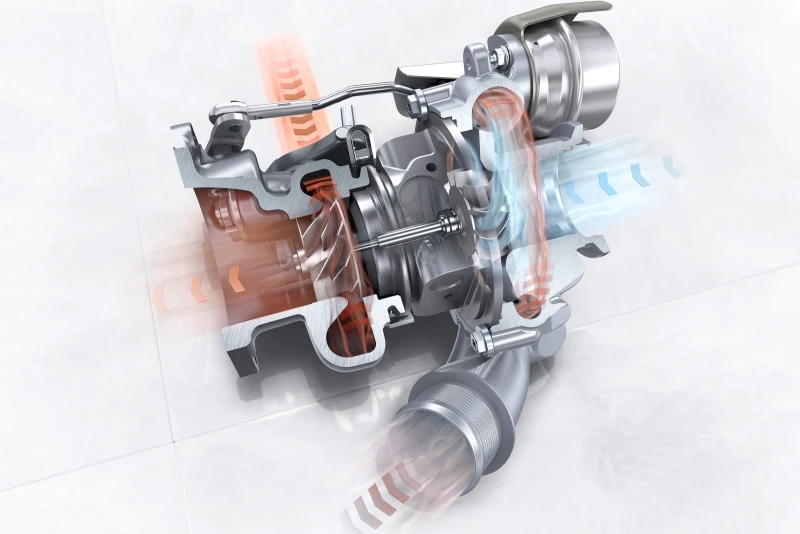
The new Porsche patent describes the use of an additional expander turbine, inspired by industrial waste heat recovery systems. This component is proposed to be placed between the intercooler and the engine. Unlike a conventional turbocharger, it operates in reverse: it takes in hot compressed air and outputs cooled and less dense flow.
The key feature of this solution is that during air expansion, the system generates additional mechanical or electrical energy. In principle, it resembles a miniature power plant integrated into the vehicle's power unit.
Applications for the Generated Energy
The produced energy can be utilized in several ways. It may power an electric turbocharger compressor, improving engine responsiveness. It could also be stored in batteries or used to increase boost pressure without additional load on core engine components.
An added effect is the cooling and densification of air before delivery to the cylinders. This enables higher engine output without increasing displacement, while also improving fuel efficiency. Variable geometry vanes in the expander turbine allow precise adaptation to current driving conditions.
Implementation Prospects
Porsche emphasizes that the patent is not a theoretical exercise. The company views it as a foundation for future production powertrains with internal combustion engines. Practical implementation is expected to achieve better balance between performance, fuel consumption, and environmental metrics.
Conclusion
This new solution highlights Porsche's commitment to more rational energy use in traditional powertrains. Rather than abandoning ICE, the company prioritizes deep engineering optimization, which may extend the relevance of turbocharged engines in the coming years.