


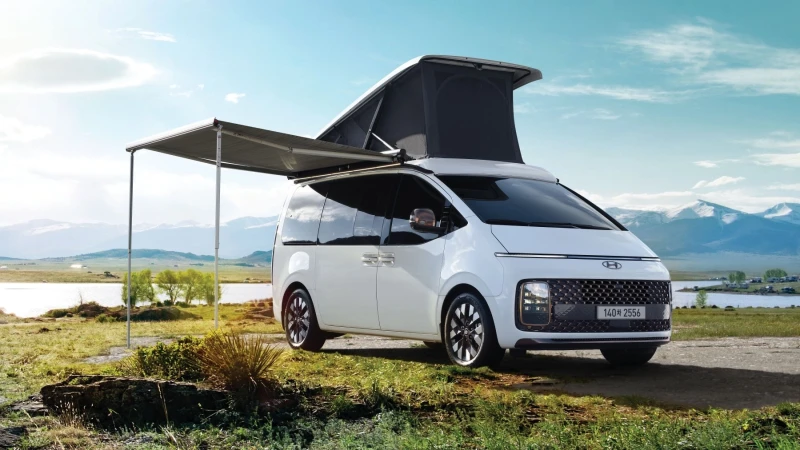
The project is presented as a demand study: the serial future of the model directly depends on the reactions of visitors and potential clients. The concept is designed to assess interest in the format of a compact electric camper based on an existing model.
Idea and Positioning
Staria Camper was shown shortly after the debut of the electric version of Staria and logically continues the development of the family. At the CMT exhibition in Stuttgart, Hyundai positioned this vehicle as a "premium recreational" version, focused on travel and autonomous rest. The focus is on combining electric drive, a living module, and an elevated level of comfort.
Living Equipment and Autonomy
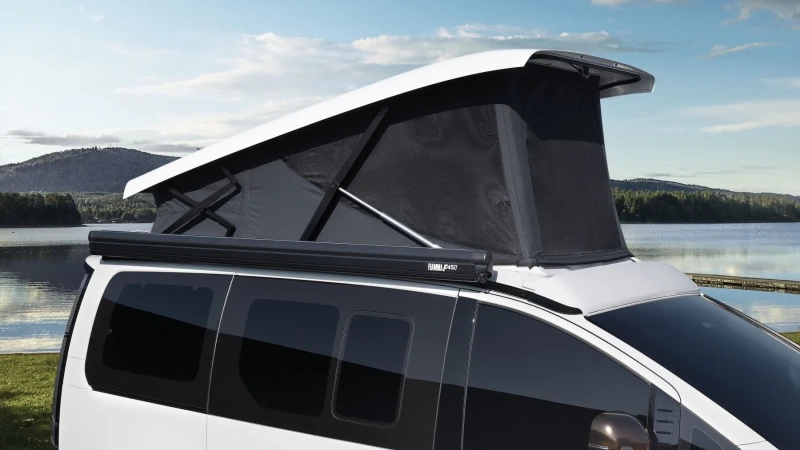
The concept features a fully integrated pop-up roof with electric drive. It includes a built-in solar panel with a capacity of 520 W, intended for autonomous power supply of onboard systems. Under favorable conditions, the system can generate up to 2.6 kWh of electricity per day.
The generated energy is used to operate:
- a kitchen unit with a 36-liter refrigerator;
- a shower system;
- climate control for the living space;
- lighting and auxiliary electronics.
This setup allows the vehicle to be used away from stationary power sources during short trips and stops.
Interior and Cabin Transformation
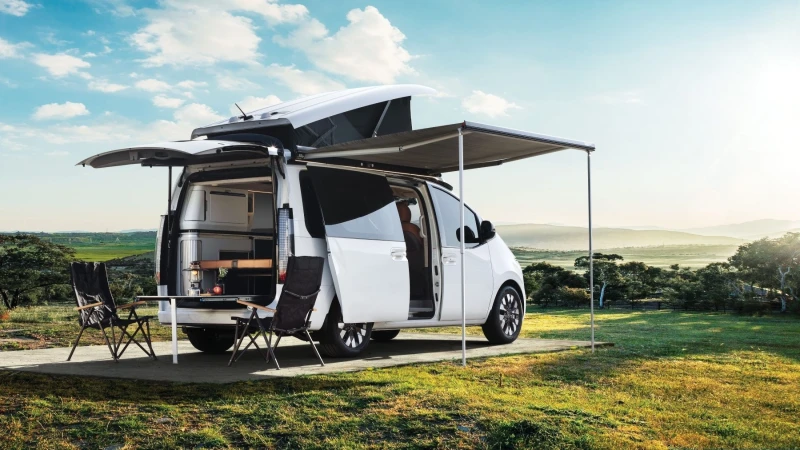
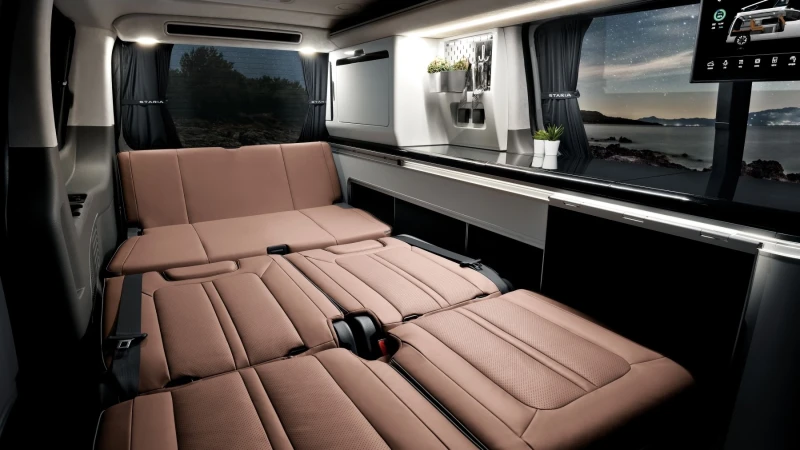
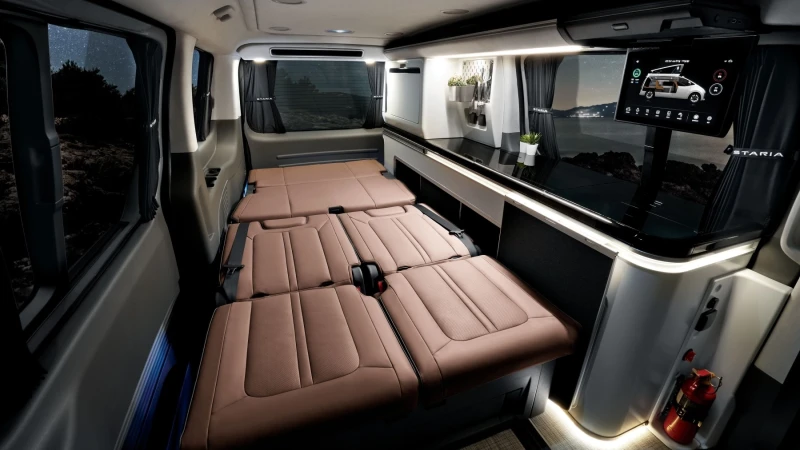
The Staria Camper interior is designed with flexibility in mind. The seats transform into a full sleeping area, and for privacy, both traditional curtains and rear windows with electronically adjustable transparency are provided. The front seats swivel to create a shared living space.
The equipment also includes numerous storage niches, foldable and extendable tables for use inside the cabin and outside, as well as a separate flip-down display at the rear of the body. It controls all functions of the camping module.
Technical Base
If the project receives the green light, the basis for the production version will be the Staria Electric. The electric MPV uses an 800-volt architecture and an 84 kWh battery, providing a range of up to 400 kilometers. The front axle is driven by a 160 kW electric motor.
The question of potential modifications to the powertrain for the heavier camping version remains open. Additional equipment and the living module will inevitably increase the vehicle's weight, which may require revisions to the settings.
Project Prospects
Hyundai emphasizes that the decision on serial production of the Staria Camper will be based on feedback from exhibition visitors. It is possible that the company will also consider alternative powertrain options, including hybrid versions, if the market deems the electric camper insufficiently versatile.
Summary
Staria Camper represents a conceptual attempt to combine an electric MPV and a compact camper in one product. The project clearly illustrates a possible direction for the model's development, but its further fate directly depends on audience interest and practical evaluation of this format.