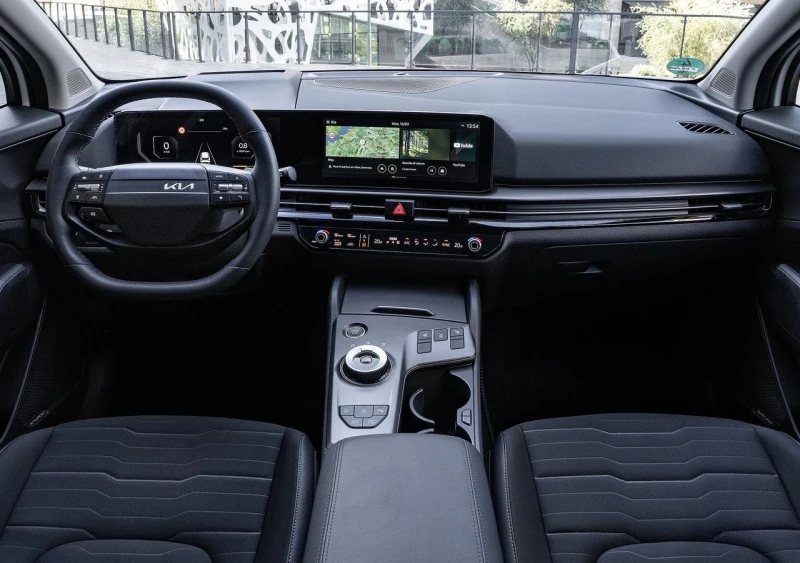
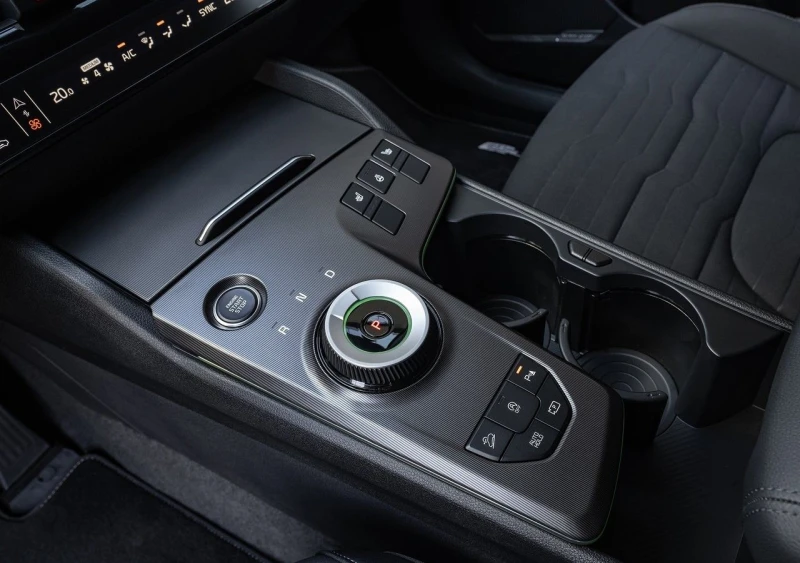
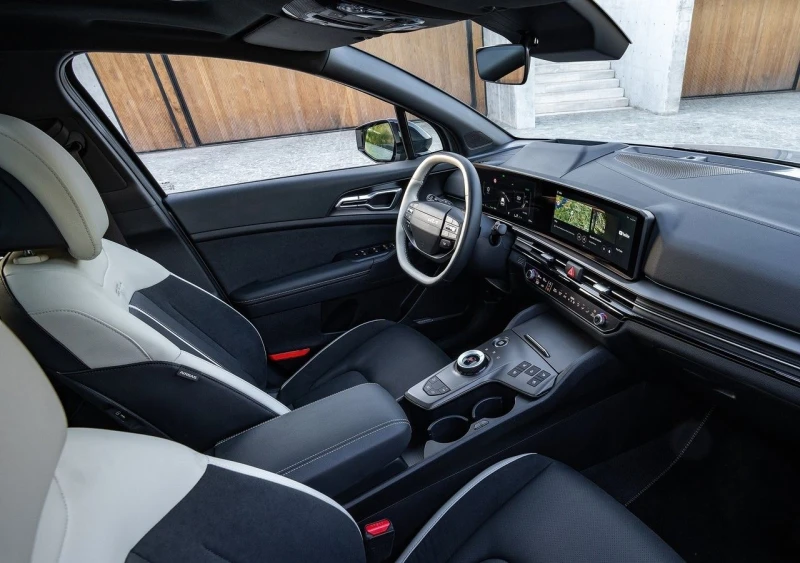
The U.S.-market fifth-generation Kia Sportage (NQ5) arrived for the 2023 model year with a much more digital cabin than its predecessor. Depending on trim and model year, the dashboard can pair a 12.3-inch digital instrument display with a 12.3-inch center touchscreen in a wide, curved layout. Lower trims use simpler instrumentation, while the 2026 refresh brings a 12.3-inch center touchscreen across the gasoline lineup and introduces Kia's newer connected-car interface on many configurations. The center console sits relatively high, with useful storage areas and controls positioned within easy reach of the driver.
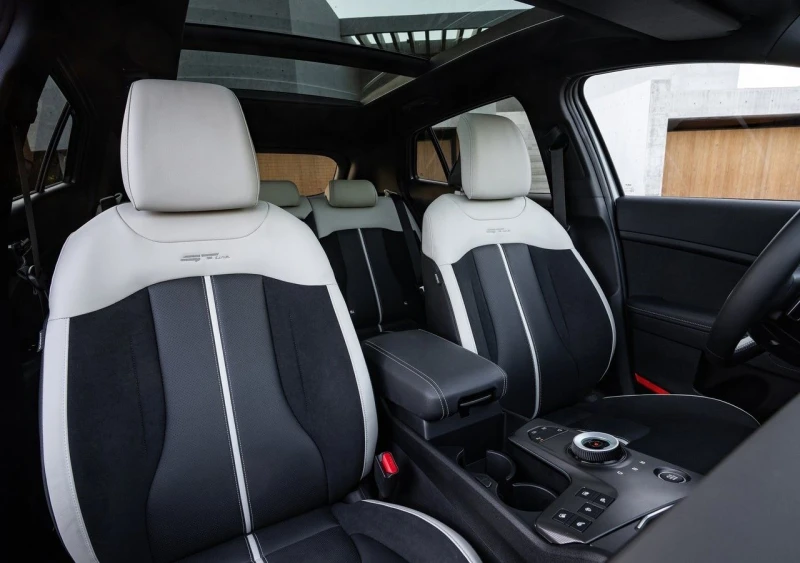
U.S. models emphasize cloth and Kia's SynTex synthetic upholstery rather than the leather-and-suede combinations offered in some other markets. The LX is the most basic cabin, while EX, X-Line, SX, SX Prestige and X-Pro-family trims add combinations of upgraded trim, power-adjustable seating, heated seats, memory settings, ambient lighting, a panoramic sunroof and premium audio depending on model year. Material quality is strongest on the upper dashboard, armrests and major touch points; harder plastics remain visible lower in the cabin, which is typical for the compact-SUV class.
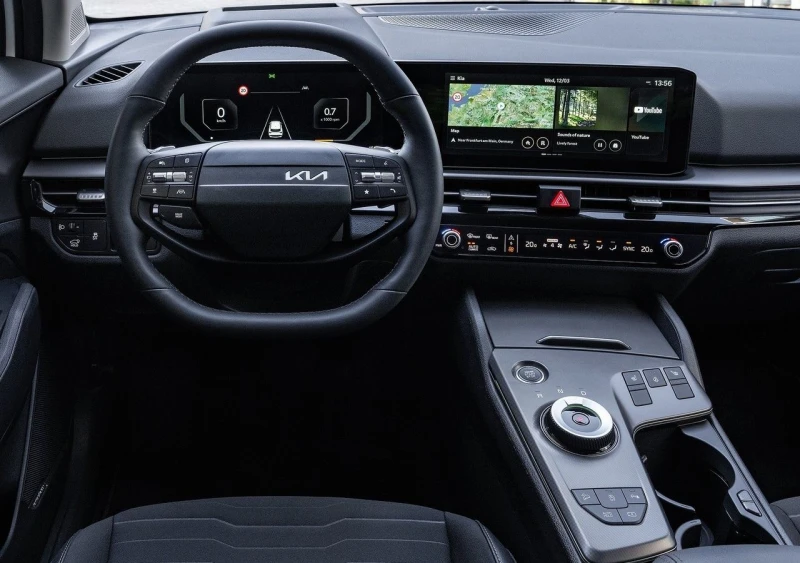
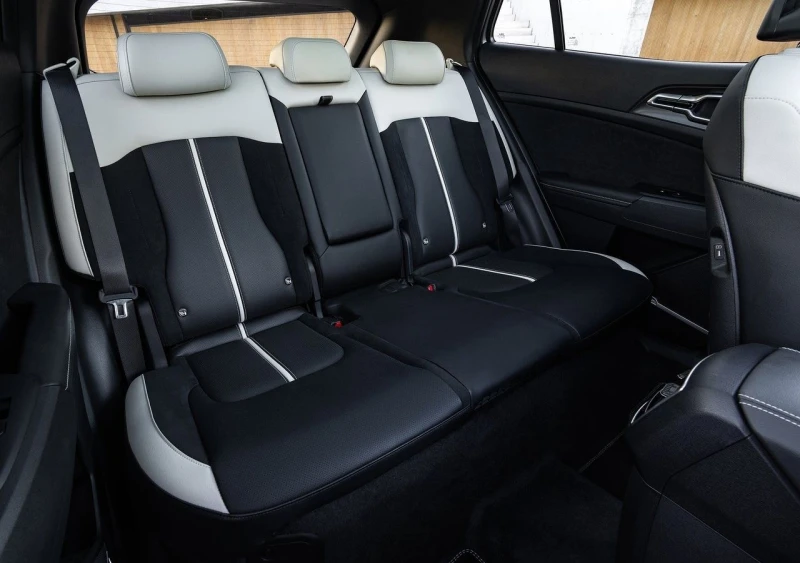
The driving position offers a broad range of adjustment, and upper trims add a 10-way power driver's seat with lumbar support. Rear-seat space is a major strength of the U.S.-spec long-wheelbase Sportage: rear legroom is about 41.3 inches, giving adults generous knee room. The rear bench also reclines and folds 60:40. Visibility to the front and sides is generally good, although the thick rear pillars can make the backup camera and available surround-view system especially useful in tight parking areas.
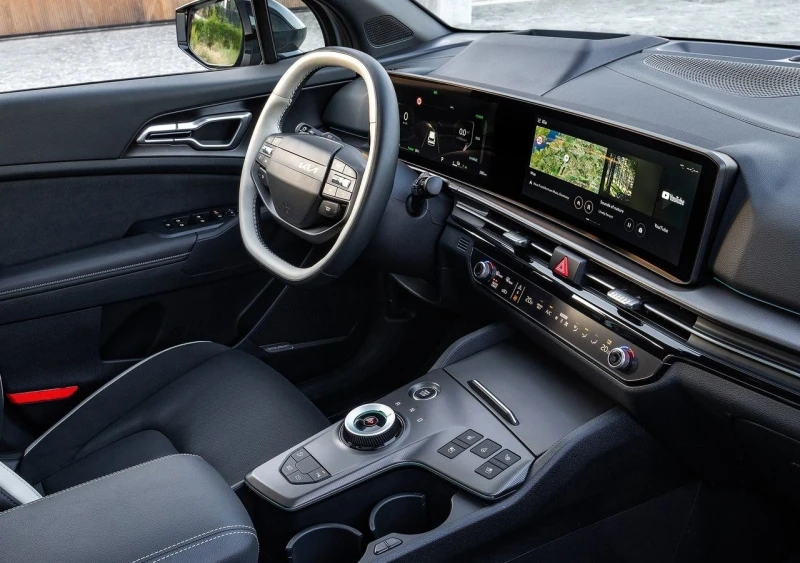
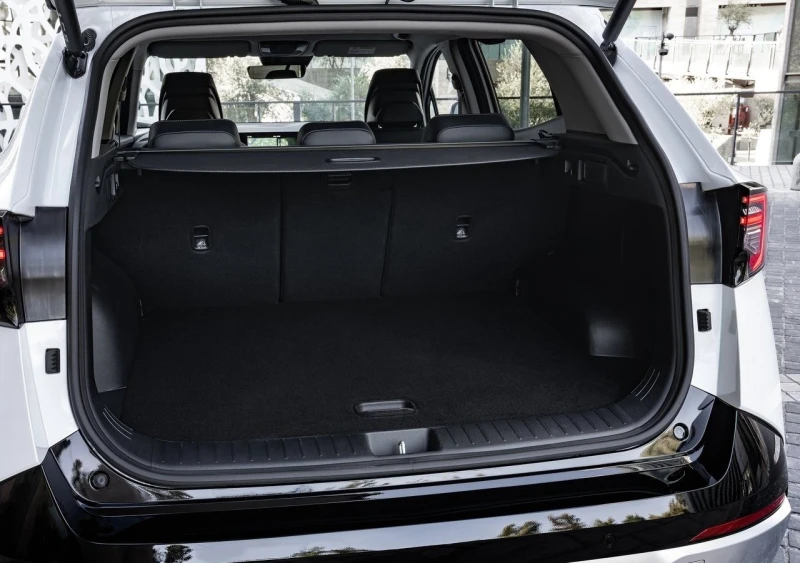
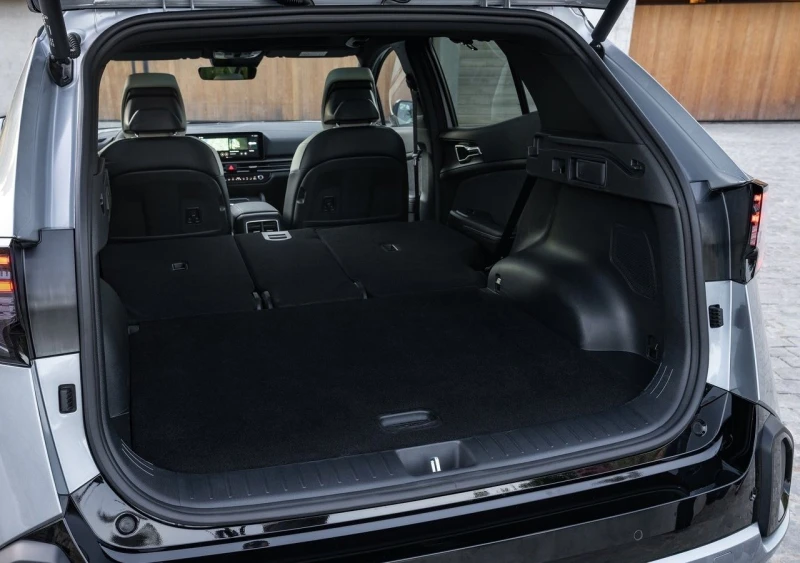
Gasoline versions offer up to about 39.6 cubic feet of cargo space behind the second row and up to 74.1 cubic feet with the rear seats folded when the dual-level cargo floor is in its lower position. Hybrid models are nearly as spacious, while plug-in hybrid packaging reduces cargo room somewhat. There is no front trunk on U.S.-market Sportage models. Practical touches include a dual-level cargo floor on many versions, bottle holders, multiple USB-C charging ports on newer configurations and available wireless phone charging.
U.S. trims and interior equipment
The U.S. trim structure differs substantially from versions sold in Europe, Ukraine and other markets. For 2023–2025 gasoline models, the main grades were LX, EX, SX, SX Prestige, X-Line, X-Pro and X-Pro Prestige. The 2026 gasoline lineup was revised to LX, EX, SX, SX Prestige, X-Line and X-Pro Prestige, while Hybrid and Plug-In Hybrid models use their own trim combinations.
| Trim group | Typical upholstery | Displays and media | Climate and comfort | Driver assistance | U.S.-market notes |
|---|---|---|---|---|---|
| LX | Cloth seating | 2023–2025 models use a smaller center display; 2026 upgrades to a 12.3-inch touchscreen | Manual front seats on most versions; heated seats may depend on year and package | Core systems such as forward-collision assistance, lane keeping and lane following | The simplest and most value-focused cabin in the lineup |
| EX / X-Line | SynTex synthetic upholstery | 12.3-inch center display on most versions; 2026 adds wireless Apple CarPlay and Android Auto with the newer system | Dual-zone climate control, heated front seats and available panoramic sunroof depending on trim/year | Blind-spot and rear cross-traffic systems are widely available or standard depending on version | X-Line emphasizes styling and standard AWD rather than a fundamentally different cabin layout |
| SX / SX Prestige / X-Pro family | Upgraded SynTex or SynTex Premium | Available dual 12.3-inch curved displays, Harman Kardon audio and richer camera interfaces | Available ventilated front seats, memory driver's seat, heated steering wheel and panoramic sunroof | Available Smart Cruise Control, Highway Driving Assist, Surround View Monitor and Blind-Spot View Monitor | Feature content varies by year; X-Pro versions add rugged styling and all-terrain-focused equipment rather than unique luxury materials |
For U.S. shoppers, the key distinction is not simply “base versus premium” but also model year and powertrain. A 2025 SX Prestige, for example, can have a different infotainment setup from a 2026 model with the refreshed ccNC-based interface. Hybrid and Plug-In Hybrid versions also use different trim combinations, so equipment should be checked against the VIN-specific window sticker or original build sheet.
Interior changes by model year
The U.S. fifth-generation Sportage started with the 2023 model year, not 2022. The major cabin changes are:
- 2023 — launch of the NQ5 generation in the U.S., with available dual 12.3-inch curved displays, new touch-sensitive climate/media controls and significantly more rear-seat and cargo space than the previous generation
- 2024 — largely a carryover year for the basic cabin layout, with trim and package adjustments rather than a redesign
- 2025 — EX gains an available Premium Package with features such as a panoramic sunroof and smart power liftgate; the overall dashboard design remains familiar
- 2026 — substantial refresh with a revised dashboard interface, 12.3-inch center touchscreen across the gasoline lineup, wireless Apple CarPlay and Android Auto, updated connectivity and revised trim packaging
The 2026 update is the meaningful dividing line for shoppers focused on infotainment. Earlier NQ5 models retain the original interface and control layout, while refreshed models adopt Kia's newer software architecture and broader wireless smartphone integration.
What to inspect in a used Sportage cabin
Rather than treating every cosmetic complaint as a known defect, it is more useful to inspect the condition and operation of the specific vehicle. Areas worth checking include:
- Seat bolsters and light-colored upholstery for staining, creasing or abrasion
- Gloss-black trim around the console and climate/media panel for scratches and fingerprints
- Dashboard, door panels and center console for rattles over uneven pavement
- Rear visibility and correct operation of the backup camera, parking sensors and available surround-view cameras
- Touchscreen responsiveness, Bluetooth, smartphone integration, USB ports and wireless charging if equipped
- Panoramic sunroof operation, seals and headliner for any sign of water intrusion on vehicles so equipped
Because equipment varies significantly by trim, powertrain and model year, a used Sportage should be checked feature by feature rather than judged only by the badge on the tailgate.
Interior verdict and current relevance
For the U.S. market, cabin space remains one of the fifth-generation Sportage's clearest strengths. The long-wheelbase body provides generous second-row room and one of the larger cargo areas among compact crossovers, while upper trims add technology that still feels contemporary in 2026.
Shoppers comparing used examples should pay particular attention to the infotainment generation. A well-equipped 2023–2025 Sportage can offer the dual-screen look, Harman Kardon audio, ventilated seats and advanced camera systems, while the refreshed 2026 models add the newer connected interface and standard wireless smartphone integration on compatible systems.
Before buying a used Sportage, it is worth checking:
- seat and upholstery condition, especially on light-color interiors
- rattles or trim noises during a road test
- operation of the instrument display, touchscreen and all charging ports
- camera, parking-sensor and driver-assistance functions fitted to the vehicle
- panoramic sunroof operation and signs of water intrusion, if equipped
Overall, the U.S.-spec Kia Sportage V (NQ5) offers a practical, spacious interior, but the exact mix of screens, comfort features and driver-assistance technology depends heavily on trim, powertrain and model year.