


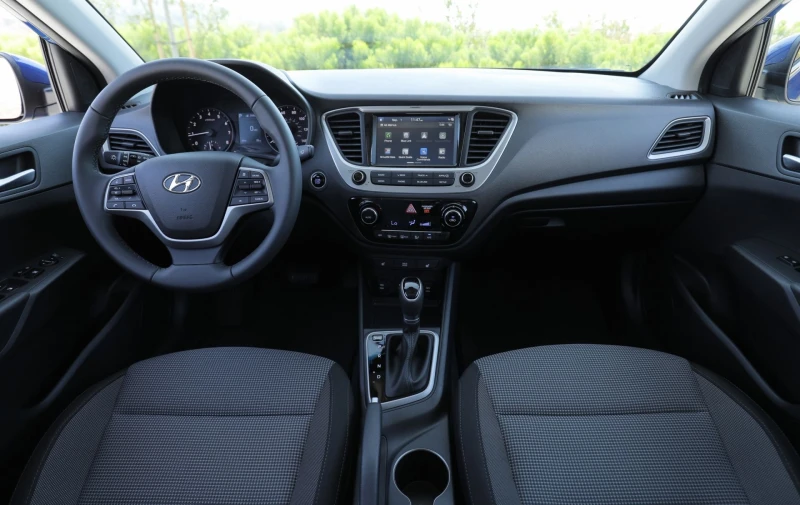
The fifth-generation Hyundai Accent sold in the United States from the 2018 through 2022 model years used a straightforward cabin designed around practicality rather than premium materials. The interior combines simple controls, durable-looking surfaces and enough everyday storage for a subcompact sedan. Equipment varies noticeably between the SE, SEL and Limited trims, especially in infotainment and convenience features. Exterior design, specifications and common mechanical concerns are covered in other articles in this series.
Cabin overview
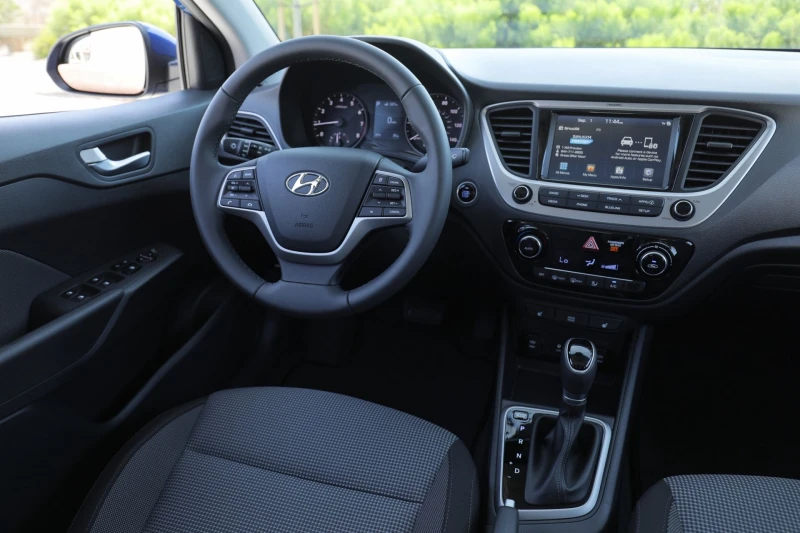
The Hyundai Accent interior uses a horizontally arranged dashboard with physical controls placed within easy reach of the driver. Hard plastic covers much of the dashboard and door panels, which is typical for the subcompact segment, while cloth upholstery is used across most U.S.-market versions. The design is functional and restrained, with a centrally positioned infotainment display and conventional climate controls below it. On higher trims, additional trim details and convenience equipment make the cabin feel better equipped without fundamentally changing its layout.
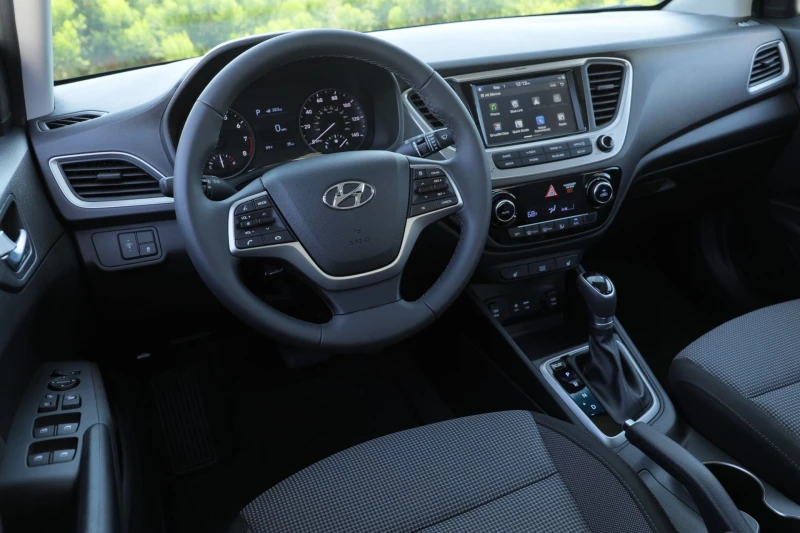
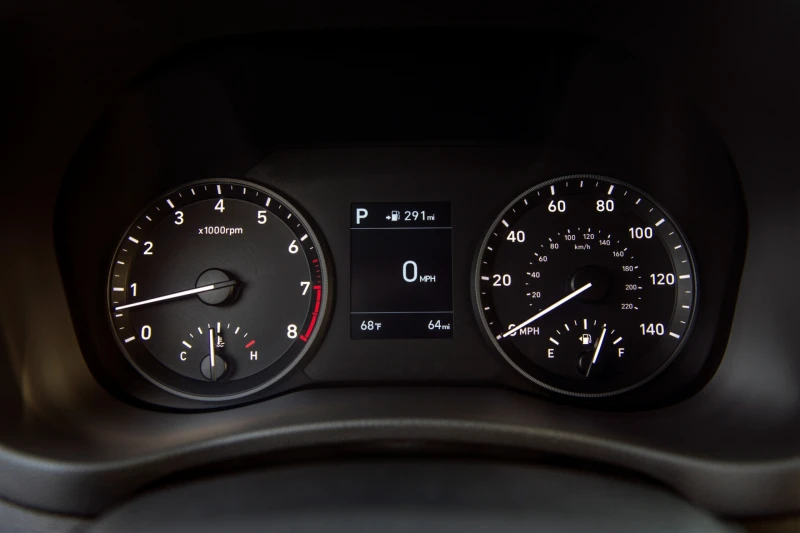
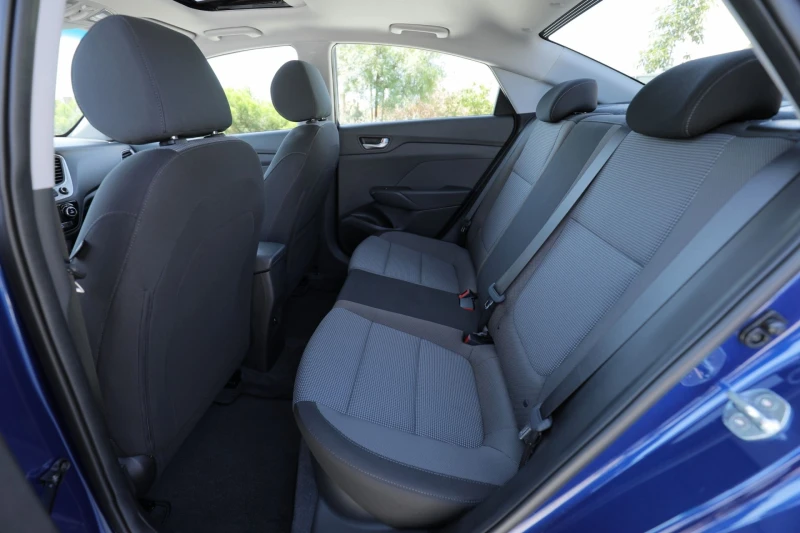
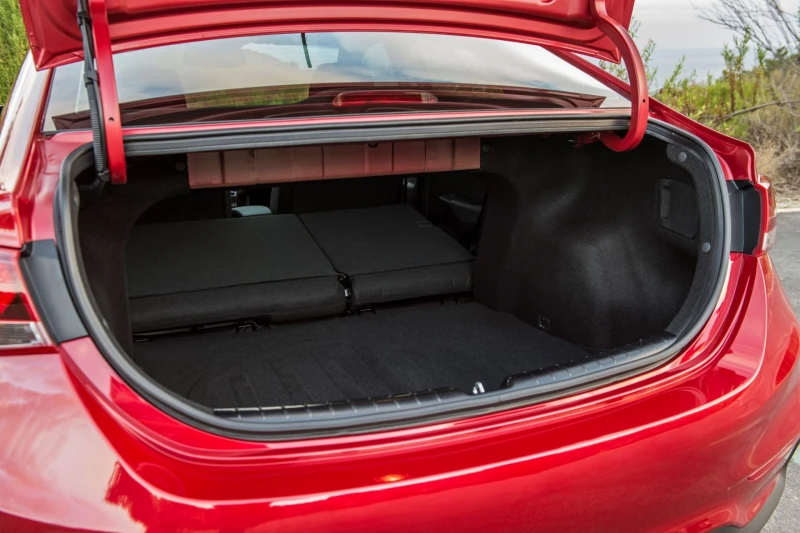
The driving position is straightforward, with good forward visibility and clearly arranged instruments. Steering-wheel adjustment and other convenience features vary by trim and model year. Front-seat space is adequate for a small sedan, while the rear bench is better suited to two adults than three on longer trips. The U.S.-market Accent has a 101.6-inch wheelbase, and rear legroom is reasonable for the class, although taller passengers may find the back seat restrictive compared with larger compact sedans. The trunk provides about 13.7 cubic feet of cargo capacity. Depending on trim, split-folding rear seatbacks can also make it easier to carry longer items.
U.S. trims and interior equipment
In the United States, the fifth-generation Accent was primarily offered in SE, SEL and Limited trim levels. Exact standard equipment changed slightly from one model year to another, but the basic hierarchy remained consistent. The SE served as the entry-level version, with cloth seats, air conditioning, Bluetooth connectivity and a smaller infotainment system. It focused on essential equipment rather than additional comfort features.
The SEL added several features that made the cabin more convenient for daily use, including a larger touchscreen infotainment system with Apple CarPlay and Android Auto on applicable model years. The Limited sat at the top of the U.S. range and added comfort and convenience equipment such as heated front seats, automatic climate control, proximity-key access with push-button start and additional interior trim details. Equipment such as the power sunroof and certain driver-assistance features also appeared on higher-spec versions, depending on model year.
| Trim | Seat upholstery | Infotainment | Climate control | Typical key features |
| SE | Cloth | Basic touchscreen, Bluetooth | Manual air conditioning | Essential cabin equipment |
| SEL | Cloth | 7-inch touchscreen, Apple CarPlay/Android Auto on applicable years | Manual air conditioning | Upgraded infotainment and convenience equipment |
| Limited | Premium cloth | 7-inch touchscreen, Apple CarPlay/Android Auto | Automatic climate control | Heated front seats, proximity key, push-button start |
Interior changes by model year
The U.S.-market Accent did not receive a complete cabin redesign during its 2018–2022 run. Instead, Hyundai made smaller equipment adjustments while keeping the same basic dashboard architecture. The larger touchscreen offered on SEL and Limited trims became one of the more important differences from the simpler SE setup, while Apple CarPlay and Android Auto provided smartphone integration on appropriately equipped cars.
The most significant technical change arrived for the 2020 model year, when the U.S. Accent switched from the earlier 1.6-liter direct-injected engine to a 1.6-liter Smartstream engine and Hyundai's Intelligent Variable Transmission on automatic versions. Although this change was primarily mechanical, buyers comparing used cars should keep the model year in mind because drivetrain specifications and some equipment details differ between earlier and later examples. Interior trim, infotainment and convenience equipment should therefore be checked against the original specification of the individual car rather than assumed from the model year alone.
Common interior issues to check
The Accent's extensive use of hard plastic means scratches and cosmetic marks can become visible on the center console, door panels and other frequently touched areas. Cloth upholstery should be inspected for staining, worn bolsters and damage caused by heavy use. On higher-mileage examples, occasional rattles or squeaks from interior panels can also appear, particularly on rough pavement.
Rear-seat space is one of the cabin's natural limitations. Two passengers can fit comfortably enough for shorter trips, but the narrow body and limited legroom make three-adult seating less practical. Road and tire noise can also be more noticeable than in larger or more expensive sedans. When evaluating a used Accent, it is worth testing the touchscreen, Bluetooth connection, smartphone integration, climate controls, heated seats and steering-wheel buttons where fitted.
Interior relevance on the used market
By 2026, the fifth-generation Hyundai Accent is a used-car proposition in the United States, as the model left the U.S. new-car lineup after the 2022 model year. Its cabin now feels relatively simple compared with newer subcompact and compact cars that use larger displays and more advanced digital interfaces, but the conventional controls and uncomplicated layout remain easy to understand.
SE versions provide the basics, while SEL models typically add the infotainment features many used-car buyers expect. Limited models offer the most complete interior specification, including additional comfort and convenience equipment. Before purchasing a used example, inspect the seat fabric, steering wheel and control surfaces for excessive wear, verify that the infotainment system operates correctly and check every powered or heated feature fitted to the vehicle.
Overall, the Hyundai Accent interior reflects the model's original role in the U.S. market: a straightforward subcompact sedan focused on practical everyday transportation rather than luxury or elaborate cabin technology.