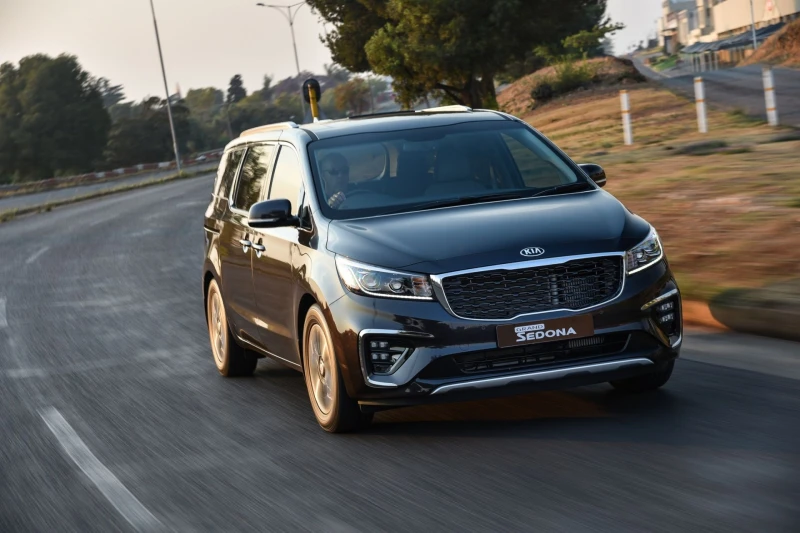
The third-generation Kia Carnival carried the YP platform code, but in the United States it was sold as the Kia Sedona. The redesigned model arrived for the 2015 model year and remained on sale through 2021. Unlike European and Korean-market versions, the U.S. Sedona did not offer a diesel engine: every trim used the same naturally aspirated gasoline V6 and front-wheel-drive layout.
U.S.-market YP powertrain
The only engine offered in the U.S. was Kia’s 3.3-liter Lambda II V6 with gasoline direct injection. It produced 276 hp at 6,000 rpm and 248 lb-ft of torque at 5,200 rpm. The aluminum, 24-valve DOHC engine was fitted across the range, so choosing between L, LX, EX, SX and, in earlier years, SX Limited mainly changed equipment rather than performance.
The 2.2-liter CRDi turbodiesel commonly associated with the Carnival YP in Europe, South Korea and several export markets was never part of the official U.S. Sedona lineup. U.S.-market technical specifications therefore center entirely on the 3.3-liter V6, which was designed to run on regular unleaded gasoline rated at 87 AKI or higher.
| Engine type | Displacement | Output | Torque | Transmission | Drive |
| Gasoline V6 GDI | 3.3 liters | 276 hp | 248 lb-ft | 6-speed or 8-speed automatic | Front-wheel drive |
The transmission changed during the generation. Sedona models from 2015 through 2018 used a six-speed automatic. For the 2019 model year, Kia introduced an eight-speed automatic while retaining the same 276-hp V6. The additional ratios were intended to keep the engine closer to its preferred operating range and contributed to a small improvement in the combined EPA rating. All U.S. versions remained front-wheel drive; all-wheel drive was not offered.

Body dimensions and weight
The YP platform used a 120.5-inch wheelbase, helping provide usable space across three seating rows. Overall length was 201.4 inches, while body width measured 78.1 inches without the side mirrors and 89.3 inches with them. Height was 68.5 inches without roof rails and about 69.1 inches when rails were fitted. Depending on trim and seating configuration, the Sedona accommodated seven or eight occupants.
Curb weight varied by trim and equipment. Across the U.S. range, published figures generally ran from about 4,411 to 4,736 pounds, while the gross vehicle weight rating was 6,085 pounds. These numbers place the Sedona firmly in the full-size minivan category and explain why the 248 lb-ft V6, transmission condition and brake maintenance deserve close attention when evaluating a used example.
| Length | Width without mirrors | Height | Wheelbase | Curb weight | GVWR |
| 201.4 in. | 78.1 in. | 68.5–69.1 in. | 120.5 in. | Approx. 4,411–4,736 lb. | 6,085 lb. |
Exterior dimensions changed little during the U.S. model run. The long wheelbase, wide body and relatively low roof gave the Sedona a stable highway stance while preserving the interior packaging expected of a three-row minivan. Wheel and tire sizes varied by trim, but the basic body shell and core hard points remained consistent.
Changes during the model run
The most important mechanical update arrived for 2019, when the eight-speed automatic replaced the previous six-speed unit. Engine output remained unchanged at 276 hp and 248 lb-ft. The refresh also revised styling and equipment, but it did not introduce a new U.S.-market engine or an all-wheel-drive option.
For 2015–2018 models, EPA estimates varied by trim: most versions were rated at 18 mpg city and 24 mpg highway, while certain higher trims differed slightly. For 2019–2021 models with the eight-speed automatic, the published estimate was 18 mpg city, 24 mpg highway and 21 mpg combined. These are EPA figures rather than real-world test results; actual fuel use depends on load, speed, climate, traffic and vehicle condition.
Used-vehicle inspection priorities in the United States
Because all U.S.-market examples share the same direct-injected V6, a pre-purchase inspection should focus on maintenance history and the condition of that specific powertrain rather than on choosing between multiple engines. A cold start, diagnostic scan, inspection for fluid leaks and review of cooling-system and ignition-system maintenance can reveal more than mileage alone. Service records are particularly valuable on vehicles that have spent years in urban family use or regular highway travel.
The six- and eight-speed automatics should be evaluated separately. During a test drive, shifts should be checked when cold and fully warmed, under light throttle and during firmer acceleration. Delayed engagement, harsh shifts, warning lights or evidence of neglected fluid service warrant further diagnosis. No fixed service-life claim applies to every vehicle, because operating conditions, towing, heat exposure and maintenance history vary widely.
EPA fuel-economy figures provide a consistent factory comparison, but they should not be mixed with owner-reported mileage. Most 2015–2018 trims carried ratings around 18 mpg city and 24 mpg highway, with combined figures of 19–21 mpg depending on trim. The 2019–2021 range was rated at 18/24/21 mpg. A used Sedona that falls well below expectations should be checked for tire pressure, brake drag, stored powertrain faults and overdue maintenance before conclusions are drawn.
Parts and routine service are available through Kia dealers and independent repair shops familiar with Hyundai and Kia vehicles. Even so, trim-specific items such as power sliding-door components, seating hardware, infotainment modules and driver-assistance equipment can affect repair cost. A complete inspection should therefore cover the cabin electronics and door mechanisms as carefully as the engine and transmission.
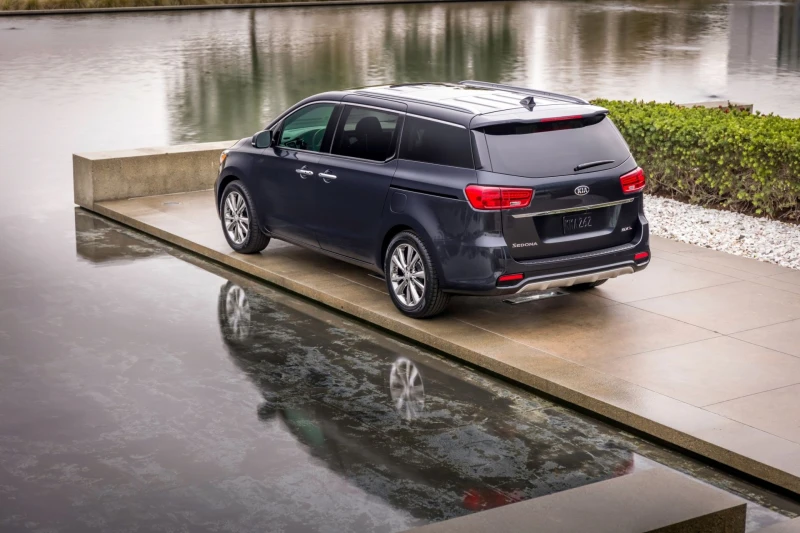
Which U.S. configurations matter on the used market
By 2026, every YP-generation Sedona in the United States is a used vehicle. The 2021 model year was the final U.S. Sedona, and the all-new 2022 Kia Carnival replaced it. Buyers will mainly encounter 2015–2018 examples with the six-speed automatic and 2019–2021 examples with the eight-speed. All use the 3.3-liter V6 and front-wheel drive, so year, trim, condition, service history and equipment are the main differentiators.
Later eight-speed models may appeal to buyers who prefer the updated transmission and the 21-mpg combined EPA rating, while earlier six-speed vehicles can offer a lower purchase price. Neither group should be judged by model year alone. For a used Sedona, documented maintenance, smooth transmission operation, properly functioning sliding doors and a clean diagnostic scan are more informative than minor differences in trim or exterior styling.