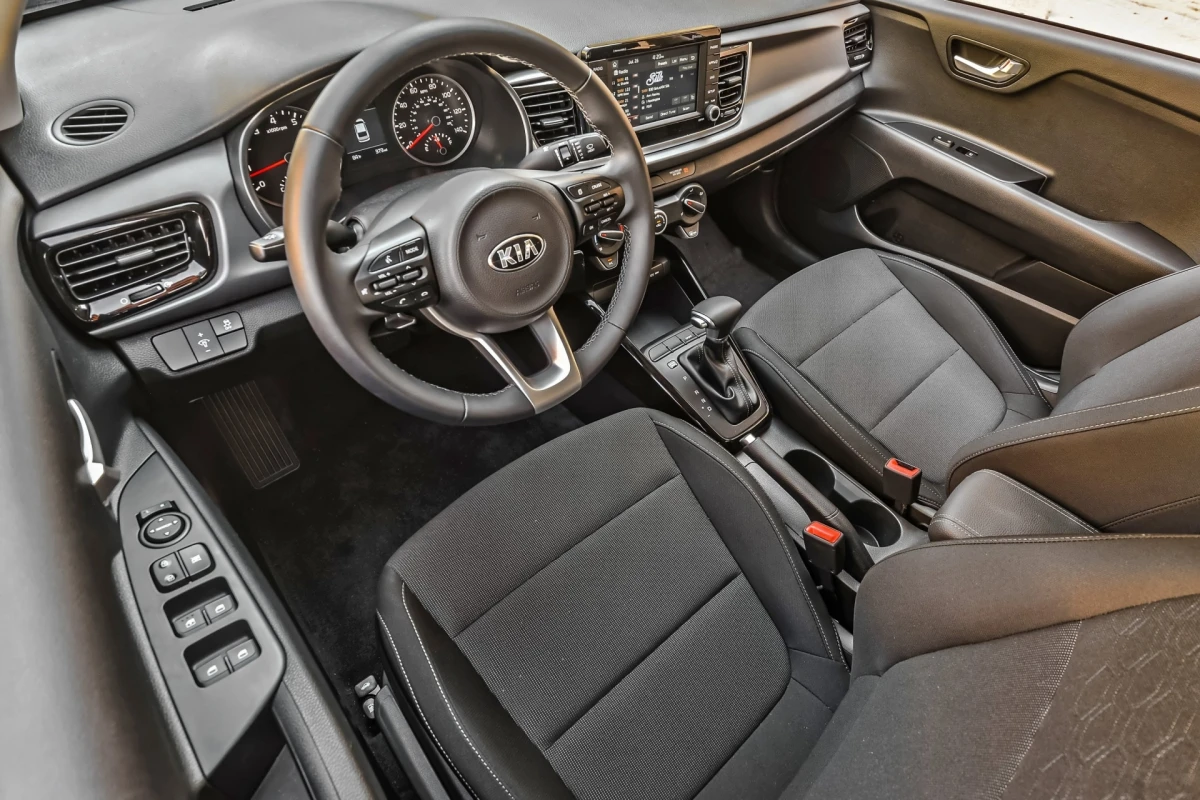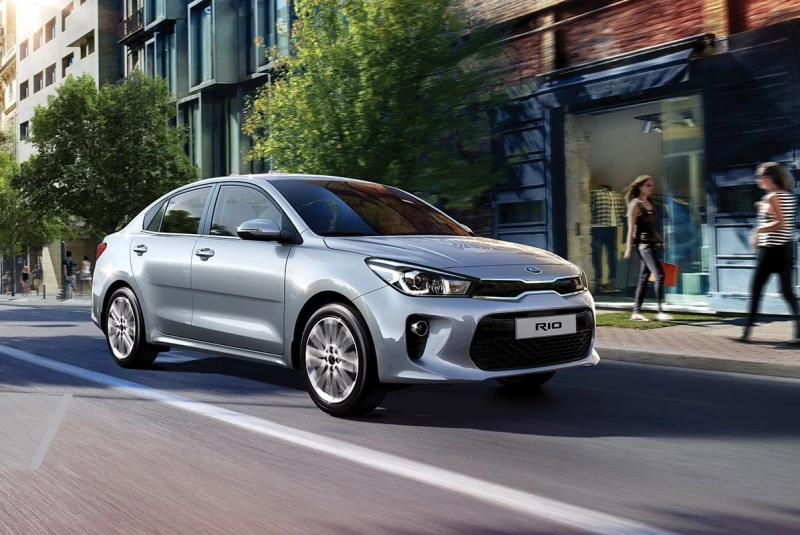
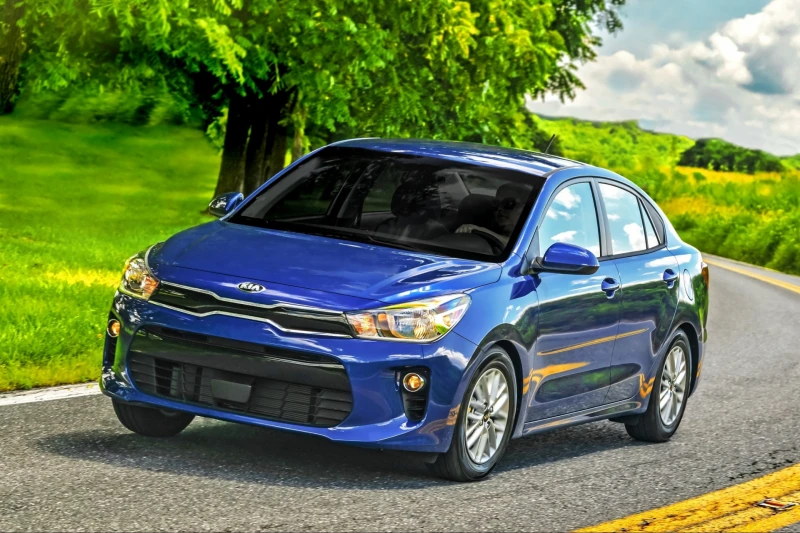
The fourth-generation Kia Rio is a subcompact car offered in the United States as a four-door sedan and a five-door hatchback. It rides on Kia's small-car architecture and has a 101.6-inch wheelbase, front-wheel drive, and a straightforward cabin designed around everyday commuting.
The U.S.-market model debuted at the 2017 New York International Auto Show and went on sale for the 2018 model year. Cars for North America were built primarily at Kia's plant in Pesquería, Nuevo León, Mexico. The Rio remained in the American lineup through the 2023 model year and was not renewed for 2024.
Within Kia's U.S. range, the Rio served as the brand's entry-level passenger car. Its main rivals included the Hyundai Accent, Nissan Versa, Toyota Yaris, Mitsubishi Mirage, and Chevrolet Sonic, depending on the model year.
Key attributes included compact exterior dimensions, a 101.6-inch wheelbase, a choice of sedan or hatchback body styles, a naturally aspirated 1.6-liter four-cylinder engine, and simple front-wheel-drive mechanicals. Equipment varied considerably by year and trim, from basic LX models to the better-equipped 2018 EX and later S models with optional technology packages.
What Changed from the Previous Generation
The fourth-generation Rio (YB/SC) was a full redesign compared with the third-generation UB model sold in the United States through 2017.
The main changes included:
- Exterior design: sharper body lines, a wider interpretation of Kia's "tiger nose" grille, and more mature sedan and hatchback proportions
- Platform and structure: a longer 101.6-inch wheelbase, greater use of high-strength steel, and revised body construction
- Powertrains: a 130-hp 1.6-liter GDI engine for 2018–2019, followed by a 120-hp 1.6-liter MPI engine and IVT for 2020–2023
- Interior: a cleaner dashboard layout, improved packaging, and touchscreen infotainment that expanded from smaller early systems to an 8-inch display on later models
- Safety: stability control and a rearview camera were widely available, while forward-collision avoidance and lane-departure-related features depended on trim, package, and model year
- Suspension: MacPherson struts in front and a torsion-beam rear axle, tuned for predictable everyday handling rather than sporty performance
Current Status of the Generation
The Rio is no longer sold new in the United States. The 2023 model year was the final U.S. version, so shoppers in 2026 will generally find the fourth-generation model only through used-car dealers and private sellers.
The U.S.-market powertrain lineup changed during the generation:
- 2018–2019: 1.6-liter GDI — 130 hp and 119 lb-ft, paired with a six-speed automatic; a six-speed manual was available on certain early LX models
- 2020–2023: 1.6-liter MPI — 120 hp and 112 lb-ft, paired with Kia's Intelligent Variable Transmission (IVT), front-wheel drive only
EPA-rated combined fuel economy improved from 32 mpg for the 2018 model to 36 mpg for the 2020–2023 powertrain. Diesel, hybrid, mild-hybrid, and turbocharged Rio variants offered in other regions were not part of the official U.S. lineup.
U.S. Used-Car Market
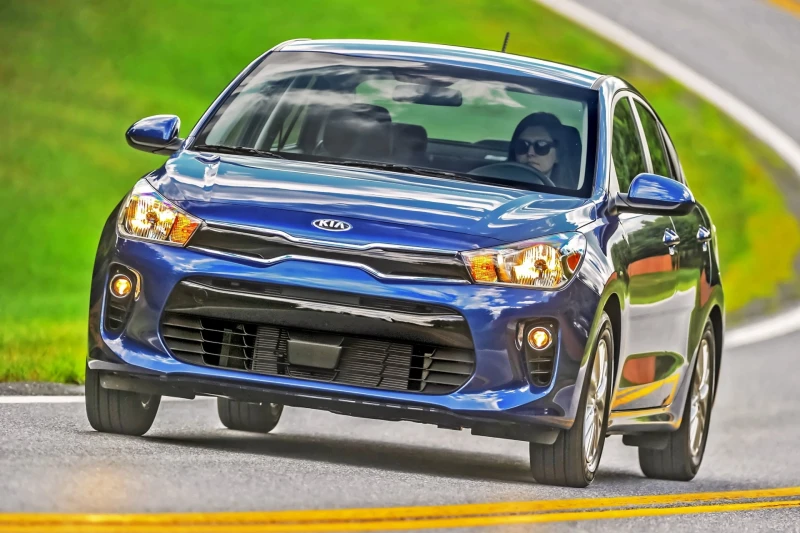
Fourth-generation Rio sedans and hatchbacks remain available on major U.S. platforms such as Autotrader, CarGurus, and Cars.com. Inventory is concentrated in 2018–2023 model years, typically with about 20,000 to 120,000 miles. Prices vary substantially by mileage, accident history, location, trim, and whether the vehicle is sold by a dealer or a private owner.
Later S models with the 120-hp engine and IVT are among the most common listings. The five-door is less abundant than the sedan, while the better-equipped 2018 EX is relatively uncommon because the trim was dropped after the first U.S. model year of this generation.
Typical asking-price ranges in July 2026 are approximately:
| Version | Model years | Typical mileage | Approximate asking price | Market notes |
|---|---|---|---|---|
| LX / S / EX, 1.6 GDI | 2018–2019 | 60,000–120,000 miles | $7,000–$11,000 | Condition and theft-prevention updates can strongly affect value |
| LX / S, 1.6 MPI with IVT | 2020–2021 | 40,000–100,000 miles | $9,000–$14,000 | Refreshed 2021 cars may carry a modest premium |
| LX / S sedan and S 5-Door | 2022–2023 | 15,000–70,000 miles | $12,000–$17,000 | Low-mileage dealer cars can be listed above this range |
Main U.S. Versions and Trims
The trim structure was simpler in the United States than in many overseas markets:
- LX: the entry-level sedan, generally with cloth upholstery, 15-inch steel wheels, air conditioning, a rearview camera, and basic infotainment; early 2018 cars could be ordered with a manual transmission
- S: the volume trim for the sedan and, from 2019 onward, the only five-door trim; equipment typically added convenience features, with alloy wheels, upgraded driver-assistance systems, and other items available through model-year-specific packages
- EX (2018 only): the most upscale launch-year trim, with a larger touchscreen, Apple CarPlay and Android Auto, upgraded cabin materials, and additional available safety technology
For 2021–2023, the Rio received revised styling and an 8-inch touchscreen, while the optional S Technology Package bundled several of the model's more desirable comfort and driver-assistance features. Equipment should always be checked by VIN or window sticker because package content changed across model years.
Conclusions and Current Relevance
The fourth-generation Kia Rio remains a practical used option for commuting, first-time ownership, and buyers who prioritize compact dimensions and fuel economy. The sedan offers a useful trunk, while the five-door provides easier access to the cargo area and greater day-to-day flexibility.
The 2018–2019 cars deliver slightly more power and use a conventional six-speed automatic, while the 2020–2023 models trade some output for better EPA fuel economy and an IVT. Neither version should be treated as automatically trouble-free; vehicle history, maintenance, local insurance costs, and purchase price matter more than trim alone.
Before buying, it is sensible to check:
- service records, accident history, and evidence of regular oil changes
- smooth operation of the six-speed automatic or IVT during a thorough test drive
- the VIN for open recalls, service campaigns, and applicable anti-theft updates, especially on key-start cars
- the operation of the touchscreen, rearview camera, air conditioning, and driver-assistance features
- tire wear, brake condition, suspension noise, and signs of curb or underbody damage
In 2026, the Rio's main appeal is its combination of small-car efficiency, straightforward controls, and used prices that often remain below those of larger compact sedans. A clean, properly updated example can still make sense, but insurance availability and theft-related history deserve particular attention in the U.S. market.