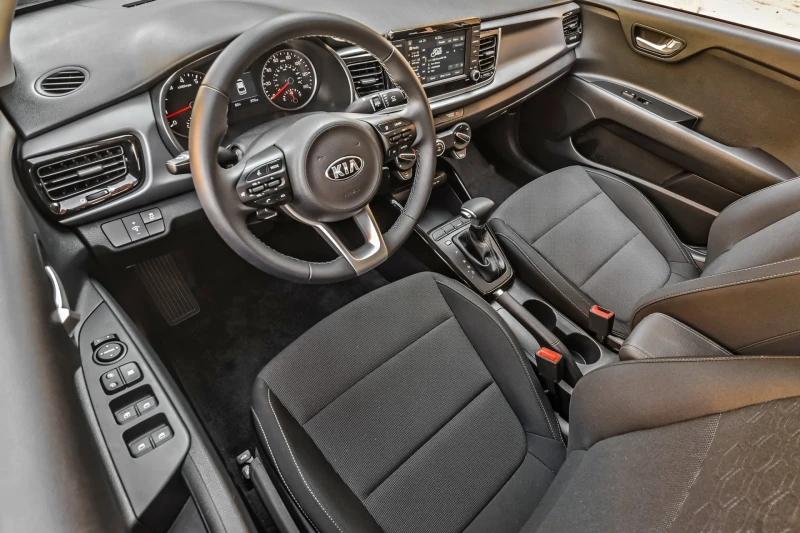
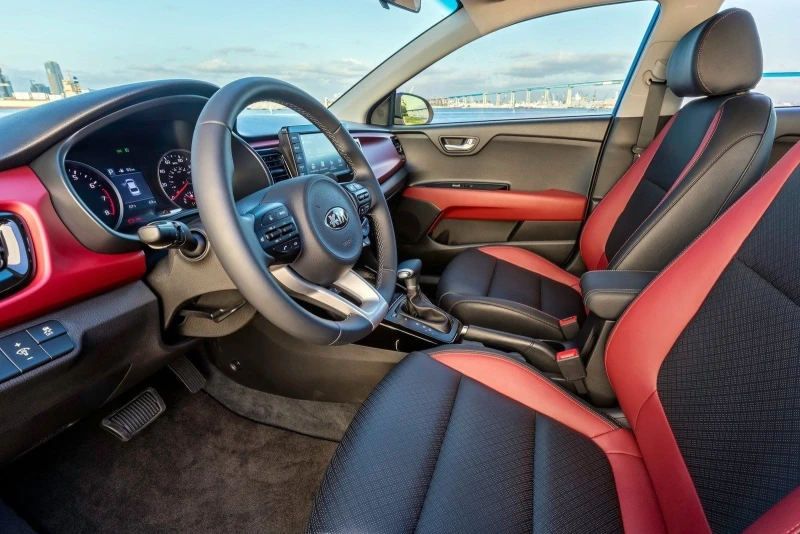
The fourth-generation Kia Rio sold in the United States for the 2018 through 2023 model years used a straightforward subcompact-car interior designed around durability, simple controls, and efficient use of space. The dashboard is clean and horizontally arranged, with physical climate controls below the center display and a conventional analog gauge cluster in front of the driver. Screen size and connectivity changed substantially over the model run: early cars used simpler audio units, selected 2018 versions offered a 7-inch touchscreen, 2020 models made a 7-inch touchscreen standard, and the 2021–2023 Rio received a standard 8-inch display with wireless Apple CarPlay and Android Auto.
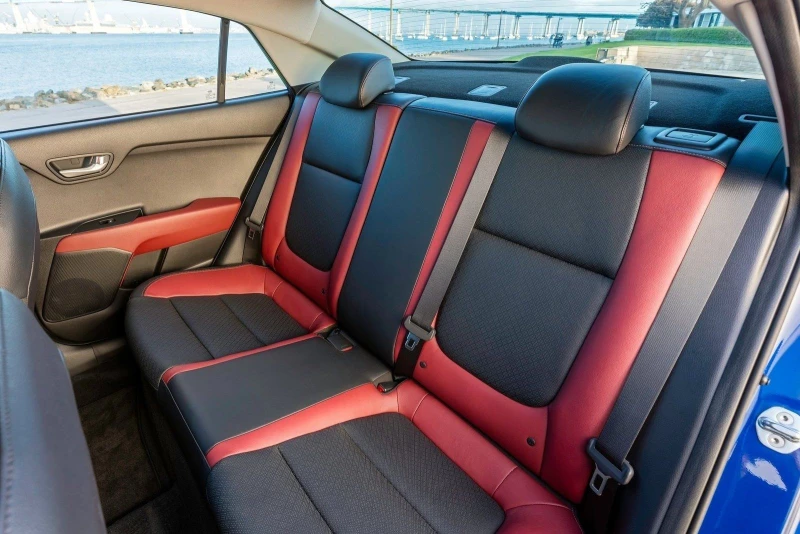
Most U.S.-market Rio interiors use cloth upholstery, hard dashboard and door plastics, and silver or gloss-black trim around the center stack. The materials are appropriate for an entry-level car but should not be confused with the soft-touch dashboards, extensive leather upholstery, or upscale trim combinations offered on some overseas versions. The 2018 EX could be ordered with a red-accent partial-leather package, but later American LX and S models were primarily cloth-trimmed. There was no regular U.S. Rio GT-Line, and features such as ventilated seats, a heated steering wheel, a power driver's seat with memory, and a panoramic roof were not part of the normal U.S. equipment range.
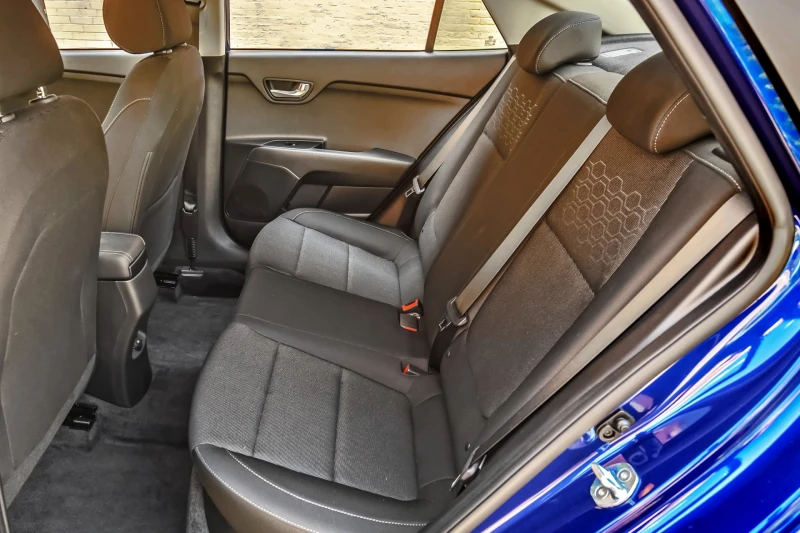
The driving position is easy to understand and the major controls are placed within reach. All versions use a six-way manually adjustable driver's seat, while steering-column adjustment varies by year and trim. Front-seat space is generous for a subcompact, but the rear bench is better suited to children or shorter adults on longer drives. The 101.6-inch wheelbase provides reasonable packaging efficiency, although official rear legroom is 33.5 inches. Three adults can fit across the rear in a pinch, but limited width, a short seat cushion, and the center seating position make the Rio more comfortable as a four-passenger car.
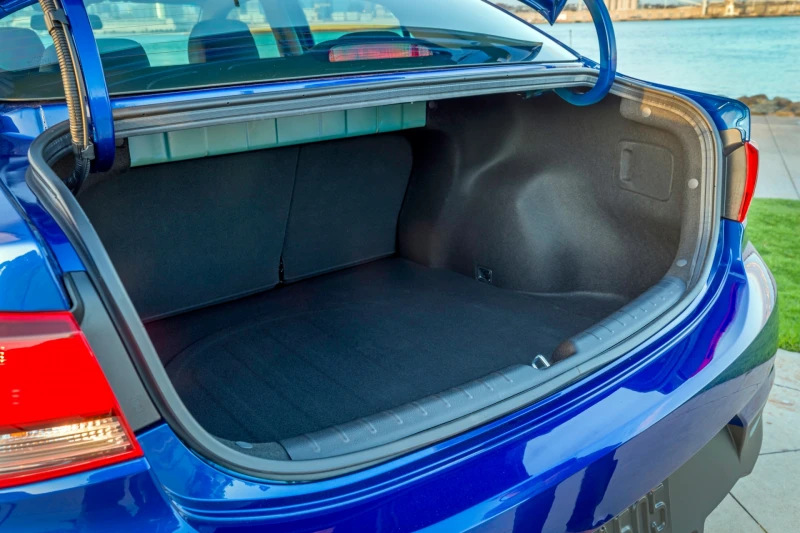
The sedan has 13.7 cubic feet of trunk space. The Rio 5-Door is more versatile, providing 17.4 cubic feet behind the rear seat and 32.8 cubic feet with the seatbacks folded. A 60/40 split-folding rear seat was standard on the S and EX but not always included on the base LX. Cabin storage is basic but useful, with front cupholders, door pockets, a USB media connection, and, on many S models, a rear USB charging port and a center armrest with a storage compartment. Wireless phone charging and USB-C ports were not regular factory features on the U.S.-spec fourth-generation Rio.
U.S. trims and interior equipment
American-market cars should be identified by model year, body style, and trim rather than by equipment names used in Europe, Mexico, Russia, or Ukraine. The main U.S. grades were LX, S, and, for 2018 only, EX. The 5-Door was generally sold in S trim during the later years. Equipment can also vary when an S Technology Package is fitted, so used-car shoppers should confirm features from the window sticker, VIN-specific build data, or the equipment installed in the vehicle.
| U.S. trim or package | Seats and cabin trim | Infotainment and instruments | Climate and convenience | Driver assistance and safety | U.S.-market notes |
|---|---|---|---|---|---|
| LX sedan | Cloth seats, hard interior plastics, basic center console | Smaller audio display on early cars; 7-inch touchscreen in 2020; 8-inch screen with wireless Apple CarPlay and Android Auto for 2021–2023 | Manual air conditioning, six-way manual driver's seat, basic key and storage layout | Six-airbag layout, ABS, stability control, tire-pressure monitoring, rearview camera | Entry trim throughout the generation; some model years lack a split-folding rear seat and cruise control |
| S sedan / S 5-Door | Cloth seats, center armrest and storage, 60/40 split-folding rear seat | 7-inch touchscreen on many 2019–2020 cars; 8-inch wireless smartphone integration from 2021; six-speaker layout on many examples | Cruise control, remote keyless entry, rear USB charger on many years; push-button start optional with later packages | Available forward-collision avoidance on earlier cars; broader Kia Drive Wise package available for 2021–2023 | The most common well-equipped U.S. version and the principal trim for the 5-Door |
| EX (2018 only) | Upgraded cloth, leather-wrapped steering wheel and shifter, optional red-accent partial-leather trim | 7-inch UVO3 touchscreen, wired Apple CarPlay and Android Auto, 3.5-inch supervision display | More complete interior trim, sliding armrest, upgraded lighting and convenience features | Available autonomous emergency braking | Short-lived top trim; it was dropped when the U.S. lineup was simplified for 2019 |
| S Technology Package (2021–2023) | Cloth interior with upgraded instrumentation and trim details | 8-inch connected audio system, SiriusXM availability, 4.2-inch supervision display | Automatic temperature control, push-button start, high-line tire-pressure display | Forward-collision avoidance with pedestrian detection, lane-keeping and lane-following assist, high-beam assist, driver-attention warning and related features | The most comprehensively equipped late-production U.S. Rio; package content should be verified by model year |
Most late-model used Rios advertised on Autotrader, CarGurus, and Cars.com are LX or S sedans, with the S 5-Door appearing less frequently. Buyers should be cautious with listings labeled “GT-Line,” “Premium,” or “Luxe,” because those names do not describe the normal U.S. trim structure. An imported car may legitimately carry different equipment, but its parts, infotainment software, warranty history, and compliance labels should be checked separately.
Interior changes by model year
The U.S. interior did not receive the same equipment sequence as European-market Rio models. The important changes are tied to American model years rather than a universal 2019 facelift:
- 2018: Fourth-generation launch in LX, S, and EX trims. The EX introduced the 7-inch UVO3 touchscreen, wired Apple CarPlay and Android Auto, an upgraded gauge display, and available partial-leather trim.
- 2019: The sedan lineup was reduced to LX and S. A 5-inch display was used in the LX, while the S offered a 7-inch touchscreen. Kia's U.S. equipment documentation deleted Apple CarPlay and Android Auto for this model year, so a 7-inch screen alone does not confirm smartphone integration.
- 2020: A 7-inch touchscreen, rearview camera display, wired Apple CarPlay, and Android Auto became standard. The cabin layout remained familiar, but this is an important technology upgrade over many 2019 cars.
- 2021: A mild refresh brought a standard 8-inch touchscreen with wireless Apple CarPlay and Android Auto. The available S Technology Package added a 4.2-inch cluster display, automatic climate control, push-button start, LED lighting, and a broader group of driver-assistance features.
- 2022–2023: The interior was largely carried over. The 8-inch screen remained standard, while LX, S, and the optional S Technology Package continued to define most of the U.S. equipment differences.
The 2023 model year was the final U.S. model year for this Rio generation. As a result, every fourth-generation Rio in the American market is now a used vehicle rather than a current new-car offering. Condition and installed equipment matter more than a generic “facelift” label, especially because a well-equipped 2018 EX, a basic 2019 LX, and a 2023 S Technology Package car have very different cabin features.
Common cabin issues and buying checks
Interior condition varies widely with prior use. Rio sedans were frequently used as commuter, rental, delivery, or fleet vehicles, so mileage alone does not show how heavily the cabin has been treated. These are the main areas worth inspecting:
- Seat wear and staining: cloth is durable but can show discoloration, compressed driver's-seat bolsters, and embedded odors after heavy use.
- Hard-plastic scuffs: lower door panels, the center console, and cargo-area trim scratch easily when the car has carried passengers, pets, or work equipment.
- Gloss-black trim: the center-stack surround can collect fingerprints and fine scratches, especially after repeated cleaning with abrasive cloths.
- Rattles and squeaks: listen around the door panels, center stack, glovebox, and rear parcel shelf while driving over uneven pavement.
- Road noise: tire and wheel-well noise is noticeable at highway speeds, particularly on coarse concrete or worn asphalt. This is a refinement limitation rather than proof of a mechanical defect.
- Rear-seat comfort: check whether the seat cushion, legroom, and lack of dedicated rear climate vents are acceptable for the intended passengers.
- Infotainment operation: test Bluetooth pairing, both smartphone platforms, the USB port, touchscreen response, rear camera, and steering-wheel controls. On a 2019 car, do not assume that Apple CarPlay or Android Auto is present.
- Climate performance: confirm that the air conditioner cools promptly, the blower works at every speed, and automatic temperature control functions correctly when the Technology Package is fitted.
Cars from hot, sunny regions may show faded trim, a glossy steering wheel rim, hardened weather seals, or screen damage, while vehicles from snow-belt states can bring salt and moisture into the carpet. Lift the floor mats, inspect the spare-tire well, and look for water staining around the trunk or hatch seals. A strong fragrance or recently shampooed carpeting can be harmless, but it can also mask smoke, mildew, or heavy fleet use.
Is the Kia Rio interior still competitive?
In 2026, the fourth-generation Rio cabin looks simple next to newer subcompacts with digital gauge clusters, larger screens, and more elaborate materials. Its strengths are clarity, easy-to-use physical controls, good front-seat space, and useful cargo capacity—especially in the 5-Door. The limitations are equally clear: extensive hard plastic, modest rear legroom, noticeable highway noise, and few luxury features.
For most U.S. used-car buyers, the strongest balance of equipment and simplicity comes from a 2021–2023 S. The standard 8-inch display and wireless smartphone integration make these cars feel substantially more current than early versions. An S with the Technology Package adds the most desirable safety and convenience equipment, while a 2018 EX remains interesting for buyers who want the generation's rarest factory interior specification. A 2019 car can still be a practical choice, but its infotainment features require especially careful verification.
Before buying a used Rio, check:
- the exact trim, body style, model year, and factory package content
- seat fabric, bolsters, door panels, center-console trim, and cargo-area plastics
- touchscreen response, Bluetooth, USB connectivity, smartphone integration, and rear camera
- air-conditioning performance and all blower settings
- rear-seat folding mechanisms and the condition of the sedan trunk or 5-Door cargo floor
- evidence of rental, delivery, fleet, flood, smoke, or pet use
The Rio's interior is not luxurious, but a clean, correctly equipped example remains practical and easy to live with. The key is to evaluate the actual U.S.-market trim rather than relying on overseas equipment descriptions or seller-added labels.