


The Kia Rio III technical specs include Gamma-family engines, four- and six-speed transmissions, as well as dimensions adapted to North American market preferences. In the United States, the most common versions are equipped with 1.4L and 1.6L gasoline engines. Diesel variants were not officially sold in the US and are extremely rare. This overview covers the key engine parameters, fuel economy, and reliability aspects typical for American owners.
Engines and Transmissions
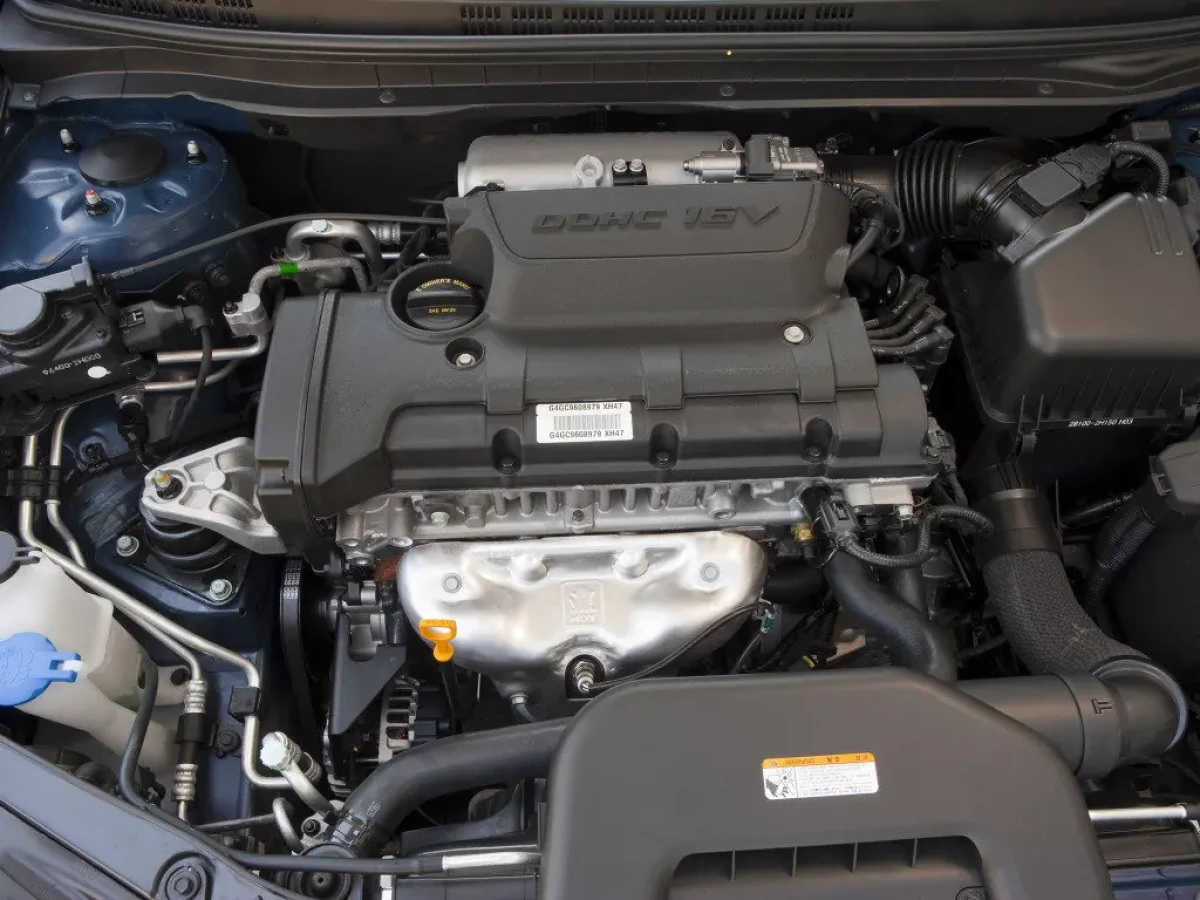
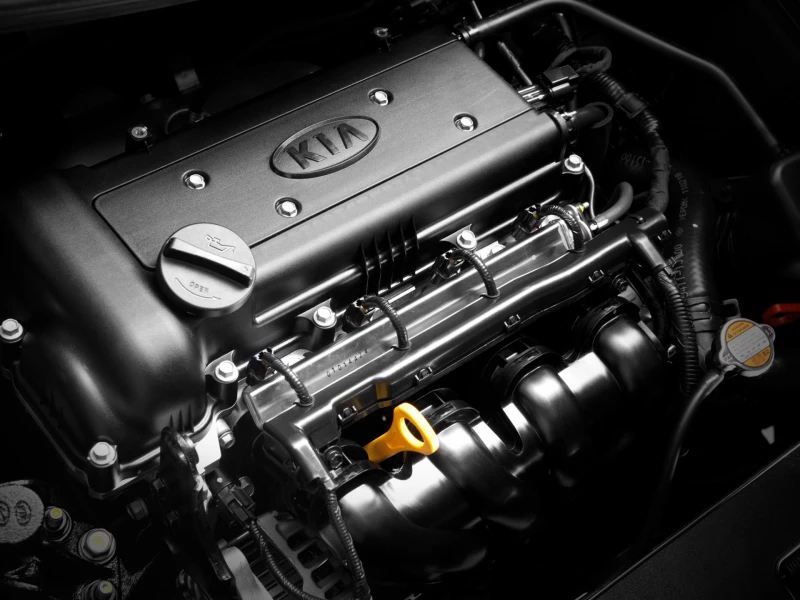
The powertrain lineup of the third-generation Kia Rio is based on Gamma-series gasoline engines with multi-point fuel injection (MPI) and continuously variable valve timing (CVVT). For the North American market (United States and Canada), the primary offerings were the 1.6L engine; the 1.4L was less common and mostly found in base models or fleet vehicles. No hybrid or diesel versions were available in the US.
Transmissions included 5- and 6-speed manual gearboxes as well as 4- and 6-speed automatic transmissions (the 6-speed automatic became standard on most trims after the 2015 facelift). All versions feature front-wheel drive (FWD); all-wheel drive was never offered.
| Fuel Type | Displacement | Engine Code | Power, hp | Torque, lb-ft | Transmission | Drivetrain | Availability (approx.) | US Market Notes |
| Gasoline | 1.25 L | Kappa MPI CVVT | 83–88 | 89 | 5-MT | Front | 2011–2017 | Very rare in US – mostly imported |
| Gasoline | 1.4 L | Gamma MPI CVVT | 107–109 | 100–101 | 5/6-MT / 4/6-AT | Front | 2011–2017 | Base engine, less common |
| Gasoline | 1.6 L | Gamma MPI CVVT | 123–130 | 114–123 | 6-MT / 6-AT | Front | 2011–2017 | Most popular engine in US |
Dimensions and Weight
The exterior dimensions of the Kia Rio III remained largely consistent throughout its production run, with minor differences between the hatchback and sedan. The sedan was significantly more popular in the United States.
| Parameter | Hatchback (UB) | Sedan (UB) | Notes |
| Length, in | 159.3–160.0 | 171.9–172.0 | Sedan is ~12–13 inches longer |
| Width, in | 67.7 | 67.7 | Excluding mirrors |
| Height, in | 57.3 | 57.3 | Depends on wheel/tire size |
| Wheelbase, in | 101.2 | 101.2 | Same for all body styles |
| Ground Clearance, in | 5.5–6.3 | 5.5–6.3 | Typically 5.5–6.0 in US |
| Curb Weight, lb | 2434–2734 | 2467–2800 | Depends on engine & transmission |
| Gross Vehicle Weight, lb | 3439–3770 | 3483–3814 | Maximum allowable |
| Trunk / Cargo Volume, cu ft | 10.2–49.8 | 13.7 | Hatchback with seats folded |
Model Year Changes & Facelift
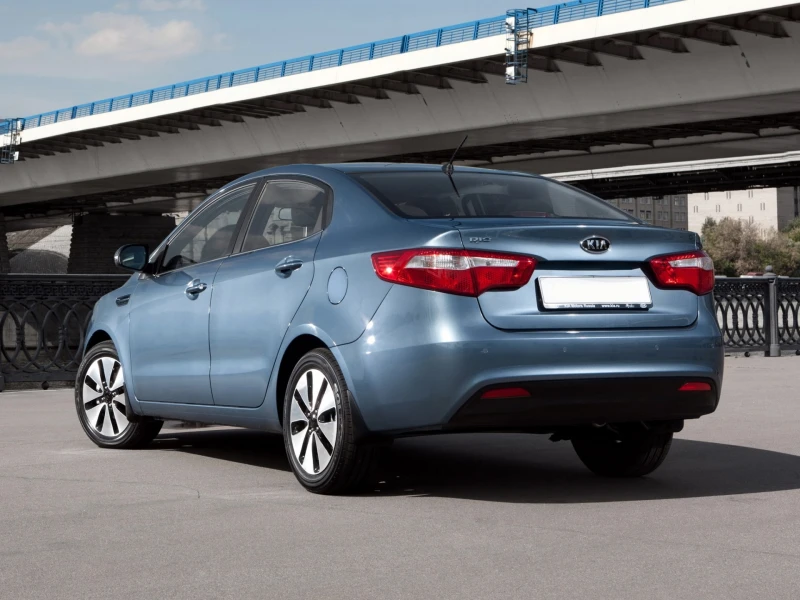
Production of the Kia Rio III (UB) began in 2011. Early models (2011–2014) came with a 1.6L engine producing 123–130 hp, paired with either a 5/6-speed manual or 4/6-speed automatic. The 2015 facelift brought updated headlights, taillights, front and rear fascias, a revised interior, and the widespread adoption of the 6-speed automatic transmission.
Post-facelift models (2015–2017) are generally preferred on the used market in the US due to the smoother 6-speed automatic, improved interior materials, and better overall refinement. Earlier 4-speed automatics can feel dated and less efficient by today’s standards.
Ownership Notes & Technical Highlights
The Gamma 1.4L and 1.6L engines are known for solid reliability when properly maintained: oil changes every 5,000–7,500 miles with synthetic oil and use of Top Tier gasoline (premium unleaded recommended for best performance). Engine life often exceeds 200,000–250,000 miles with regular care.
Most popular combination in the US is the 1.6L with 6-speed automatic – good balance of acceleration, highway cruising, and fuel economy. Approximate real-world fuel consumption (based on US owner reports and EPA estimates): 1.6L models achieve 27–30 mpg city / 36–40 mpg highway; real-world mixed driving typically 28–34 mpg depending on conditions.
The 6-speed automatic is smooth and reliable with fluid changes every 60,000 miles; the earlier 4-speed can be less refined. Manual transmissions are durable and low-maintenance. Parts are widely available and inexpensive thanks to shared components with Hyundai models. Body rust can appear in salt-belt states if underbody protection is neglected – check rockers, wheel arches, and subframe during pre-purchase inspection.
Summary & Best Choice for the US Market
On the American used-car market, the 1.6L Gamma engine paired with the 6-speed automatic (especially 2015–2017 facelift models) offers the best all-around package: decent performance, good fuel economy, low running costs, and strong parts availability. These versions also tend to hold value better.
The 1.4L is best suited for maximum fuel savings in city driving, while manual-transmission cars appeal to enthusiasts. When shopping, always verify service history, transmission condition, accident-free status, and actual mileage. A pre-purchase inspection is highly recommended.