This model masterfully blended timeless elegance, effortless power, and forward-thinking engineering. It became an icon across Europe and found its way to the United States through gray-market imports and official sales channels in the late 1990s. The E38’s technical foundation — rear-wheel drive with significant aluminum use in the chassis and body — delivered an exceptional mix of handling precision and ride comfort. In this guide we cover the engines, transmissions, dimensions, weight figures, year-to-year changes, and real-world ownership considerations for the American market.
Engines & Transmissions
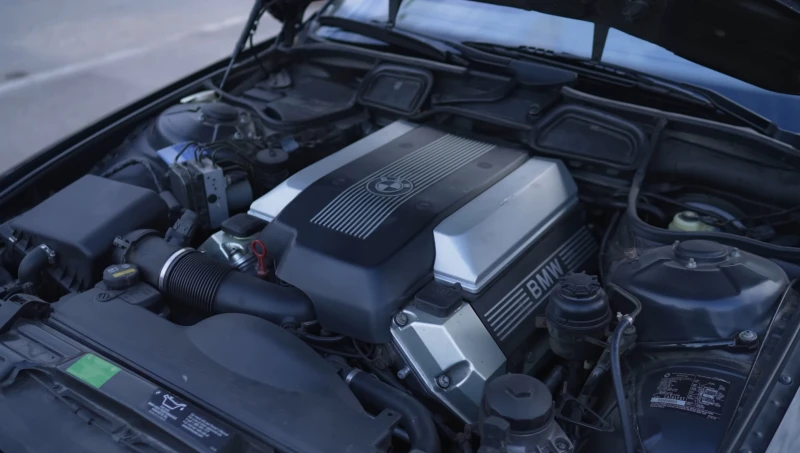
The 1994–2001 BMW 7 Series engine lineup featured smooth inline-six, V8, and V12 gasoline units along with a smaller selection of turbo-diesel powerplants — all designed for effortless cruising and strong mid-range response. Most engines used aluminum blocks and, in later versions, VANOS variable valve timing. Gasoline range: inline-six 2.8 L (193 hp) up to V8 4.4 L (286 hp) and V12 5.4 L (326 hp). Diesels: turbo inline-six 2.5 L (143 hp) and biturbo V8 3.9 L (245 hp). Transmissions were primarily the excellent 5-speed ZF automatic; a 5-speed manual was available only on the entry-level models and is very rare today. All-wheel drive was never offered — rear-wheel drive only.
| Engine | Type / Displacement | Power (hp) | Transmission | Drivetrain |
|---|---|---|---|---|
| 728i | I6, 2.8 L | 193 | 5-spd manual / 5-spd auto | RWD |
| 730i | V8, 3.0 L | 218 | 5-spd auto | RWD |
| 735i | V8, 3.5 L | 235 | 5-spd auto | RWD |
| 740i | V8, 4.0–4.4 L | 286 | 5-spd auto | RWD |
| 750i | V12, 5.4 L | 326 | 5-spd auto | RWD |
| 725tds | I6 turbo diesel, 2.5 L | 143 | 5-spd manual / 5-spd auto | RWD |
| 730d | I6 turbo diesel, 2.9 L | 184–193 | 5-spd auto | RWD |
| 740d | V8 biturbo diesel, 3.9 L | 245 | 5-spd auto | RWD |
Acceleration ranges from about 6.6 seconds (750i) to 10.6 seconds (725tds) for 0–60 mph. Estimated fuel economy (combined, based on EPA-style testing and real-world owner reports): gasoline models 14–22 mpg, diesels 24–30 mpg depending on engine and driving style.
Dimensions & Weight
The E38 was sized like a true flagship. Aluminum-intensive construction helped keep weight reasonable for its class while maintaining exceptional structural rigidity. Curb weight ranges from roughly 3,840 lb (base short-wheelbase models) to over 5,000 lb (long-wheelbase V12 and loaded examples). Gross vehicle weight rating typically 5,300–5,700 lb. All versions feature rear-wheel drive and the 5-speed automatic (manual extremely rare).
| Version | Length (in) | Width (in) | Height (in) | Wheelbase (in) | Curb / GVWR (lb) | Transmission | Drivetrain |
|---|---|---|---|---|---|---|---|
| Standard | 196.2 | 73.3 | 56.5 | 115.4 | 3,840–4,410 / 5,290–5,510 | 5-spd auto | RWD |
| Long (L) | 201.7 | 73.3 | 56.1 | 120.9 | 4,190–5,020 / 5,510–5,730 | 5-spd auto | RWD |
| 740i | 196.2 | 73.3 | 56.5 | 115.4 | 4,290 / 5,500 | 5-spd auto | RWD |
| 750iL | 201.7 | 73.3 | 56.1 | 120.9 | 5,020 / 5,730 | 5-spd auto | RWD |
Ground clearance is approximately 4.7–5.5 inches — adequate for most paved roads but cautious on steep driveways or deep speed bumps common in many U.S. neighborhoods.
Year-to-Year Changes (Facelift 1998)
The major mid-cycle refresh arrived in 1998. Pre-facelift engines included the 728i (2.8 I6), 730i (3.0 V8), 735i (3.5 V8), 740i (4.0 V8), 750i (5.4 V12), and 725tds diesel. Post-1998 updates brought revised bumpers, clear-lens headlights, new taillights, and — most importantly — engine upgrades: the 740i received the stronger 4.4 L M62TUB44 (286 hp, 440 Nm), the 730d (184–193 hp inline-six diesel) was introduced, and the 740d biturbo diesel (245 hp) became available in some markets. Electronics, safety systems (HPS head protection, optional DSC stability control), and interior materials also improved. In the United States, post-facelift models (1999–2001) are generally preferred today for better reliability, refinement, and parts availability.
Ownership & Maintenance Notes – U.S. Market
The most commonly seen and recommended version in the U.S. used market is the 740i / 740iL with the 4.4 L V8. These cars typically offer 300,000+ mile potential with diligent maintenance. Fuel economy in real-world mixed driving usually falls between 16–20 mpg (premium unleaded). Common issues include: ZF 5HP24 transmission (rebuild ~$2,500–$4,500 after 150,000–200,000 miles), cooling system neglect (radiator, expansion tank, water pump), VANOS seals, oil leaks (valve cover gaskets, oil pan), pixelated instrument cluster displays, and electronic gremlins (ABS module, throttle body). Suspension components (especially EDC shocks if equipped) and bushings wear over time. Parts availability remains excellent thanks to strong aftermarket support and BMW classic programs — many items cost 40–70% less than original dealer prices. Rust is rarely an issue unless the car spent time in the salt belt.
Bottom Line
For most American buyers today, the sweet spot remains the post-1998 740i / 740iL with the 4.4 L V8, 5-speed automatic, and rear-wheel drive. These examples usually sit in the $8,000–$15,000 range depending on condition and mileage (2025 market), deliver respectable fuel economy for the class, enjoy strong parts availability, and still turn heads with their timeless design. The E38 7 Series remains one of the most satisfying large luxury sedans ever built — perfect for enthusiasts who value presence, comfort, and analog driving feel.