


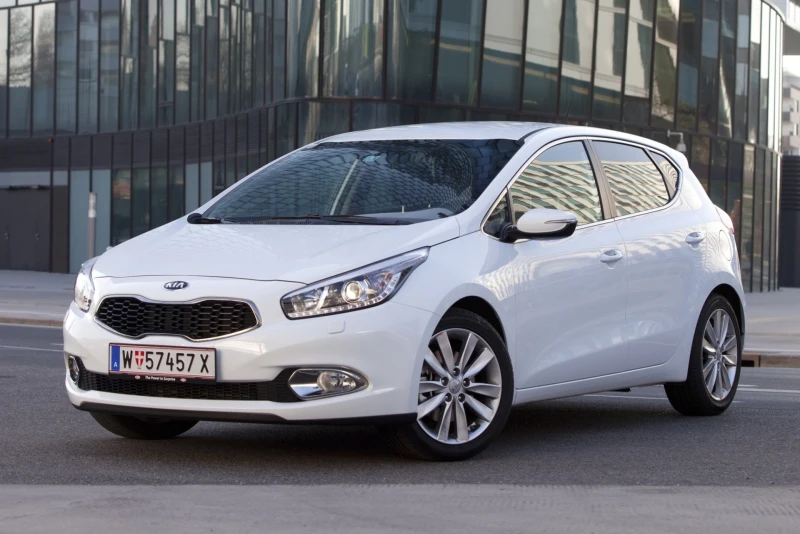
In the US market, this model was not officially sold by Kia and is primarily seen as a gray-market import or enthusiast vehicle. It was offered in Europe with gasoline and diesel powertrains meeting Euro 5/6 standards. Technical specs for the Kia Ceed II (JD) varied by model year, spec, and trim, emphasizing efficiency and sharp handling. Below are the key details on engines, transmissions, dimensions, and ownership notes relevant to the American used market. Exterior design, interior, trim levels, and common issues are covered in other articles in this series.
Engines and Transmissions
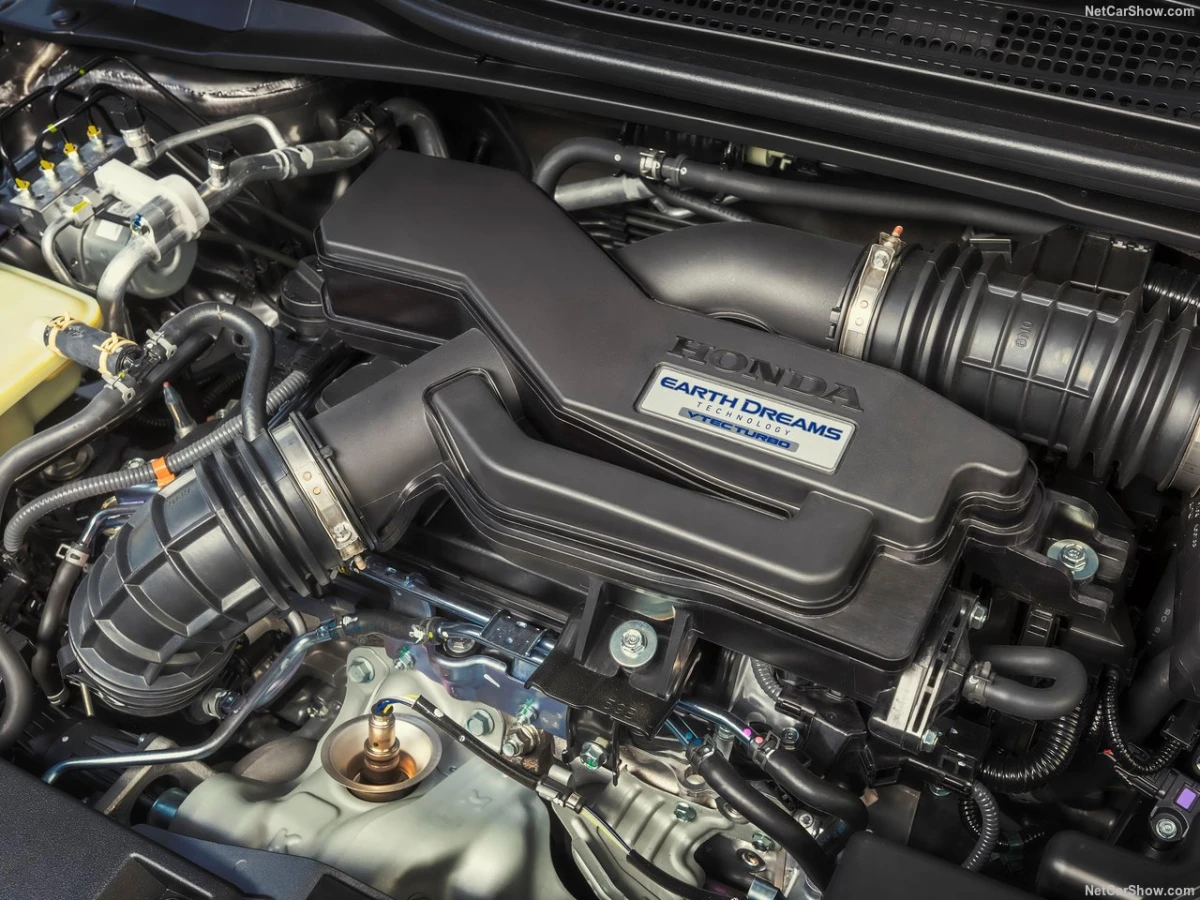
In Europe (source market for US imports), the Kia Ceed II came with Gamma and U2 family gasoline and diesel engines, featuring port or direct injection (GDI). No hybrid variants existed. All models were front-wheel drive (FWD) — no AWD was offered. Turbo gasoline 1.6 T-GDI engines (135 hp and 204 hp) were available, though the 204-hp GT version was relatively rare.
Main powertrains available in the European market (and thus for US imports):
| Engine Type | Displacement, cu in | Power, hp | Transmission | Drivetrain | Notes |
| Gasoline, Gamma MPI (naturally aspirated, port injection) | 85.2 | 100 | 6-speed manual | FWD | Base engine, pre-2015 |
| Gasoline, Gamma GDI (naturally aspirated, direct injection) | 97.1 | 135 | 6-speed manual / 6-speed automatic | FWD | Most common for imports |
| Gasoline, Gamma T-GDI (turbocharged, direct injection) | 97.1 | 204 | 6-speed manual / 7-speed DCT | FWD | GT version, post-2013 |
| Diesel, U2 CRDi (turbo, direct injection) | 85.2 | 90 | 6-speed manual | FWD | Base diesel, pre-2015 |
| Diesel, U2 CRDi (turbo, direct injection) | 96.5 | 128–136 | 6-speed manual / 6-speed automatic | FWD | Most popular diesel import |
Transmissions included 6-speed manual or automatic; the 7-speed DCT was exclusive to the GT. For imported examples, the 1.6 CRDi diesel (128–136 hp) with manual or automatic was a frequent choice.
Dimensions and Weight
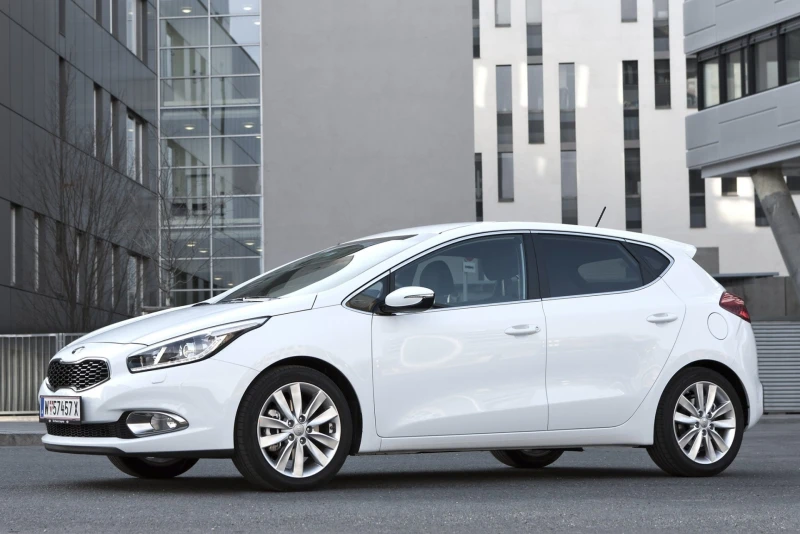
Dimensions varied by body style: 5-door hatchback, wagon (SW), and coupe (pro_cee'd). Average figures for the 5-door hatchback with 1.6 CRDi and manual (most common import):
| Parameter | Value | Notes |
| Length, in | 169.7 (hatch) / 177.4 (wagon) | pro_cee'd ≈177.4 in |
| Width, in | 70.1 | Excluding mirrors |
| Height, in | 57.9 | Without roof rails |
| Wheelbase, in | 104.3 | Consistent across models |
| Curb Weight, lb | 2756–3086 | Lowest for 1.4 MPI, highest for 1.6 T-GDI GT |
| Gross Weight, lb | 4012–4299 | Depending on engine |
| Ground Clearance, in | 5.5–5.9 | Varies with tires and load |
Higher weights apply to automatic and top-engine versions. Cargo volume (VDA): hatch — 13.4–46.5 cu ft, wagon — 18.6–58.0 cu ft, pro_cee'd — 13.4–43.3 cu ft.
Updates by Year and Facelift
Production ran from 2012 to 2018. Key changes:
- 2012–2014 — Launch with 1.4 MPI (100 hp), 1.6 GDI (135 hp), 1.6 T-GDI (135 hp and 204 hp GT), 1.4/1.6 CRDi (90/128 hp), 6MT/6AT. Met Euro 5 standards.
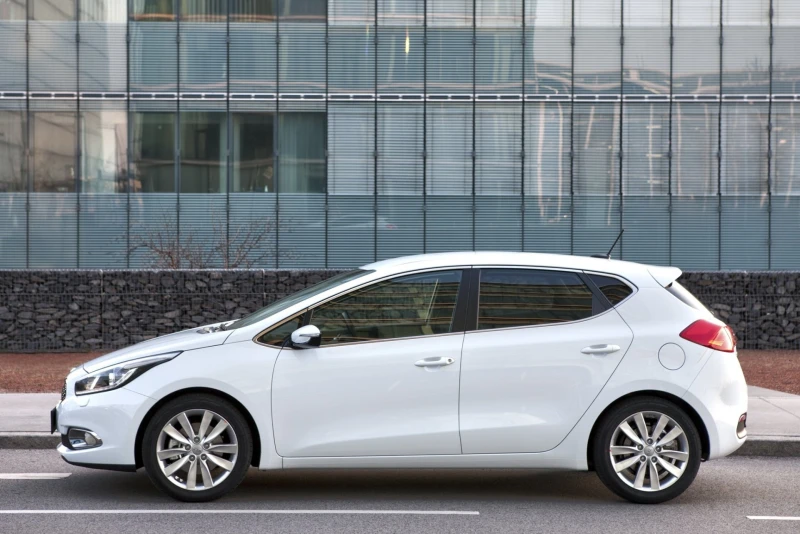
- 2015 — Facelift: 1.6 CRDi uprated to 136 hp, refined automatic, updated headlights/taillights, 7-inch multimedia with navigation, added driver aids (Lane Departure Warning, Blind Spot Detection).
- 2016–2018 — Final years focused on Euro 6 compliance, better noise insulation, and efficiency. 1.6 T-GDI GT gained 7-speed DCT in 2016.
The 2015 facelift boosted appeal for imports: post-facelift diesels gained favor for efficiency and refinement, while GDI gas engines were prized for responsiveness. Earlier models are cheaper but may need more attention to emissions and electronics.
Ownership Notes and Technical Details
In the US used market, the most sought-after imports are 1.6 CRDi diesels (128–136 hp) and 1.6 GDI gasoline (135 hp). Engines are durable with proper fuel and maintenance: expect 155,000–220,000 miles. Diesels are sensitive to the DPF particulate filter, needing cleaning every 60,000–90,000 miles. Gasoline GDI engines can suffer intake valve carbon buildup — recommend walnut blasting every 50,000 miles. The 1.6 T-GDI (204 hp) demands premium unleaded and 0W-30 synthetic oil.
Based on European owner data (adapted for US-style driving), approximate real-world fuel economy:
- 1.6 GDI (135 hp) — 28–34 mpg combined;
- 1.6 CRDi (128–136 hp) — 36–47 mpg combined (highway up to 52 mpg);
- 1.6 T-GDI (204 hp) — 24–29 mpg combined (city 19–22 mpg).
Automatics and DCTs are reliable with fluid changes every 40,000 miles; manuals are straightforward and long-lasting. Parts are widely available (shared with Hyundai i30), and maintenance costs are low to moderate for the class. Repairability is strong: engines/transmissions are shared with Hyundai models, suspension (MacPherson front, multi-link rear) typically needs attention around 60,000–70,000 miles on poorer roads.
Summary and Best Choice for the US Market
In the 2026 US used/import market, the most balanced option is the 1.6 CRDi (128–136 hp) with 6-speed manual or automatic and front-wheel drive: strong fuel economy (36–47 mpg combined), solid reliability, and good value in the $9,000–$13,000 range (approximate market price for the United States). The gasoline 1.6 GDI (135 hp) with automatic suits those wanting smoother operation and less fuel sensitivity, though efficiency is lower.
Considering ownership costs (low to moderate) and resale value, the diesel version is preferable for highway and mixed driving. Post-facelift 2015–2018 models offer the best liquidity, especially with documented service history. When shopping, prioritize inspection of the automatic/DCT and turbo to avoid surprise expenses.
This engine overview highlights the versatility of the 2012–2018 generation: these powertrains remain practical for American conditions with regular maintenance. The Kia Ceed II's technical specs deliver a compelling mix of efficiency and everyday usability in the used market.