The technical specifications for the Honda CR-V sixth generation are tailored to the North American market, including the United States, where the model is widely available through Honda dealerships. The lineup emphasizes hybrid powertrains, with the 1.5L turbo gasoline variant also offered. Engines meet strict U.S. emissions standards, prioritizing fuel efficiency and low emissions. Below are the key details on powertrains, dimensions, and operating features for the U.S. market as of early 2026.
A detailed look at exterior design, interior, trim levels, and potential drawbacks of this generation is covered in separate articles in the series.
Engines and Transmissions
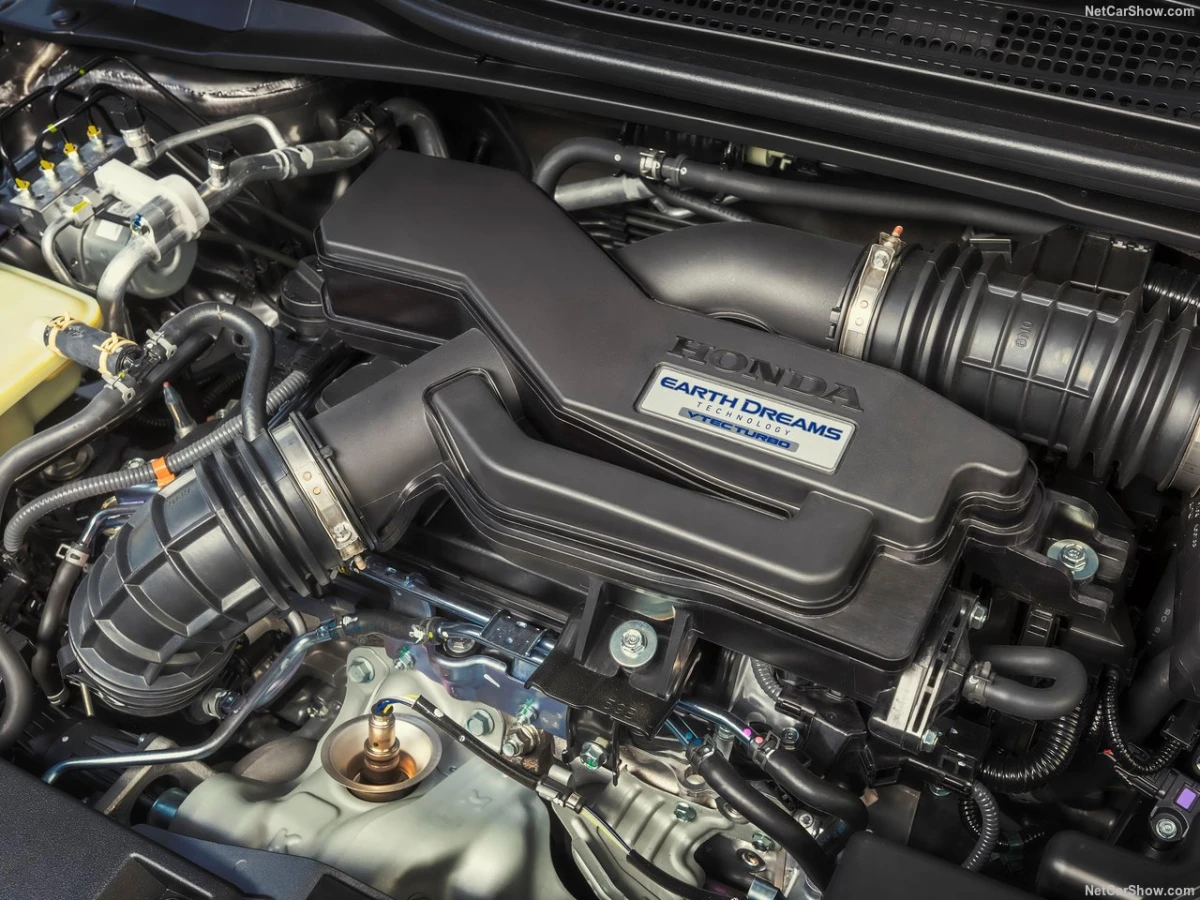
Since its introduction, the Honda CR-V sixth generation (2023–present) has featured a range of powertrains. In the United States, the focus is on the efficient e:HEV hybrid system, alongside the responsive 1.5L turbo gasoline engine. The hybrid combines a 2.0L Atkinson-cycle engine with electric motors for a total system output of 204 hp. All versions use a smooth e-CVT or CVT transmission. Real Time AWD is widely available, though front-wheel-drive models are also offered for better efficiency.
| Engine Type | Displacement | Power | Transmission | Drivetrain | Notes / Availability |
| Turbo Gasoline | 1.5L (VTEC Turbo) | 190 hp | CVT | FWD / AWD | Widely available across the U.S. market |
| Hybrid (e:HEV) | 2.0L (Atkinson) + electric motors | 204 hp (combined) | e-CVT | FWD / AWD | Primary offering in the U.S., highly popular |
| Plug-in Hybrid | — | — | — | — | Not currently offered in the U.S. market (gasoline and standard hybrid versions dominate) |
Dimensions and Weight
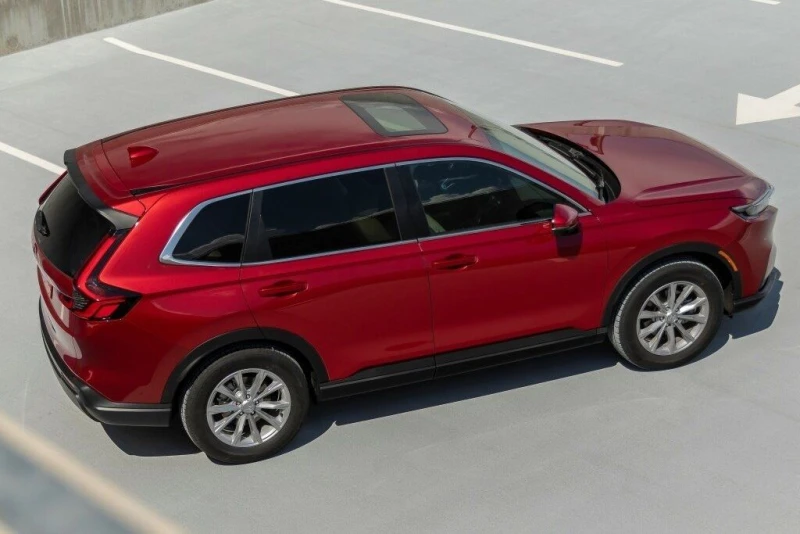
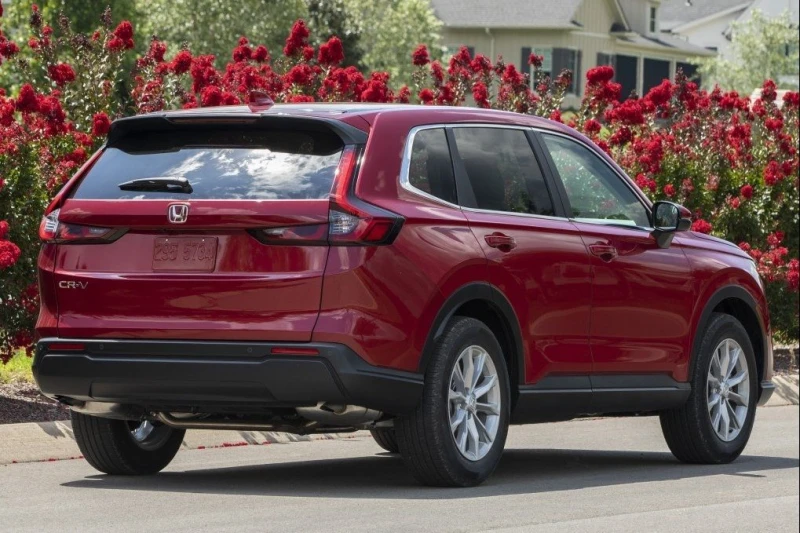
Exterior dimensions of the Honda CR-V sixth generation are consistent across most trims, with minor variations depending on equipment and drivetrain. Averages are shown below. Curb weight varies: hybrids are heavier due to the battery and electric motors, while gasoline models are lighter. Gross vehicle weight ratings apply to common configurations with CVT and AWD.
| Specification | Value | Notes |
| Length, in | 184.8–185.3 | Varies slightly by trim and market |
| Width, in | 73.5 | Without mirrors |
| Height, in | 66.5 | With / without roof rails |
| Wheelbase, in | 106.3 | Consistent across the generation |
| Curb Weight, lbs | 3,500–4,200 | Lowest for 1.5L gas, highest for hybrids |
| Gross Vehicle Weight, lbs | 4,850–5,300 | Depending on configuration |
| Ground Clearance, in | 7.8–8.2 | Standard / TrailSport trims |
Yearly Updates and Refresh
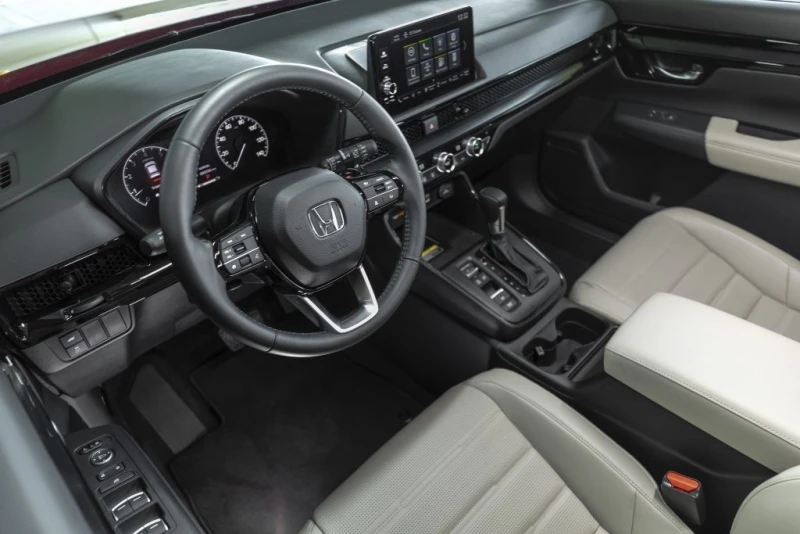
The Honda CR-V sixth generation remains current, with a refresh introduced around 2025–2026 that brought updated styling (new grille, headlights, bumpers), enhanced infotainment (larger touchscreen, wireless smartphone integration), and the addition of the TrailSport trim featuring higher ground clearance (8.2 in), underbody protection, and all-terrain tires. Powertrains stayed consistent: e:HEV hybrid (204 hp) with refined tuning for better efficiency. The 1.5L turbo gasoline engine (190 hp) saw no major changes and remains a core option.
In 2026, minor updates included improved Honda Sensing safety software, compatibility with current fuel standards, and expanded color options. No major components were discontinued, but emphasis has grown on hybrid models and the rugged TrailSport variant. Current 2026 lineup highlights include e:HEV hybrids in various trims with FWD or AWD.
Operating Features and Technical Notes
In the U.S., the Honda CR-V sixth generation is primarily driven in e:HEV hybrid configurations. Engine reliability is rated highly: the 2.0L Atkinson hybrid powertrain often exceeds 200,000 miles with regular maintenance, while the turbo 1.5L requires attention to oil quality and turbo care. Popular used-market versions include the e:HEV hybrid and 1.5L turbo models.
Real-world fuel economy (based on EPA and owner reports): e:HEV hybrid — 37–40 mpg combined; 1.5L turbo — 27–30 mpg combined, depending on drivetrain and driving style.
Transmissions: e-CVT in hybrids delivers seamless operation but benefits from fluid changes every 30,000–40,000 miles; CVT in gasoline models is sensitive to overheating in heavy traffic. Real Time AWD is reliable and effective on slippery roads but not designed for serious off-roading. Parts are readily available through Honda dealers, with costs average for the class—higher for hybrid components like the battery pack. Repairability is strong, with many parts shared across generations, though hybrids require specialized diagnostic tools for the high-voltage system.
Summary and Best Choice for the U.S. Market
From a technical standpoint, balanced options for U.S. buyers include the e:HEV hybrid 2.0L (204 hp) + e-CVT + AWD for excellent efficiency and all-weather capability, or the 1.5L turbo (190 hp) + CVT + AWD for simpler maintenance and lower upfront cost. The hybrid shines for daily driving and fuel savings, especially with rising fuel prices. The gasoline turbo model appeals to those prioritizing lower purchase price and straightforward servicing.
When choosing, consider typical driving needs, access to premium unleaded fuel (recommended for best performance), and service history. Overall resale value remains strong thanks to Honda's reputation and demand for efficient crossovers in the United States.