The cabin of the 2019–2024 BMW 1 Series is tuned for both comfort and driving engagement, appealing to urban drivers who value style and refinement. In the US, this model has built a solid following on the used market thanks to its blend of accessibility, dynamics, and premium feel. Below, we dive into the key interior highlights, available trims, year-over-year changes, potential drawbacks, and tips for used buyers. The 1 Series cabin marks a clear evolution from prior generations, prioritizing space and digital integration.
Overall Cabin Overview
Materials and Design
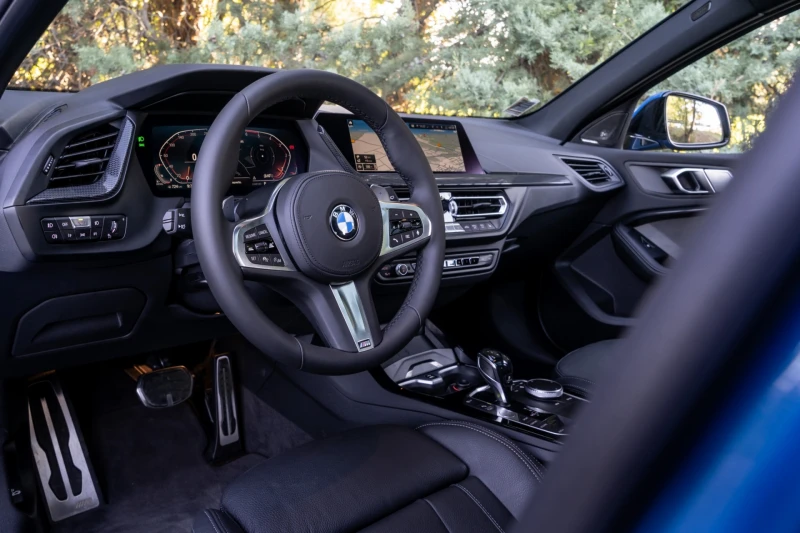
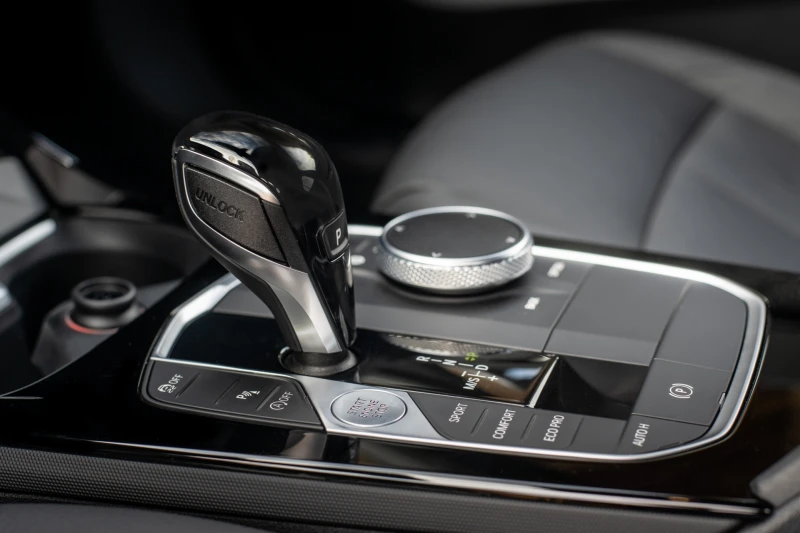
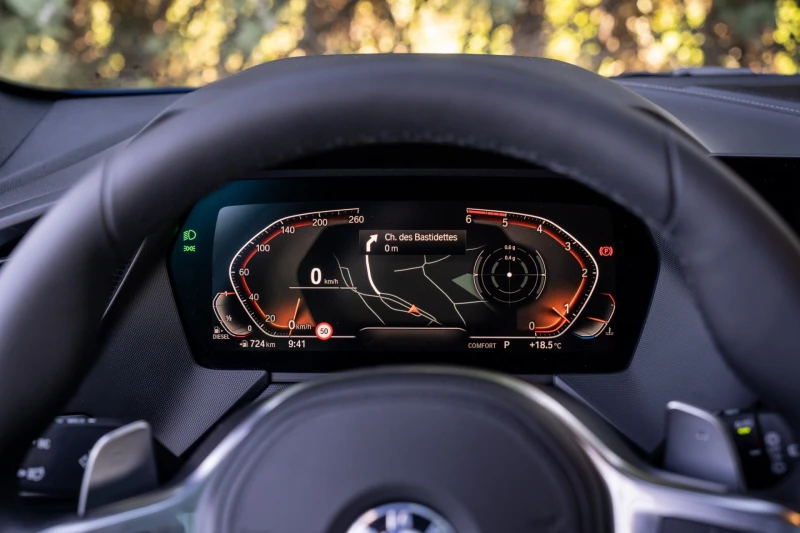
The 2019–2024 BMW 1 Series interior features high-quality materials: soft-touch plastics with refined textures, optional Dakota leather or Sensatec upholstery, and elegant aluminum or wood accents (walnut or brushed aluminum). The layout is modern with horizontal lines that emphasize width and openness. The instrument cluster is fully digital: standard 5.1-inch display, with the optional 10.25-inch Live Cockpit Professional upgrade. The center console is driver-oriented, featuring the iDrive 7.0 controller, touchpad, and an 8.8–10.25-inch infotainment touchscreen. Controls are clean and minimal, with optional gesture control.
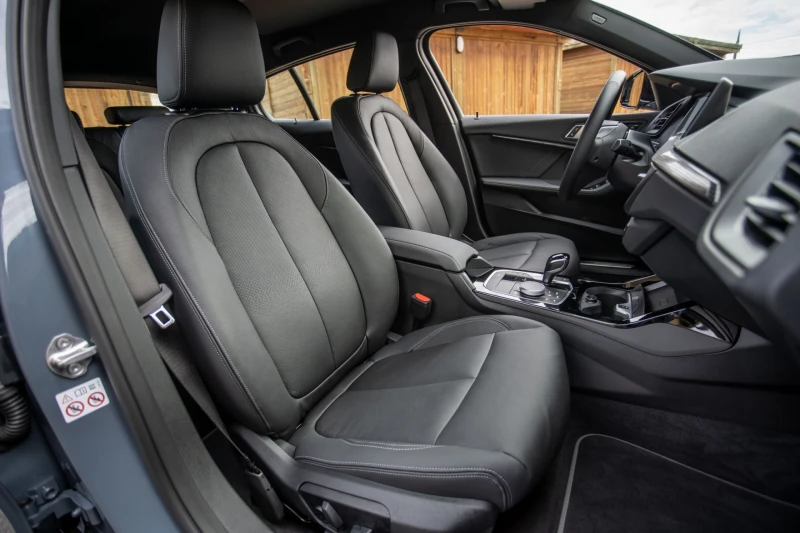
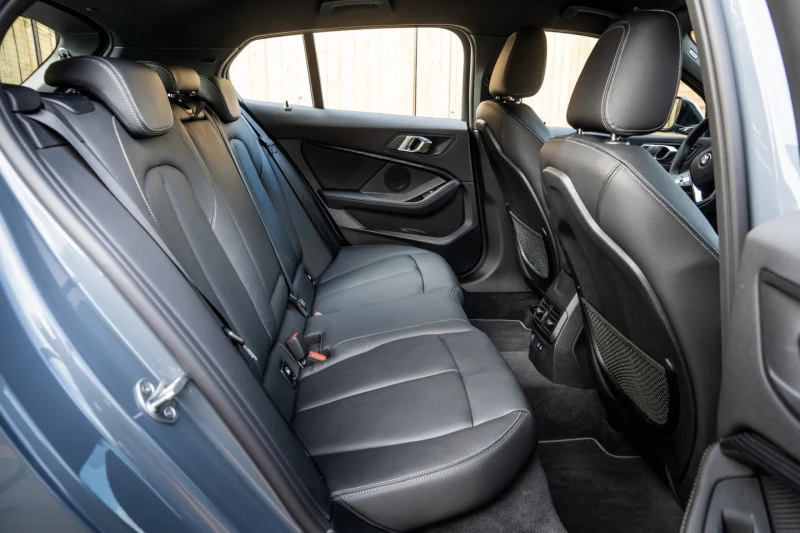
Seating comfort is excellent: front seats offer optional power adjustments, strong bolstering, and available heating/ventilation. The rear bench is noticeably roomier than before (+1.3 inches legroom, +0.75 inches headroom), though taller passengers over 6'1" may find headroom snug. It's comfortable for four adults. Practical touches abound: generous storage pockets, multiple USB ports.
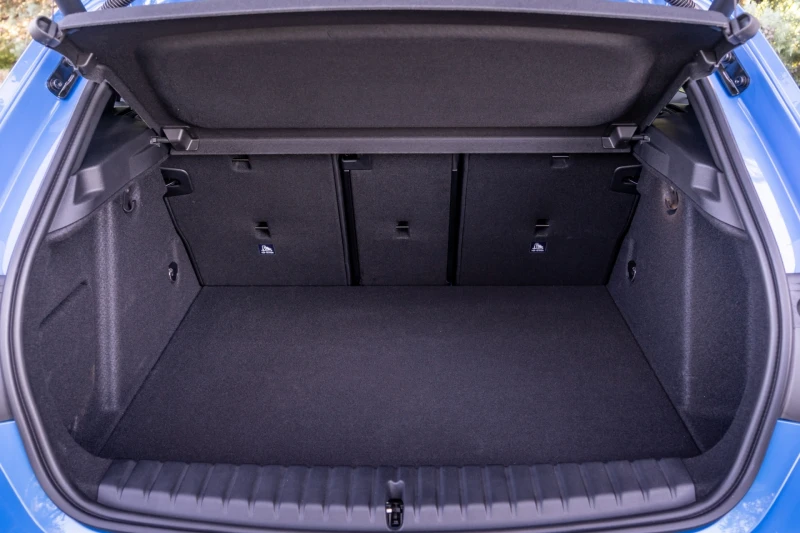
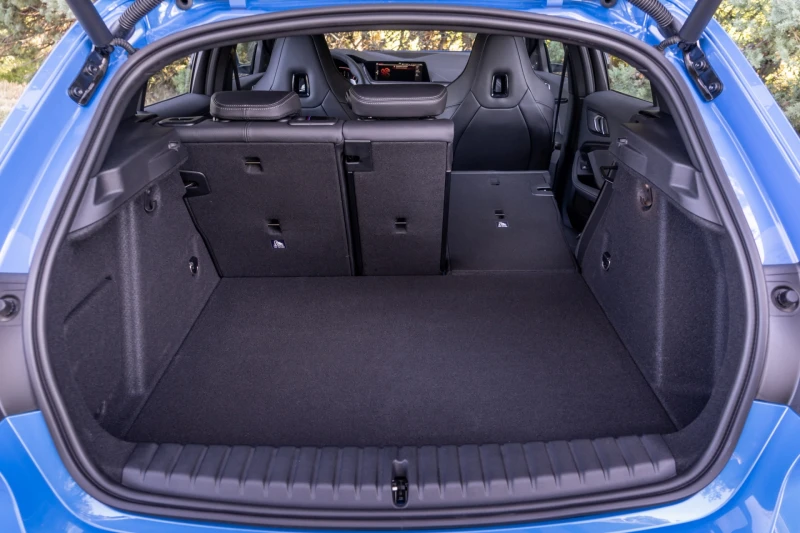
Cargo space measures about 13.4 cu ft in the M135i xDrive (or roughly 10.6 cu ft in mild-hybrid variants due to battery placement) with a flat floor and 40:20:40 split-folding rear seats (optional). Loading is straightforward thanks to low liftover, cargo nets, and available power tailgate. With seats folded, capacity expands to around 42 cu ft—plenty for weekend trips, groceries, or gear.
Trims & What They Include
Trims Available in the US Market
In the US, the BMW 1 Series III was offered in trims such as Advantage (base), Sport Line, Luxury Line, and M Sport, often equipped with packages suited to American preferences (heated seats/steering, advanced driver aids). Typical choices range from well-equipped base models to fully loaded performance-oriented versions. Owners enjoy premium finishes, intuitive infotainment, and strong safety tech.
Base Advantage: cloth upholstery, single-zone climate control, iDrive with 8.8-inch screen, LED headlights, parking sensors. Often included heated seats and mirrors for colder regions.
Sport Line: sport seats with cloth/leather combo, M Sport steering wheel, ambient lighting, 17-inch wheels, lane-keeping assist, forward collision warning.
Luxury Line: Dakota leather, wood/aluminum trim, panoramic sunroof, multi-zone climate, Harman Kardon audio, head-up display.
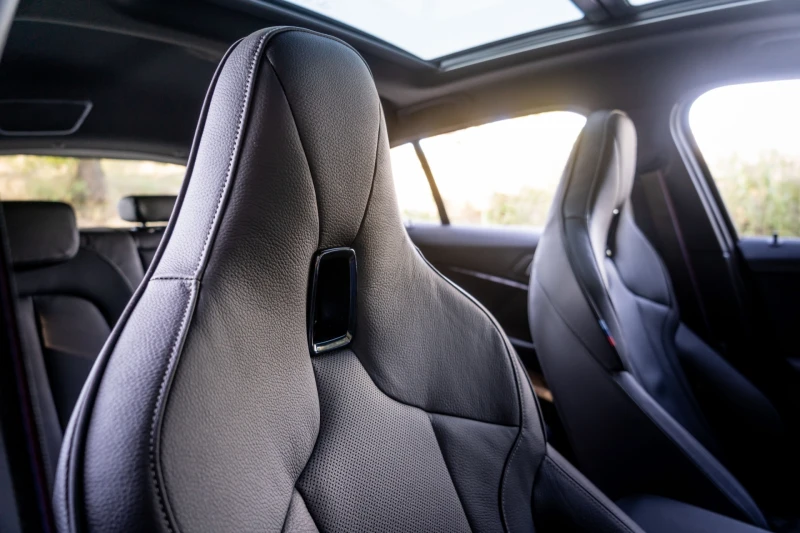
Top M Sport: Alcantara/leather, M Sport seats with optional massage/ventilation, Bang & Olufsen sound, gesture control, 360° cameras, active cruise control.
In the US, popular used examples often feature gasoline engines with automatic transmission and options like remote start. On the secondary market (typical prices $18,000–$28,000 depending on mileage and condition), Sport and M Sport variants remain in high demand. See the table below.
| Trim | Key Interior Features | Additional Options |
|---|---|---|
| Advantage | Cloth, single-zone climate, iDrive 8.8" | Heated seats, parking sensors |
| Sport Line | Sport seats, M steering wheel, ambient lighting | Driver aids, 17" wheels |
| Luxury Line | Leather, panorama roof, Harman Kardon | Multi-zone climate, HUD |
| M Sport | Alcantara, M seats, Bang & Olufsen | Gesture control, 360° cameras |
Changes Through the Generation
Interior Updates by Year
In 2022–2023, the facelift brought refreshed iDrive graphics, enhanced sound insulation (extra materials in doors and floor), and new upholstery color options (gray, red). The 2023 update included an optional larger 10.7-inch central screen, cleaner console design, standard gesture control in some markets, and improved ambient lighting. These refinements made the cabin quieter and more tech-forward—valuable on highways where road and tire noise can intrude. Post-2023 models feel noticeably more refined with reduced cabin noise.
Common Questions & Cabin Drawbacks
Known Interior Issues
On used F40 1 Series models, watch for: wear on soft-touch plastics (scratches), steering wheel/seat bolsters showing shine after 60,000+ miles. Pre-facelift examples can suffer noticeable tire roar above 60 mph due to moderate sound deadening. Rear seat is tight for three adults, and thick pillars limit visibility. iDrive glitches occur occasionally (software updates usually resolve them), and leather may crack in extreme cold or sun exposure. Owners in hot/dusty regions report faster carpet wear. Reviews mention occasional vibrations, minor electrical quirks, and doors that lack the heavy “thunk” of larger BMWs.
Conclusion: How the Cabin Holds Up Today & Best Trim
As of 2026, the BMW 1 Series III interior still feels fresh and upscale: crisp digital displays and quality materials have aged well. The sweet spot for most buyers is a Sport Line or M Sport 118i/120i—offering a strong mix of value (approximate used market price $18,000–$25,000), desirable equipment (driver aids, ambient lighting), and everyday comfort. When shopping used, inspect plastic surfaces, test iDrive functionality, check for unusual vibrations/noises, and look for signs of wear (stains, deep scratches). The cabin remains one of the model's strongest assets, helping make the 1 Series a smart choice on the used market.