The model arrived in the U.S. market in 2016 and quickly gained strong popularity thanks to its well-balanced mix of design, comfort, and features. This article focuses on the 2016–2021 Hyundai Tucson cabin, available trim levels, year-by-year changes, and real-world ownership experience on American roads. Technical specs, exterior design and other topics are covered in other articles of the series.
Overall Cabin Overview
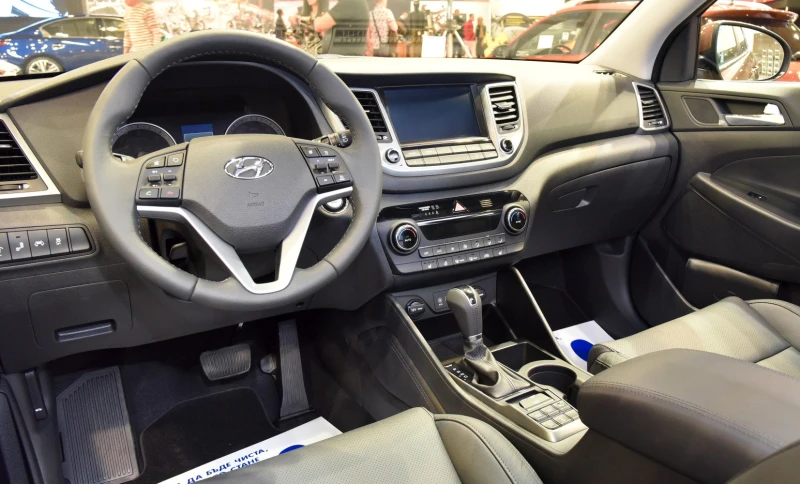
The Hyundai Tucson 2016–2021 cabin stands out with its thoughtful layout and solid materials that were competitive in the compact crossover segment at launch. The interior follows a clean, driver-focused minimalism. The center stack is angled slightly toward the driver for easier access to climate and infotainment controls. The instrument panel is classic analog with clear gauges and a small 3.5–4.2-inch trip computer display. Higher trims feature an 8-inch touchscreen neatly integrated into the dash.
Materials vary by trim level. Entry-level versions come with cloth upholstery and hard plastics finished with a nice texture. Mid- and top-tier trims (SEL, Limited, Ultimate) add soft-touch surfaces, leatherette or genuine leather accents on the dash and seats, plus chrome highlights. Build quality is consistently strong: tight panel gaps and no creaks even on rough pavement or pothole-filled city streets.
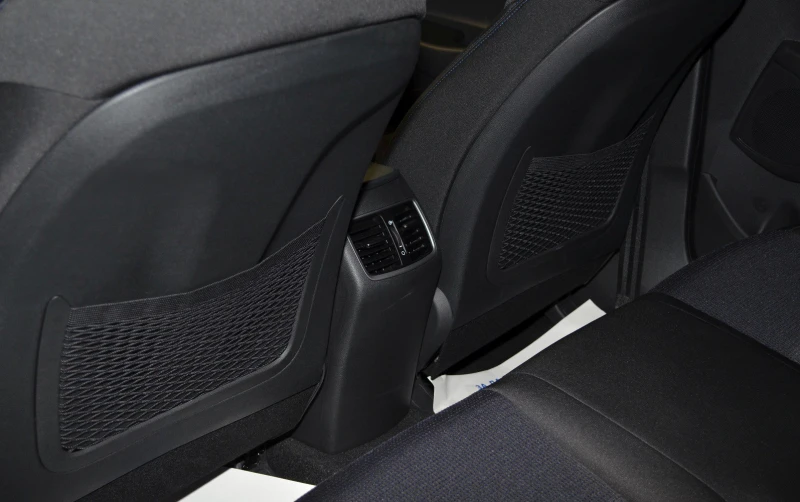
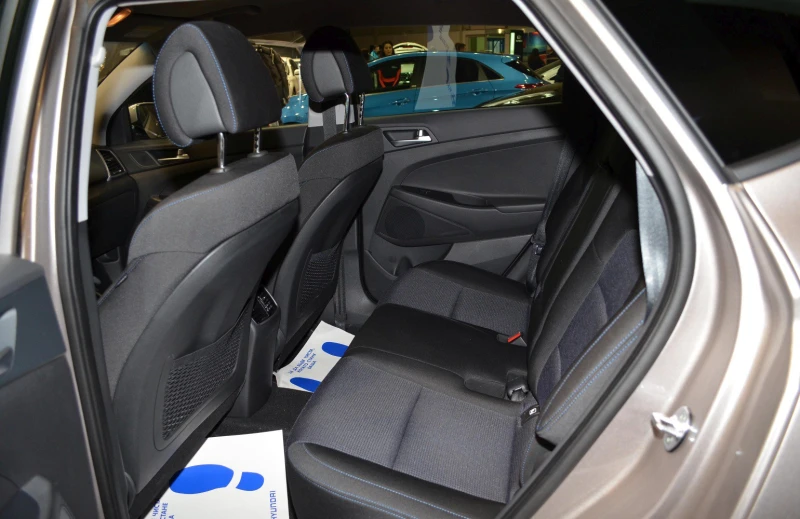
Driver seating position is comfortable thanks to a tilt-and-telescopic steering wheel and supportive front seats with good bolstering. Higher trims offer power-adjustable seats and lumbar support. Rear-seat passengers get decent legroom and headroom (wheelbase 105.1 inches), though the center tunnel can intrude on the middle passenger’s foot space. The rear bench features reclining seatbacks for better long-trip comfort.
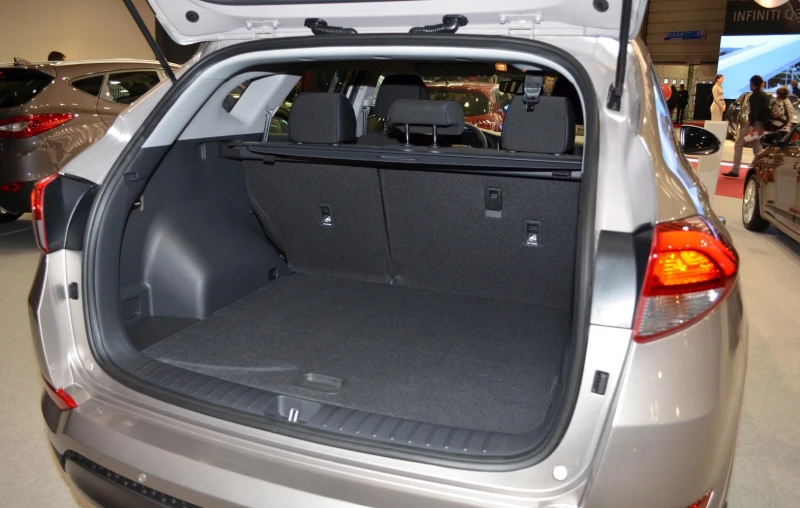
The cargo area is one of the Tucson’s strongest points. It offers 31 cubic feet behind the rear seats and expands to 61.9 cubic feet with them folded (60:40 split). The cargo floor is flat, with under-floor storage and tie-down hooks. A compact spare (or full-size on some trims) is stored underneath. This practicality makes the Tucson an excellent choice for family road trips and weekend adventures.
Trim Levels on the U.S. Market
The Hyundai Tucson interior trims offered a wide range of features tailored to American buyers. Here are the most common configurations and their key equipment:
- SE (base): cloth seats, single-zone air conditioning, 5-inch touchscreen audio (4 speakers, USB, Bluetooth), heated front seats, tilt/telescopic steering, six airbags. Analog gauges with small monochrome display. Simple but practical setup for value-conscious buyers.
- SEL / Value: dual-zone automatic climate control, heated rear seats (later models), rearview camera, 7-inch touchscreen with Apple CarPlay/Android Auto support, rear parking sensors, cruise control. Softer plastics and cloth or cloth/leatherette seating.
- Limited: leather upholstery, proximity key with push-button start, 8-inch touchscreen, heated steering wheel, front & rear parking sensors, blind-spot monitoring, lane-keeping assist. Color 4.2-inch driver display. Chrome accents and noticeably better sound insulation.
- Ultimate / Limited Ultimate: panoramic sunroof, ventilated front seats, power driver’s seat with memory, premium audio (often 8 speakers), adaptive cruise control, fully leather interior. Ambient LED cabin lighting in top versions.
On the American used market, SEL and Limited models are the most common, offering the best balance of features and value. Base SE versions were popular in fleet sales, while Ultimate trims remain relatively rare due to higher original pricing.
Cabin Updates by Year
The 2018 facelift brought the most significant changes to the Hyundai Tucson III interior. Updates applied to both North American and other markets:
- Infotainment: Pre-facelift (2016–2017) models had 5- or 7-inch screens with basic graphics. After 2018, an 8-inch touchscreen became standard on most trims, with sharper resolution, Apple CarPlay/Android Auto, improved navigation and a more responsive interface.
- Instrument Cluster: Facelift added an optional 7-inch digital gauge cluster on higher trims, replacing the analog setup. It included customizable Sport, Eco, and Normal display modes.
- Sound Insulation: Better engine bay and wheel-arch insulation reduced cabin noise by roughly 2–3 dB. The improvement is especially noticeable on highways and during extended cruising.
- Materials: Post-facelift Limited and Ultimate trims received new interior color options (beige, gray) and higher-grade leather with stitching. Soft-touch materials were extended across more of the dash.
- Features: Heated steering wheel and ventilated seats became available lower in the lineup after 2018, previously reserved for top trims.
Facelifted models (2018–2021) feel noticeably more modern and refined, making them the preferred choice on today’s used market.
Common Issues & Owner Feedback
Despite its solid design, used 2016–2021 Hyundai Tucsons have some known cabin-related drawbacks worth considering in U.S. driving conditions:
- Material Wear: Cloth seats in base models wear and stain relatively quickly with heavy family use or frequent cargo hauling. Leather in higher trims holds up better, but light-colored leather needs regular care to avoid visible wear.
- Noise Levels: Pre-facelift models (2016–2017) transmit noticeable tire and engine noise above 60–65 mph, especially on diesel versions sold elsewhere. Post-2018 models are quieter, but coarse pavement still brings some suspension noise into the cabin.
- Rear Seat Space: Adequate for most adults, but passengers over 6'2" may find headroom tight, particularly with the panoramic sunroof. The center rear passenger feels the tunnel intrusion.
- Visibility: Thick A-pillars create blind spots during turns. The rear window is small, though the standard rear camera and parking sensors help on mid- and higher trims.
- Infotainment: Early 5-inch screens look dated and lack modern resolution. Even 7- and 8-inch units can occasionally lag when running heavy navigation or multiple apps.
- Used Condition: Many examples on the market are ex-fleet or high-mileage vehicles showing steering wheel wear, center-console scratches, and button fade.
Protect cloth seats with covers and keep leather conditioned. Always test noise levels during a highway drive, especially on pre-facelift examples.
Conclusion: How the Cabin Holds Up Today & Best Trim Choice
In 2025–2026, the Hyundai Tucson 2016–2021 cabin remains competitive, particularly in facelifted form (2018–2021). The clean design, solid materials, and smart ergonomics still feel contemporary. However, base models with cloth and small screens now appear dated next to newer competitors. Facelifted Limited and Ultimate trims with the 8-inch touchscreen, leather, and improved insulation continue to deliver strong value.
The sweet spot for most American buyers is a facelifted Limited (2018–2021). It brings leather upholstery, heated steering wheel & seats, 8-inch infotainment, parking sensors, and advanced safety features. This trim strikes the best balance of comfort, technology, and resale value. On the current used market, clean examples typically range from $14,000–$18,000 depending on mileage, condition, and region (roughly equivalent to original MSRP positioning).
When shopping, pay special attention to:
- Cabin Condition: Check seat bolsters, steering wheel, and console for heavy wear. Light leather can show stains or scuffs.
- Infotainment: Confirm the screen and software respond quickly, especially if navigation is important to you.
- Noise Levels: Test the vehicle on both highway and imperfect local roads to judge cabin quietness.
- Repair History: Look for signs of substandard collision repair (uneven trim gaps, adhesive residue).
The Hyundai Tucson III interior combines everyday practicality, long-term durability, and genuine comfort — making it a smart pick for families, commuters, and weekend road-trippers. Choose a facelifted Limited trim, and even in 2026 the cabin will still impress with its functionality and welcoming feel.