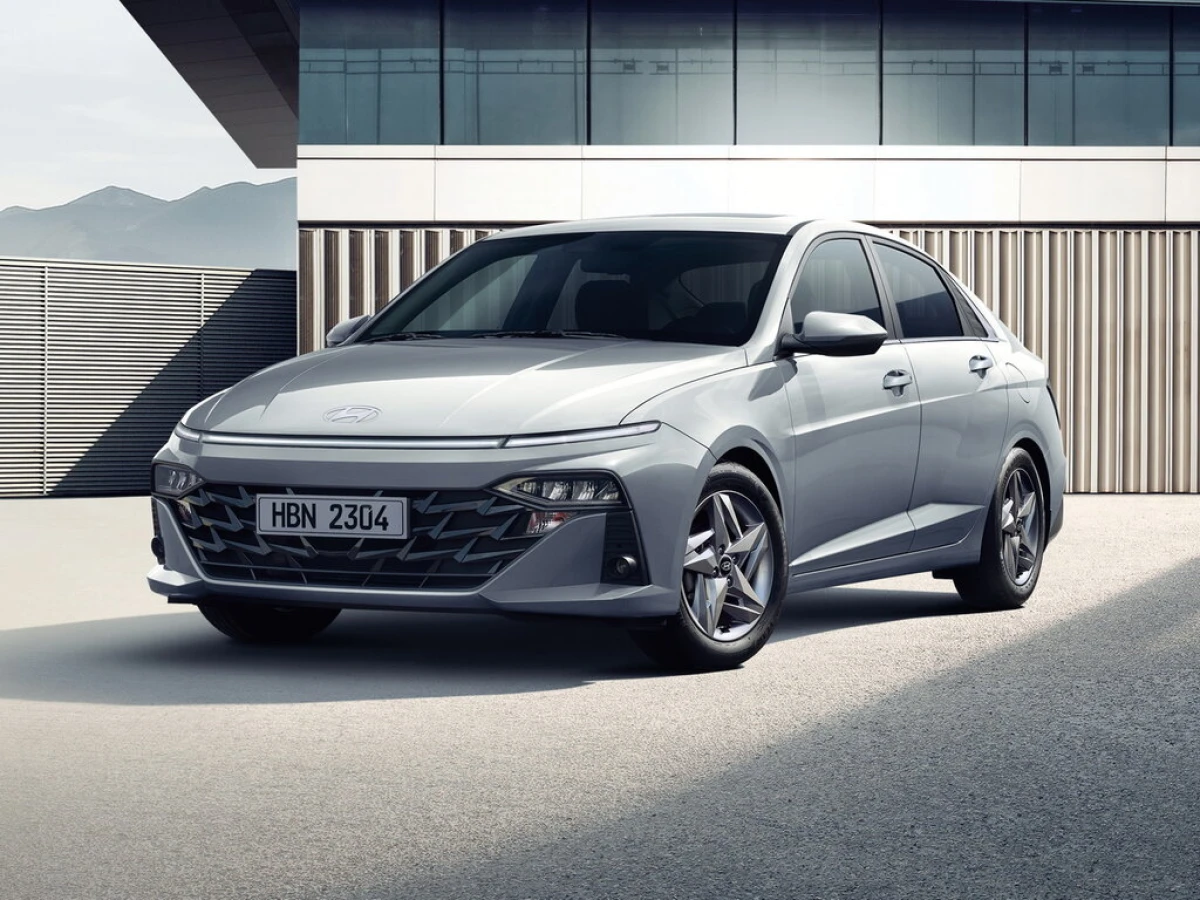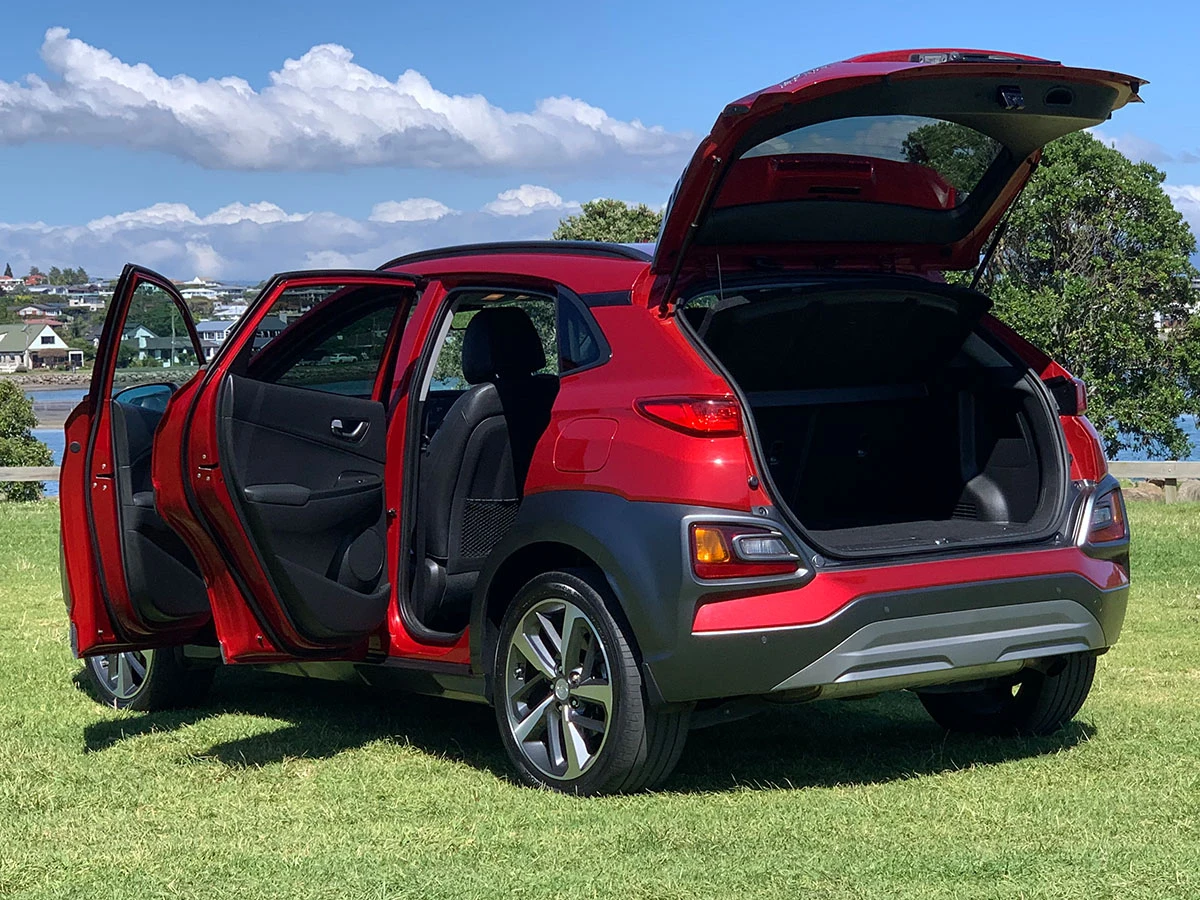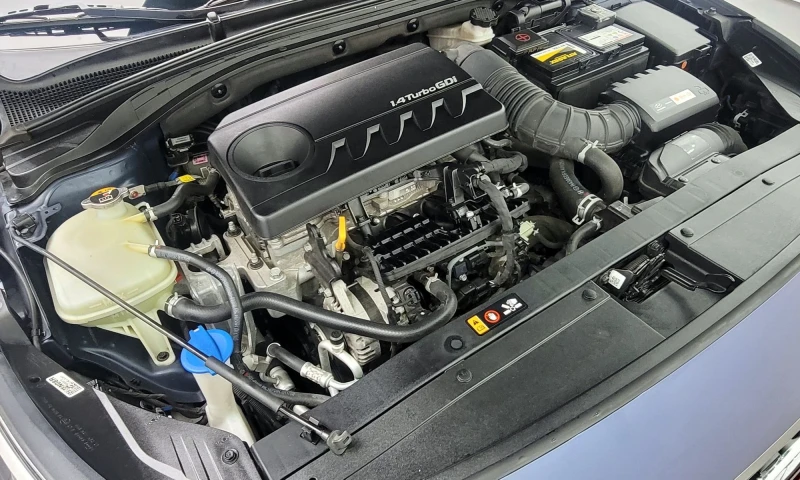
Engines in the Hyundai i30 from 2017 to the present (PD generation) differ depending on model year and market. In the United States, gasoline engines dominate, with configurations meeting EPA and CARB emissions standards, especially after the 2020 facelift. Exterior styling, interior features, trim packages and known issues are covered in other articles of this series.
Engines and Transmissions
The PD generation received several powertrain updates after the 2020 facelift. In the US market the focus remains on turbocharged and naturally aspirated gasoline engines, with mild-hybrid versions appearing in later model years in some regions. All-wheel drive is not offered — every i30 comes with front-wheel drive. Diesel powertrains have been largely discontinued in North America.
Below is a table of the main powertrains offered between 2017–2026 and most commonly seen on the American used car market.
| Engine Type | Displacement, L | Power, hp | Engine Code | Transmission Type | Drivetrain | Notes / Regional Availability |
| Gasoline Naturally Aspirated | 1.4 | 100 | Kappa 1.4 MPi | 6MT | Front | Pre-facelift only; rare in the US after 2020 |
| Gasoline Turbo | 1.0 | 120 | Smartstream G1.0 T-GDi | 6MT / 7DCT | Front | Post-facelift, mild-hybrid in later versions; one of the most common in the US market |
| Gasoline Turbo | 1.4 | 140 | Kappa 1.4 T-GDi | 6MT / 7DCT | Front | Pre-facelift; available in some North American markets |
| Gasoline Naturally Aspirated | 1.5 | 110 | Smartstream G1.5 DPI | 6MT / IVT | Front | Post-facelift; widely available in the US market |
| Gasoline Turbo | 1.5 | 160 | Smartstream G1.5 T-GDi | 7DCT | Front | Post-facelift, mild-hybrid; available in the US and Canada |
| Diesel | 1.6 | 95–136 | U2 1.6 CRDi | 6MT / 7DCT | Front | Mild-hybrid in later versions; very rare in the US after 2020 |
The most common combination in the US used market post-facelift is the 1.0 T-GDi with 7DCT. The 1.5 DPI with IVT is also very popular for its smooth and economical character.
Dimensions & Weight
Exterior dimensions and curb weight of the Hyundai i30 PD vary slightly by body style (hatchback, wagon, Fastback), but remain consistent after the facelift. Ground clearance is typically 5.3–5.5 inches. Below are average figures for the most common hatchback version in the US market.
| Parameter | Value | Notes |
| Length, in | 170.9 | Hatchback; wagon — 180.5 in, Fastback — 175.4 in |
| Width, in | 70.7 | Excluding mirrors |
| Height, in | 57.3 | Hatchback; wagon — 57.7 in |
| Wheelbase, in | 104.3 | Identical across all body styles |
| Curb Weight, lb | 2635–3185 | Depends on engine & trim; ~2780 lb typical for 1.0 T-GDi |
| Gross Vehicle Weight, lb | 3858–4233 | Varies by version |
| Cargo Volume, cu ft | 13.9–45.9 | Hatchback (seats up/folded); wagon — 21.3–58.2 cu ft |
| Fuel Tank Capacity, gal | 13.2 | Standard across versions |
These figures are representative of most gasoline-powered, front-wheel-drive examples found on the American market.
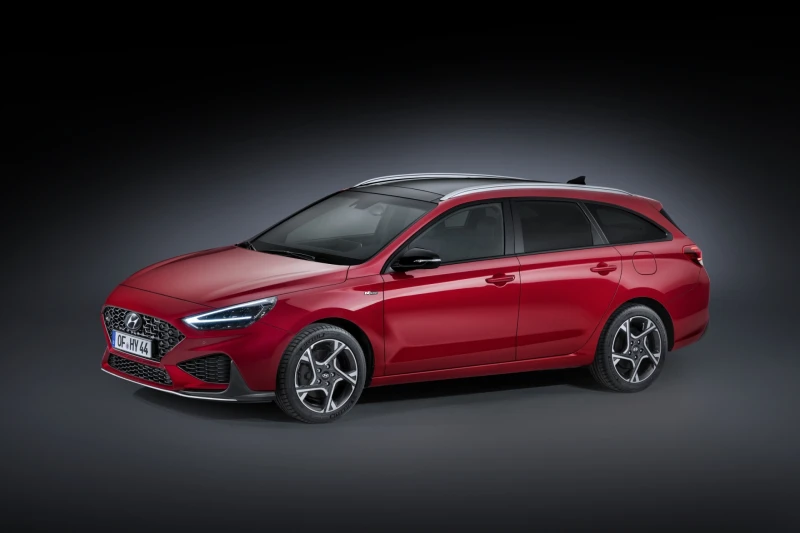
Yearly Updates and 2020 Facelift
The PD generation remains relevant in 2026. From 2017–2019 changes were minor: suspension tuning and software tweaks. The major 2020 facelift brought:
- switch to Smartstream engines: 1.4 MPi replaced by 1.5 DPI, 1.4 T-GDi by 1.5 T-GDi mild-hybrid;
- 48V mild-hybrid system introduced on most gasoline and remaining diesel variants;
- transmission upgrades: 7-speed DCT replaced older 6-speed DCT on turbo engines;
- refined suspension geometry for improved handling and ride comfort.
Older non-hybrid engines (1.4 MPi, 1.4 T-GDi, base 1.6 CRDi) were discontinued. Diesel availability dropped sharply after 2022 due to emissions regulations. Current 2025–2026 configurations in the US primarily feature the 1.5 DPI with 6MT/IVT and the 1.0 T-GDi mild-hybrid with 7DCT.
Ownership Notes & Technical Highlights
When buying or owning a Hyundai i30 PD in the United States, engine reliability is generally strong. The naturally aspirated 1.5 DPI (Smartstream G1.5) is considered very dependable, often exceeding 150,000–200,000 miles with regular maintenance. The turbo 1.0 T-GDi mild-hybrid performs well when using Top Tier premium unleaded fuel (91–93 AKI) and shows solid reliability in owner reviews. The 1.6 CRDi diesel is durable but sensitive to fuel quality and now very rare stateside.
Most popular engine choices in the US used market are the 1.0 T-GDi (120 hp) and 1.5 DPI (110 hp) — both well-suited to daily commuting and highway driving. Approximate real-world fuel economy based on US owner reports and EPA-equivalent testing:
- 1.5 DPI 6MT — 32–36 mpg combined;
- 1.0 T-GDi 7DCT mild-hybrid — 36–42 mpg combined;
- 1.5 T-GDi 7DCT mild-hybrid — 34–38 mpg combined;
- 1.6 CRDi 7DCT mild-hybrid — 42–48 mpg combined (where available).
Transmission notes: the 7-speed dual-clutch is quick-shifting but benefits from fluid changes every 40,000 miles to prevent issues in heavy traffic. The IVT (CVT) paired with the 1.5 DPI is smooth and efficient but less engaging. Front-wheel drive keeps maintenance simple but limits capability in heavy snow without good winter tires.
Parts availability is excellent through Hyundai dealers and aftermarket suppliers; costs are reasonable for the segment: filters and brake pads are inexpensive, while major components (DCT clutch pack, turbo) typically range from $800–$2,500. Overall repairability remains good — most independent shops are familiar with the platform.
Summary & Best Choice for the US Market
The best all-around option for American buyers is the post-facelift 1.0 T-GDi mild-hybrid with 7DCT and front-wheel drive. It delivers a great balance of fuel economy, responsive performance and low running costs, plus strong resale value on the used market (especially 2020–2023 models).
The 1.5 DPI variants are ideal for budget-conscious buyers who prioritize simplicity and low fuel costs. Diesels are best suited for very high-mileage drivers — but they are now scarce and more expensive to maintain in the US. When shopping, always verify full service history (especially DCT fluid changes and mild-hybrid battery health) and prefer vehicles with documented mileage and no signs of major accident repairs.