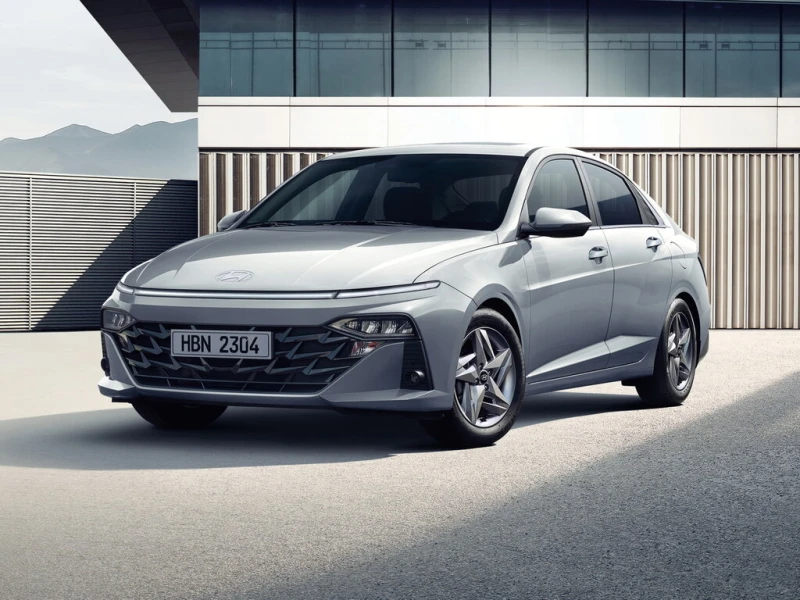
The engines in the 2023–present Hyundai Accent BN7 vary by region, with a strong focus on naturally aspirated and turbocharged gasoline units available in the United States. In the US market, the Accent is offered through official dealership channels, featuring configurations aligned with North American standards and preferences. Exterior design, interior, trim levels, and common issues are covered in other articles in this series.
Engines and Transmissions
The BN7 generation offers several powertrain options tailored for Asian, Latin American, and Middle Eastern markets, though the US receives a streamlined lineup focused on efficient gasoline engines from the Smartstream family. Diesel variants are available in select regions (e.g., India) but are not offered in the US. All-wheel drive is not available — every version uses front-wheel drive (FWD).
Here is a table of the main powertrains commonly seen in 2023–2026 models and relevant to the US market via official sales or import channels.
| Engine Type | Displacement, L | Power, hp | Engine Code | Transmission Type | Drivetrain | Notes / Regional Availability |
| Gasoline Naturally Aspirated | 1.5 | 115 | Smartstream G1.5 MPi | 6MT / CVT | Front | Common configuration for value-oriented markets; similar to base US offerings |
| Gasoline Turbo | 1.5 | 160 | Smartstream G1.5 T-GDi | 6MT / 7DCT | Front | Available in select regions (India, Latin America); less common in US |
| Gasoline Turbo | 1.0 | 120 | Smartstream G1.0 T-GDi | 7DCT | Front | Offered in parts of Asia; limited availability in US |
| Diesel | 1.5 | 115 | U2 1.5 CRDi | 6MT / 6AT | Front | Not offered in the US market |
The most widespread combination in value-focused markets — and closest to US preferences — is the 1.5 MPi paired with CVT. Turbocharged 1.5 T-GDi and diesel 1.5 CRDi versions appear less frequently.
Dimensions and Weight
Exterior dimensions and curb weight for the Hyundai Accent BN7 are largely consistent across versions, with minor differences depending on trim and engine. US-market examples typically feature a ground clearance around 5.5–6 inches (140–160 mm), suited to varied road conditions.
| Parameter | Value | Notes |
| Length, in | 178.5 | Consistent across versions |
| Width, in | 69.5 | Excluding mirrors |
| Height, in | 58.1 | Varies slightly with wheels; average value |
| Wheelbase, in | 105.1 | Consistent across versions |
| Curb Weight, lbs | 2,415–2,635 | For 1.5 MPi CVT ≈ 2,515 lbs |
| Gross Vehicle Weight, lbs | 3,485–3,640 | Depending on version |
| Trunk Volume, cu ft | 18.6 | Standard for sedan |
| Fuel Tank Capacity, gal | 11.9 | Consistent |
Average figures apply to most US-market vehicles with the 1.5 MPi engine and front-wheel drive.
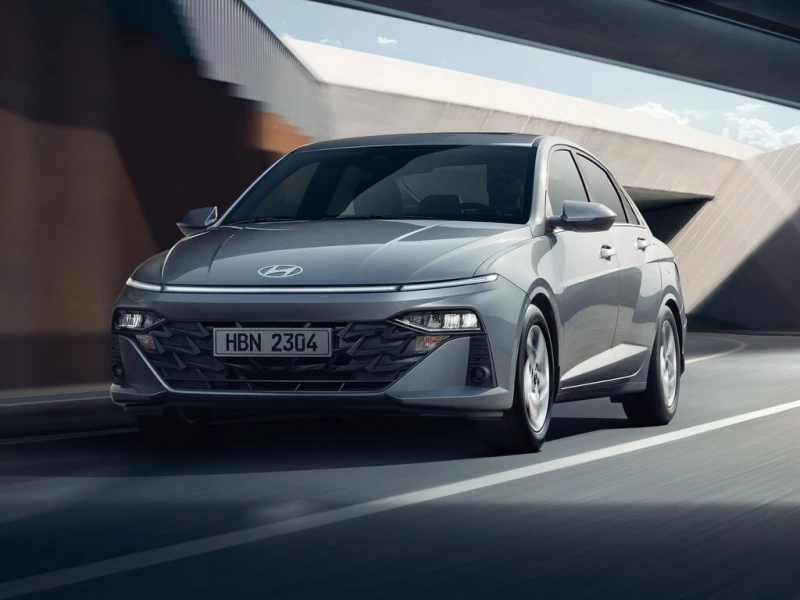
Yearly Updates and Refresh
The BN7 generation remains current as a new model. From 2023 through 2025, changes have been modest: software updates for infotainment and driver assists, along with fine-tuning of suspension for better ride comfort. No full redesign has occurred, though minor updates in 2025 included expanded CVT availability for the 1.5 MPi and refinements to safety systems.
- Added options for turbo variants in select regions (Asia);
- Expanded driver assists: forward collision avoidance with junction turning;
- Shift away from base 6MT configurations in many markets, with emphasis on CVT.
Current 2026 configurations for the US market focus primarily on efficient naturally aspirated engines with CVT, with turbo options more limited.
Driving and Ownership Notes
When owning or considering a Hyundai Accent BN7 in the US, engine reliability stands out. The naturally aspirated 1.5 MPi (Smartstream G1.5) is known for durability, often exceeding 150,000–200,000 miles with regular maintenance, and is tolerant of typical US fuel quality. Turbocharged 1.5 T-GDi versions demand premium unleaded fuel (recommended AKI 91) but deliver strong real-world performance. US buyers typically see the 1.5 MPi (around 115 hp) or similar naturally aspirated setups suited to daily commuting.
Estimated fuel economy based on US testing cycles and owner reports:
- 1.5 MPi CVT — 32–36 mpg combined;
- 1.0 T-GDi 7DCT — 34–38 mpg combined;
- 1.5 T-GDi 7DCT — 30–35 mpg combined.
Transmission notes: the CVT (Intelligent Variable Transmission) offers smooth operation but benefits from fluid changes every 30,000–40,000 miles to maintain longevity. Dual-clutch (7DCT) provides quicker shifts but is more sensitive to driving style. Front-wheel drive simplifies maintenance and suits most US road conditions.
Parts availability is excellent through dealers and aftermarket; costs remain low for the class — filters, pads, and routine items are affordable, while major components (CVT, turbo) range from $800–$2,500. Overall repairability is strong, and the model is well-known to US service centers.
Summary and Best Choice for the US Market
The most well-rounded option for US buyers is the naturally aspirated 1.5 MPi paired with CVT and front-wheel drive. This setup delivers excellent reliability, competitive fuel economy, low ownership costs, and solid resale value on the used market. It dominates listings for recent 2023–2025 models.
Turbocharged variants (1.0 T-GDi or 1.5 T-GDi) suit those wanting more pep, though with slightly higher fuel use; diesels are not available in the US. When shopping, verify service history, transmission condition, and prefer vehicles with documented mileage and no major accident repairs.