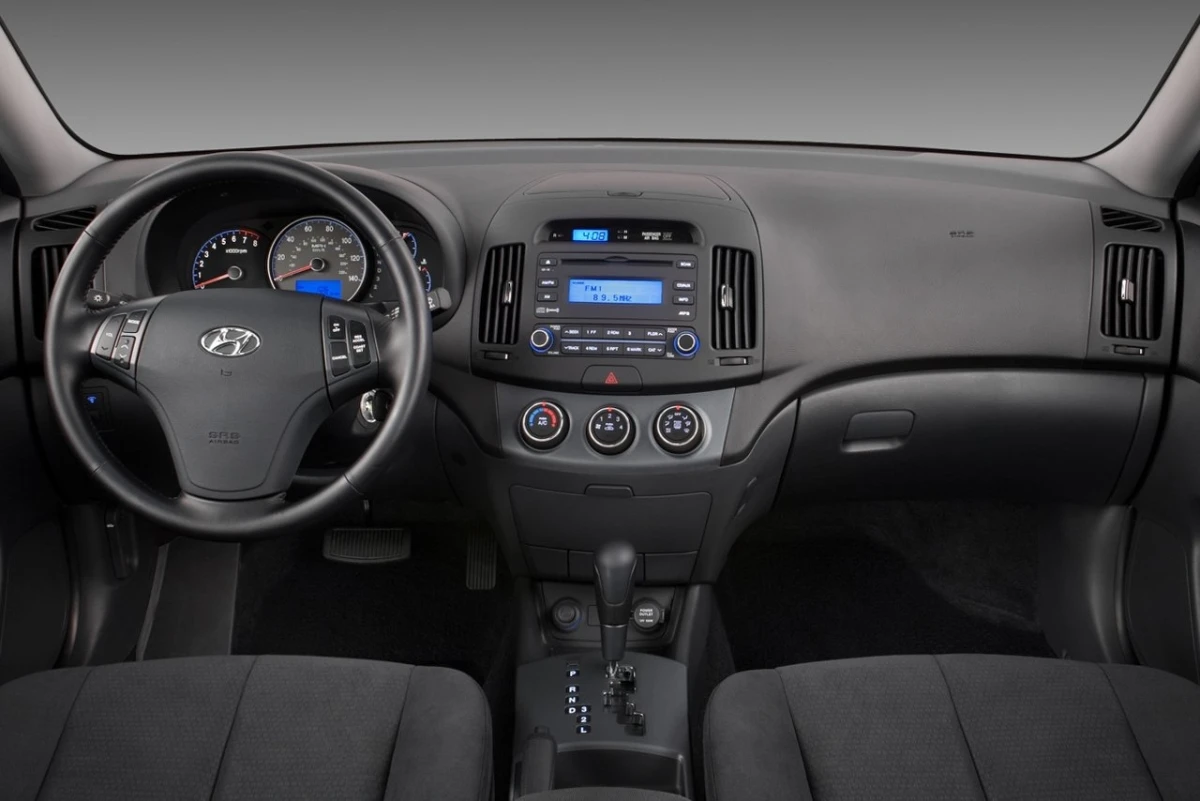



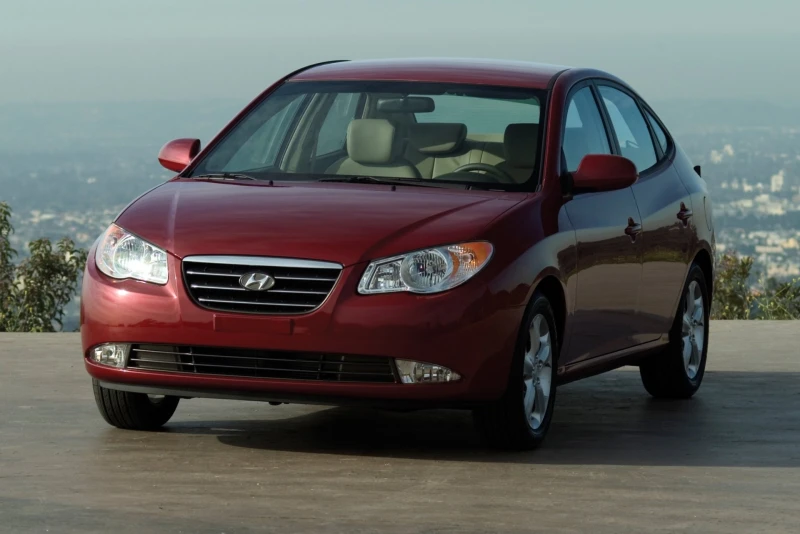
This generation, internally designated HD, is now considered complete, with production ending in 2010. It reached the US market in 2006 following its reveal at the New York International Auto Show and was sold through Hyundai dealerships nationwide.
The Elantra IV rides on the all-new J4 platform shared with Kia, which delivered significantly higher torsional rigidity and noticeably improved handling compared with the previous generation. Positioned as an affordable compact sedan in the C-segment, it was designed for daily commuting in cities like Los Angeles or Atlanta as well as longer drives on highways such as I-95 or Route 66. The exterior adopted smoother, more rounded styling with subtle “coke-bottle” waistline cues, giving the car a contemporary and aerodynamic appearance. Under the skin, the introduction of Gamma-series engines improved fuel economy, the suspension was refined, and the list of standard safety equipment grew to include ABS and front airbags (with side and curtain bags available on higher trims). The HD Elantra offered a compelling mix of efficiency, comfort and dependability that helped it become a strong contender among budget-conscious compact sedans.
What’s new compared with the previous generation
The fourth-generation Elantra (HD) introduced substantial improvements over the third-generation XD (2000–2006). The design moved to softer, more flowing lines that improved both aerodynamics and visual appeal. The body grew slightly: length reached about 177.4 inches (4505 mm) and width 69.9 inches (1775 mm), providing noticeably more interior room.
The completely new J4 platform increased torsional rigidity by roughly 51% and brought better noise insulation. Under the hood, the Gamma engines featured dual continuously variable valve timing (CVVT), delivering stronger low-end response and better fuel economy (typically 28–35 mpg combined for the 1.6-liter version in EPA estimates of the period). Ride comfort and refinement improved thanks to the updated suspension (independent front, semi-independent torsion-beam rear), higher-quality interior materials and additional features such as available climate control and better audio systems.
Safety took a big step forward with standard dual front airbags, available side-curtain airbags, ABS and electronic brake-force distribution (EBD) on most trims—equipment that was far less common on the outgoing XD. Overall, these updates made the Elantra markedly more competitive, even if some critics felt it still carried over a few basic elements from the prior technical architecture.
Current status of the generation
Production of the Hyundai Elantra IV (HD) ended in 2010 with the arrival of the fifth generation. The final US lineup consisted primarily of sedans powered by 1.6-liter (≈105–122 hp) or 2.0-liter (≈138–143 hp) gasoline engines paired with either a 5-speed manual or 4-speed automatic transmission. No diesel variants were offered in the United States.
Major milestones: debut in 2006, a light facelift for the 2009 model year (updated headlights, taillights and minor interior revisions), and discontinuation after 2010. On today’s used market the most sought-after versions are usually the 1.6-liter models with manual transmission due to their proven durability and low running costs. Automatics are also common and generally reliable when properly maintained, but at this age the transmission fluid history deserves close inspection.
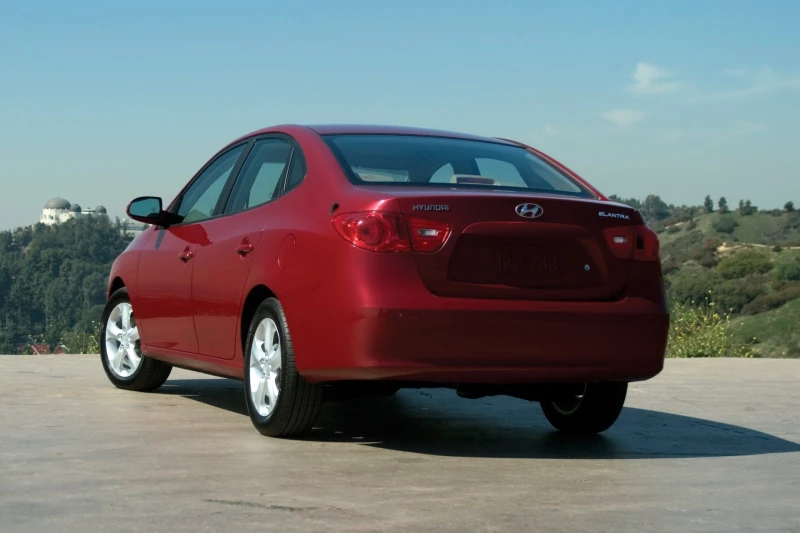
Used Market in the United States
In the US the Hyundai Elantra IV (HD) exists solely on the used-car market, as new examples have not been available for over 15 years. Listings on platforms such as Cars.com, Autotrader, and Craigslist typically number in the thousands nationwide (data approximate as of early 2026).
Most examples are 2006–2010 models showing 90,000–190,000 miles. Approximate price range: $3,500–$8,000 depending on condition, mileage, location, equipment and whether it has a clean title. Lower-mileage, well-maintained examples with automatic transmission and desirable options (alloy wheels, power sunroof, premium audio) tend to sit toward the higher end of that spectrum. The 1.6-liter engine remains the most common powertrain; many owners have added aftermarket or factory-approved LPG/CNG conversions, though these are less prevalent than in some other countries.
Main trims and equipment commonly found in the US
Typical US-market trim levels for the 2006–2010 Elantra included GLS (base and mid), SE (sportier appearance) and Limited (top-tier). The GLS came standard with the 2.0-liter engine in most years, 5-speed manual or 4-speed automatic, cloth upholstery, air conditioning (manual or automatic depending on year), power windows/locks/mirrors, AM/FM/CD audio, ABS and dual front airbags.
The SE trim usually added alloy wheels, fog lights, a sport-tuned suspension (in some years), rear spoiler and sometimes a leather-wrapped steering wheel. The Limited grade brought leather seating (heated front seats in later years), automatic climate control, power sunroof, upgraded audio and additional chrome exterior trim. All versions feature front-wheel drive; no AWD or diesel options were sold in the US. The suspension calibration was tuned with American roads in mind, providing a comfortable ride on freeways while retaining acceptable handling on twisty backroads.
| Trim level | Engine (US market) | Transmission | Key features |
| GLS (base/mid) | 2.0 L gasoline (≈138–143 hp) | 5-MT or 4-AT | ABS, airbags, A/C, power windows |
| SE | 2.0 L gasoline | 5-MT or 4-AT | Alloys, fog lights, spoiler, sport suspension |
| Limited | 2.0 L gasoline | 4-AT | Leather, heated seats, sunroof, premium audio |
Conclusions & relevance today
The 2006–2010 Hyundai Elantra (HD) remains a sensible choice on the used market for buyers seeking an inexpensive, reliable compact sedan for commuting, small-family duty or as an economical first car. Its straightforward mechanicals, low parts prices and widespread availability of service keep ownership costs very reasonable even at 15–20 years old. The 2.0-liter engine with either transmission has proven durable when oil changes and basic maintenance are performed regularly.
When shopping, pay special attention to rust on lower body panels (especially in salt-belt states), automatic transmission condition, suspension wear and service history. A pre-purchase inspection by a trusted mechanic is strongly recommended. Prices remain attractive compared with newer used cars, and the Elantra IV continues to deliver solid value for budget-minded drivers in the United States.