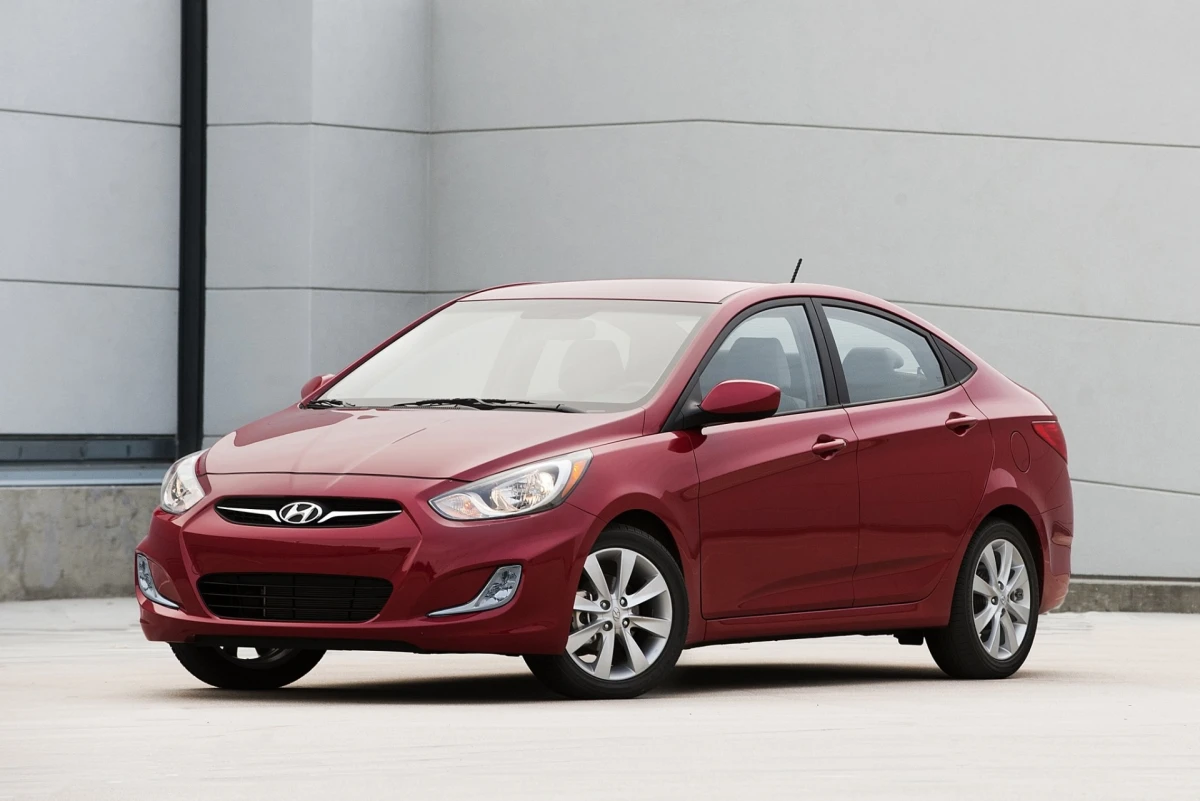



For the U.S. market, the fifth-generation Hyundai Accent was sold as a four-door sedan for the 2018 through 2022 model years. Hyundai dropped the hatchback from the U.S. lineup when this generation arrived. Every U.S.-spec Accent in this generation used front-wheel drive and a naturally aspirated 1.6-liter gasoline four-cylinder, but the engine and automatic transmission changed substantially for 2020. This article focuses on the U.S. powertrains, transmissions, dimensions and fuel-economy figures; exterior design, interior equipment, trim-level details and common used-car issues are covered separately.
Engines and transmissions
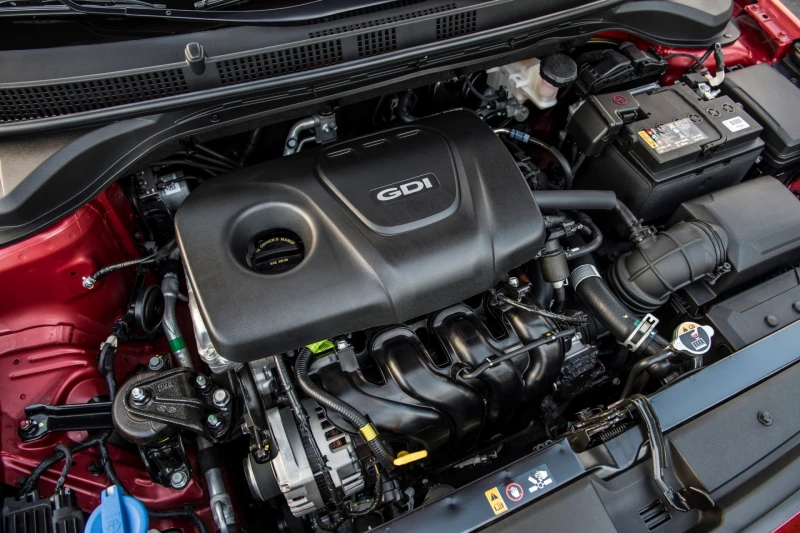
The U.S. Accent lineup is simpler than the versions sold in many other regions. For 2018 and 2019, Hyundai used a 1.6-liter GDI four-cylinder rated at 130 hp and 119 lb-ft of torque. A six-speed manual was offered on the base SE, while a six-speed automatic was available depending on trim. For 2020, Hyundai replaced that engine with the Smartstream G1.6 DPI unit, which uses dual-port fuel injection and is rated at 120 hp and 113 lb-ft. At the same time, the six-speed automatic was replaced by Hyundai's Intelligent Variable Transmission (IVT).
| Engine | Displacement | Output | Transmission | Drivetrain | U.S. model years / notes |
| 1.6-liter GDI gasoline I4 | 1,591 cc | 130 hp / 119 lb-ft | 6-speed manual or 6-speed automatic, depending on trim | FWD | 2018–2019 |
| Smartstream G1.6 DPI gasoline I4 | 1,598 cc | 120 hp / 113 lb-ft | 6-speed manual on the SE or IVT for 2020–2021; IVT-only U.S. lineup for 2022 | FWD | 2020–2022 |
For buyers comparing used U.S.-market cars, the main mechanical split is therefore 2018–2019 versus 2020–2022. The earlier cars combine the 130-hp direct-injected engine with conventional six-speed transmissions. The later cars use the 120-hp Smartstream dual-port-injected engine, with the IVT becoming the primary transmission and the manual disappearing from the U.S. lineup for 2022. European, Mexican and other regional Accent or Verna specifications should not be mixed with these U.S. configurations.
Dimensions and weight
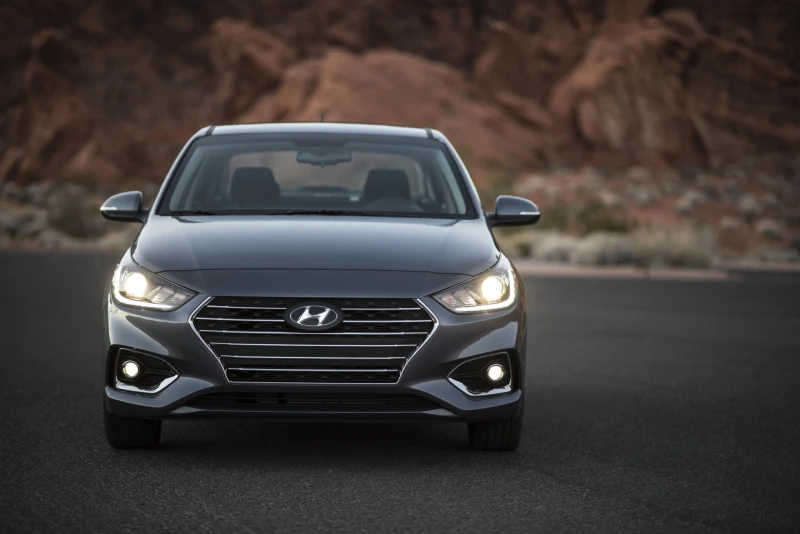
The U.S.-market fifth-generation Accent was a sedan throughout its run, and its basic exterior dimensions remained essentially unchanged. Hyundai listed a 101.6-inch wheelbase, 172.6-inch overall length, 68.1-inch width and 57.1-inch height. Curb weight varies by trim and transmission, with representative versions ranging from roughly 2,500 to about 2,680 lb.
| Specification | U.S. value | Notes |
| Overall length | 172.6 in | Sedan |
| Width | 68.1 in | Excluding mirrors |
| Height | 57.1 in | Varies only marginally by published specification |
| Wheelbase | 101.6 in | Common to the U.S. sedan |
| Curb weight | Approx. 2,500–2,680 lb | Depends on model year, trim and transmission |
| Gross vehicle weight | Up to about 3,638 lb | Representative 2022 specification |
| Ground clearance | 5.5 in | Published U.S. specification |
Because the U.S. model was sedan-only, hatchback dimensions found in international databases do not apply to an officially sold U.S.-market Accent of this generation.
Model-year changes
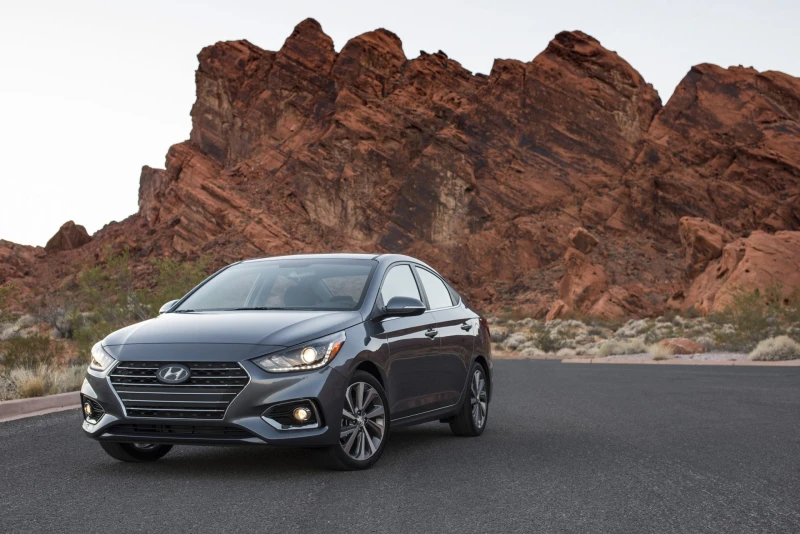
The 2018 Accent was all-new for the U.S. market and arrived only as a sedan. The 2018 and 2019 cars used the 130-hp 1.6-liter GDI engine with six-speed manual and automatic transmissions. The important U.S. technical update came for 2020: Hyundai introduced the 120-hp Smartstream 1.6-liter DPI engine and replaced the conventional six-speed automatic with the IVT. The six-speed manual remained available on the base SE through 2021, while SEL and Limited versions used the IVT. For 2022, the U.S. Accent range was IVT-only. Hyundai then discontinued the Accent for the 2023 model year in the United States, with the Venue taking over as the brand's entry-level model.
Fuel economy and technical considerations
EPA fuel-economy ratings also reflect the powertrain change. A 2018 Accent with the six-speed manual was rated at 28 mpg city, 37 mpg highway and 31 mpg combined; automatic versions of the 2018–2019 configuration were typically rated at 28 mpg city, 38 mpg highway and 32 mpg combined. With the 2020–2022 Smartstream engine and IVT, the Accent was rated at 33 mpg city, 41 mpg highway and 36 mpg combined. The 2020–2021 six-speed manual version was rated at 29 mpg city, 39 mpg highway and 33 mpg combined. These are EPA figures, not owner-reported real-world consumption.
For a used Accent, service history and the condition of the specific car matter more than broad claims about durability. The 2018–2019 six-speed automatic and the later IVT are different transmission designs, so maintenance records should be checked against the correct model-year owner's manual. Buyers should also verify open recalls and service campaigns by VIN rather than assuming that every car of a given year has the same history. Used examples are commonly listed on U.S. platforms such as Autotrader, CarGurus and Cars.com.
Which U.S.-market version fits which buyer?
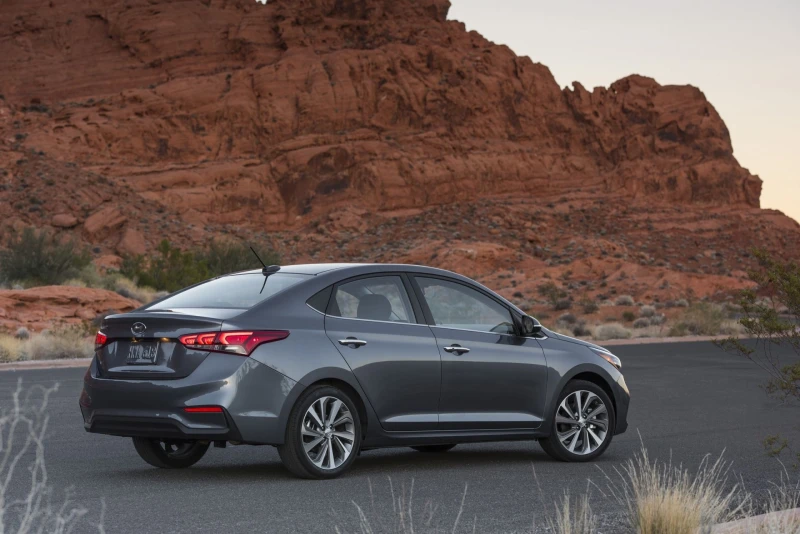
The 2018–2019 Accent offers the more powerful 130-hp engine and a conventional six-speed automatic, while the 2020–2022 version trades some output for substantially better EPA fuel economy with the Smartstream 1.6-liter engine and IVT. Buyers who specifically want a manual transmission need to look at 2018–2021 SE models; by 2022, the U.S. lineup was IVT-only. Since the Accent is no longer sold new in the United States, purchase decisions now center on used-car condition, maintenance documentation, mileage, trim equipment and the behavior of the transmission during a pre-purchase inspection.
In U.S. specification, the fifth-generation Hyundai Accent is therefore best understood as two closely related mechanical phases: the 2018–2019 1.6 GDI cars and the 2020–2022 Smartstream 1.6 DPI cars. Keeping those model-year differences separate is essential when comparing horsepower, transmission type and EPA fuel-economy figures.