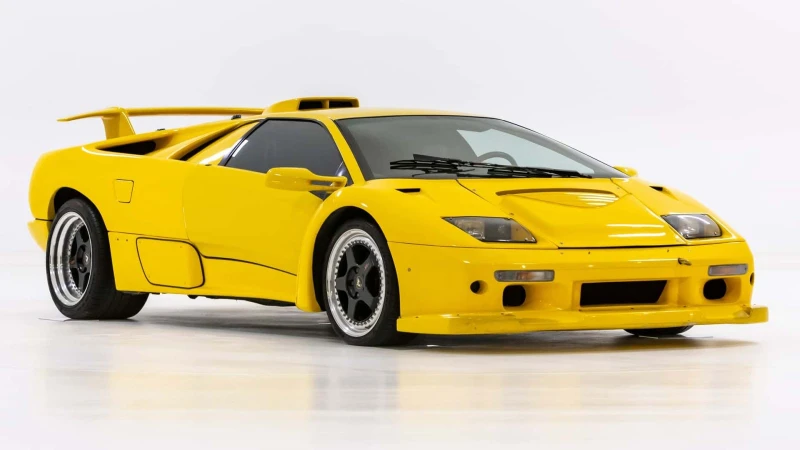
One of them involves the Lamborghini Diablo, which in the late 1990s became a test platform for a power unit not intended for production models of this brand. This episode clearly demonstrates the scale of the engineering ambitions of the Volkswagen concern at that time.
Ambitions of the Ferdinand Piëch Era
At the end of the 20th century, Volkswagen was under the management of Ferdinand Karl Piëch — a figure who played a key role in transforming the concern into one of the world's leaders. His approach to automotive technology development was characterized by a pursuit of records and solutions that other manufacturers would not dare to undertake. It was during this period that projects emerged with large-displacement engines, experimental configurations, and extreme power outputs.
The acquisition of Bugatti in 1998 became part of this strategy. The task was straightforward: to create a road car that would surpass everything existing in terms of power and top speed. This marked the beginning of work on the future Veyron.
Search for the Ideal Power Layout
In the early stages, engineers considered various engine layout options. The initial Bugatti concepts featured 18-cylinder naturally aspirated engines assembled from multiple blocks. However, it soon became clear that achieving the targeted performance required a more compact and efficient solution.
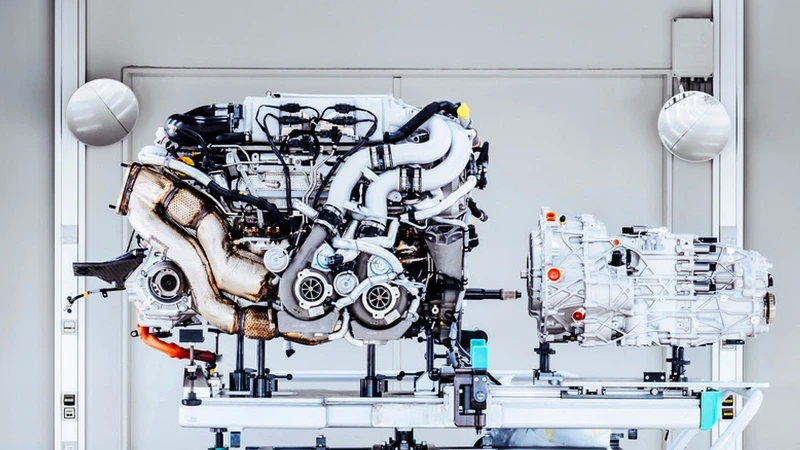
As a result, a W16 engine with four turbochargers was selected. Its displacement was 8.0 liters, and the calculated power exceeded 1,000 horsepower. The target top speed was set at 407 km/h — not a random figure, but a symbolic benchmark linked to Piëch's racing past.
Lamborghini Diablo as a Test Bed
To refine the new engine, a vehicle with a mid-engine layout and suitable configuration was needed. The Lamborghini Diablo SV became such a candidate, which, after the brand came under Volkswagen's control, was at the disposal of German engineers.
The production 12-cylinder engine with a 5.7-liter displacement was removed, and the experimental W16 was installed in its place. This required significant rework of the rear body section, cooling system, and transmission. The new engine was nearly twice as powerful as the standard unit and considerably heavier — its dry weight was about 400 kg.
Due to the increased loads, engineers reinforced the suspension and gearbox. As a result, the Diablo turned into a mobile laboratory intended solely for testing. At that time, only a few knew about the real objectives of this project.
Preserved Heritage
The experimental Lamborghini was not destroyed after the tests were completed. Today, it is considered part of Bugatti's historical heritage and, according to available data, is stored in one of the private collections associated with the Piëch era. This car serves as a tangible testament to the path taken in creating the Veyron and the resources mobilized to achieve the set goals.
Conclusion
The use of the Lamborghini Diablo for testing the W16 engine became an important stage in the development of the Bugatti Veyron. This project reflects the engineering philosophy of Volkswagen in the late 1990s, when technical capabilities and ambitions were prioritized over the standard constraints of production automotive manufacturing.