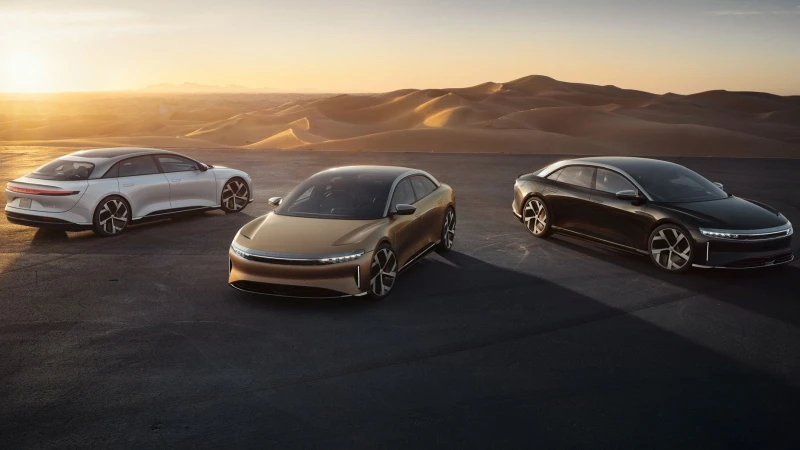
This is exactly what happened with Lucid: The launch of a certified pre-owned vehicle program unexpectedly revealed how sharply the value of even relatively new electric models drops.
Why EVs Hardly Hold Their Value
In reality, there are only a handful of cars that appreciate over time. Mass-market vehicles almost always depreciate, and the situation is even more pronounced with electric vehicles. Several factors contribute: Supply is growing faster than demand, battery technologies become obsolete quickly, and buyers are well aware that more range-extended and faster versions will appear in a couple of years.
Tesla once bucked this trend—demand was enormous, and production was limited. But that window of opportunity closed long ago. The market has changed, and even prominent names no longer shield against depreciation.
Who Is Lucid and Why the Renewed Attention
Lucid's story began in 2007 when former Tesla vice president Bernard Tse founded the company Atieva. Later, ex-Tesla chief engineer Peter Rawlinson joined the project, and the brand took its current name—Lucid Motors. The first production car, the Lucid Air sedan, debuted only in 2021, and recently it was joined by the electric SUV Gravity.
However, the company is far from Tesla's scale: In the first nine months of the year, Lucid delivered about 10,500 vehicles to customers. For a startup, that's respectable, but it's a drop in the ocean for the mass market.
Certified Pre-Owned: Appealing on Paper, But with a Catch
Lucid decided there were enough vehicles in circulation and launched a certified pre-owned program. The criteria are strict: Only first-owner cars with mileage under 100,000 km. Each vehicle is inspected on more than 160 points, all defects are addressed, and if desired, the car can even be updated—for example, with new driver assistance systems.
This includes the remainder of the factory four-year warranty plus an additional 12 months, along with 24/7 roadside assistance. On paper, it's nearly an ideal offering.
Prices That Speak for Themselves
The most affordable option is a 2023 Lucid Air Pure with about 32,000 km on the odometer. A new such sedan cost around 66,000 euros, and now it's being sold for approximately 42,000 euros. The depreciation is more than noticeable.
Even a fresher 2024 Air Touring with around 35,000 km is priced at about 52,000 euros, though new it cost on the order of 74,000 euros. The figures are illustrative and, frankly, somewhat alarming.
Is It Worth It in the End
For buyers of used electric vehicles, this is great news: You can acquire a high-tech, expensive car at a significant discount. But there's a flip side. The manufacturer itself is effectively demonstrating that buying an EV new almost guarantees a substantial loss in a short time.
Paradoxically, today depreciation concerns buyers more than range or charging issues. The electric 'dream' that Tesla once inspired has proven short-lived. And if automakers still expect a quick and painless shift away from ICE vehicles, reality suggests otherwise.