



The U.S.-market Honda HR-V introduced for the 2023 model year is different from the RV-series HR-V sold in Europe and parts of Asia. North America receives the RZ-series model, which uses a Civic-related platform and has its own cabin, seating layout, trim structure and infotainment equipment. This overview covers the U.S. HR-V from 2023 onward, including the technology updates introduced for the 2026 model year.

Cabin overview
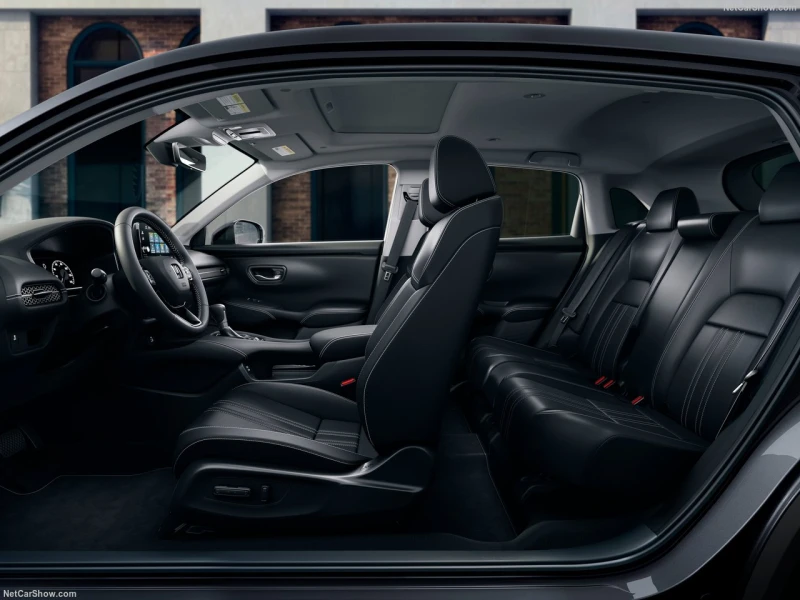
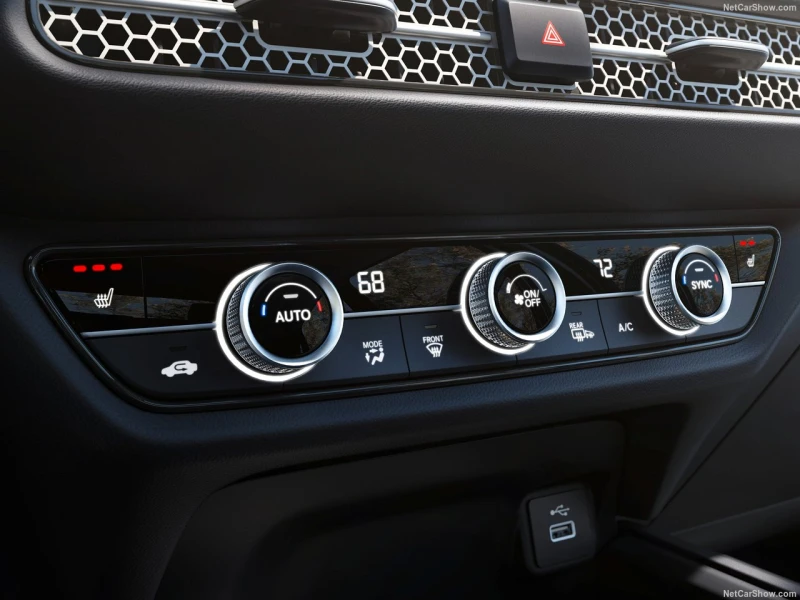
The interior follows a horizontal dashboard layout with a clean instrument panel, a mesh-style air-vent treatment and physical controls for the climate system. A 7-inch driver information display is paired with conventional gauges. On 2023–2025 LX and Sport models, the center touchscreen measures 7 inches, while EX-L models use a 9-inch screen. For 2026, Honda made the 9-inch touchscreen standard across the lineup.
Materials vary by trim rather than by region. LX uses cloth upholstery, Sport adds cloth seats with orange stitching plus matching accents on the doors and center console, and EX-L uses leather-trimmed seating. The dashboard and door panels combine textured plastics with metallic-look details around the vents, keeping the design simple and functional rather than overtly upscale.
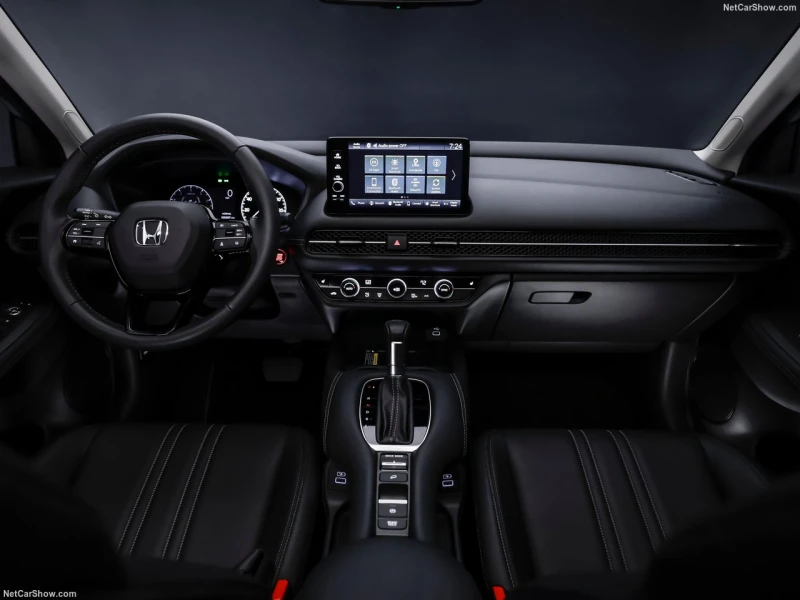
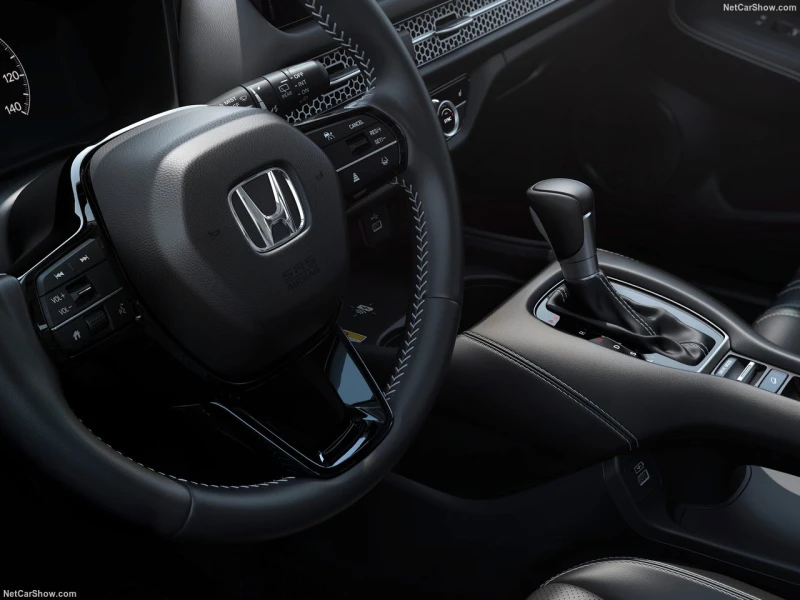
The driving position is straightforward, with a tilt-and-telescoping steering wheel, a conventional CVT shifter and clearly separated climate and infotainment controls. LX and Sport use a manually adjusted driver’s seat, while EX-L adds an 8-way power driver’s seat. Storage areas in the center console and around the front cabin are designed for everyday items such as phones, cups and small accessories.
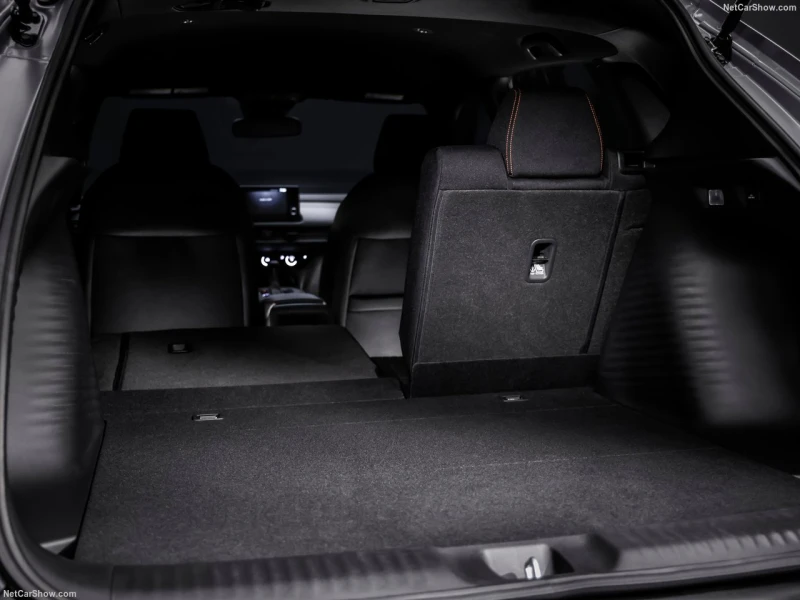
Passenger space is generous for a small crossover. Honda lists 41.9 inches of front legroom and 37.7 inches in the rear. Rear headroom is 38.0 inches, while front headroom is 39.4 inches on LX and Sport and 38.4 inches on EX-L because of its moonroof. The rear bench is a conventional 60/40 split-folding design. Unlike the previous U.S.-market HR-V, this generation does not use Honda’s Magic Seat system.
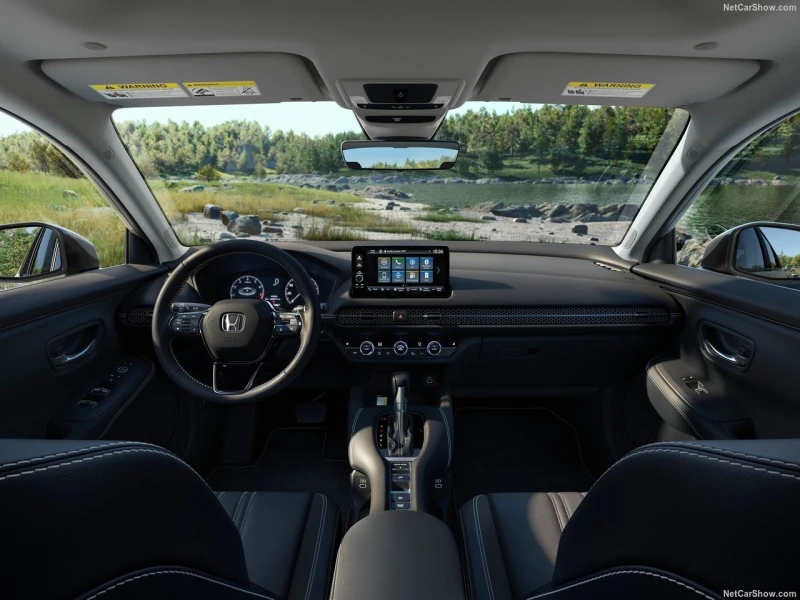
Cargo volume is 24.4 cubic feet with the rear seatbacks in place and 55.1 cubic feet with them folded. The layout favors a wide, conventional cargo area rather than the vertical-loading flexibility of the older Magic Seat arrangement. For daily use, the cabin offers a useful balance of passenger room, rear-seat access and cargo capacity.
U.S. trims and equipment
The U.S. lineup consists of LX, Sport and EX-L. Front-wheel drive is standard and Real Time AWD is available on all three trims, but the main interior differences are in upholstery, comfort equipment, audio and driver-assistance features.
On 2023–2025 LX models, the cabin includes cloth seats, automatic climate control, a 7-inch touchscreen, wired Apple CarPlay and Android Auto, a 4-speaker audio system and the standard Honda Sensing suite. For 2026, LX receives the same 9-inch touchscreen used across the lineup, along with wireless Apple CarPlay, wireless Android Auto and a wireless phone charger.

Sport adds cloth seats with orange stitching, heated front seats, a leather-wrapped steering wheel and shift knob, a 6-speaker audio system, Smart Entry and remote engine start. Blind Spot Information with Cross Traffic Monitor is standard on current 2026 Sport models.
EX-L is the most upscale U.S. trim. It adds leather-trimmed seats, an 8-way power driver’s seat, heated front seats, dual-zone automatic climate control, ambient LED lighting, an 8-speaker audio system, a one-touch power moonroof, front and rear parking sensors and an automatic-dimming rearview mirror. The U.S. HR-V does not use the European Elegance and Advance trim names, and there is no U.S. turbocharged Sport version, panoramic roof, Bose system or adaptive suspension in the regular HR-V lineup.

Interior changes by model year
The 2023 redesign established the current U.S. cabin architecture. From 2023 through 2025, LX and Sport used a 7-inch infotainment screen with wired Apple CarPlay and Android Auto, while EX-L received a 9-inch screen, wireless smartphone integration and a wireless charging pad. The 7-inch driver information display remained common across the lineup.

For 2026, Honda focused on technology rather than a major cabin redesign. The 9-inch touchscreen, wireless Apple CarPlay, wireless Android Auto and wireless phone charger became standard on all trims. EX-L also gained details such as silver steering-wheel accents, front footwell lighting and illuminated climate-control knobs. The basic dashboard, seating layout and 60/40-folding rear bench remained unchanged.
As a result, the biggest interior distinction between earlier and later examples is infotainment equipment rather than a different dashboard or seating concept. A 2023–2025 EX-L already has many of the connectivity features that became standard across the range for 2026, while earlier LX and Sport models use the smaller screen and wired phone integration.
Common questions and cabin drawbacks
The most important practical change compared with the previous U.S.-market HR-V is the loss of Magic Seat. The current model still has a folding 60/40 rear bench and useful cargo volume, but the rear seat cushions do not flip upward to create the tall interior loading space that distinguished the older HR-V.
Another limitation on 2023–2025 LX and Sport models is the smaller 7-inch infotainment display and wired smartphone connection. Buyers who want the larger screen and wireless integration can look for a 2023–2025 EX-L or a 2026-and-newer model. The HR-V also does not offer a factory Bose premium audio system or ventilated front seats in the U.S. lineup.
For used vehicles, cabin condition should be evaluated individually rather than assumed from mileage alone. Check the seat bolsters, steering wheel, door trim, center console and cargo-area plastics for wear, and test the touchscreen, USB ports, climate controls, rearview camera and available blind-spot system. Any rattles or damaged trim should be assessed during a road test rather than treated as a normal characteristic of the model.
Model-year equipment is also worth verifying before purchase because the 2026 technology update changed what is standard on the lower trims. A VIN-specific build sheet or original window sticker is the best way to confirm factory equipment, especially on used vehicles that may have aftermarket accessories or replacement infotainment components.

Overall assessment and current relevance
The U.S.-market HR-V cabin remains modern and practical, with good passenger space, straightforward controls and clear differences among LX, Sport and EX-L. Its main trade-off versus the previous generation is reduced seating flexibility because Magic Seat was discontinued, but the conventional cargo area still provides 24.4 cubic feet behind the rear seats and 55.1 cubic feet with them folded.
For buyers focused on connectivity, 2026 is the key model year because the 9-inch touchscreen, wireless Apple CarPlay, wireless Android Auto and wireless phone charger became standard on every trim. Earlier EX-L models already offer much of that technology, while Sport adds heated seats and distinctive interior stitching without moving to leather upholstery.
When evaluating a new or used HR-V, check:
- The model year and infotainment screen size;
- Whether Apple CarPlay and Android Auto operate wired or wirelessly;
- The condition of the seat upholstery, steering wheel and high-touch trim;
- The operation of heated seats, power-seat functions and climate controls where fitted;
- The rearview camera, parking sensors and blind-spot system where equipped.
For the U.S. market, the 2023–present Honda HR-V offers a roomy, conventional crossover interior with a simple trim structure and a meaningful technology upgrade for 2026. The key is to distinguish it from the global RV-series HR-V, whose cabin, hybrid powertrain, trim names and Magic Seat configuration do not apply to the North American RZ-series model.