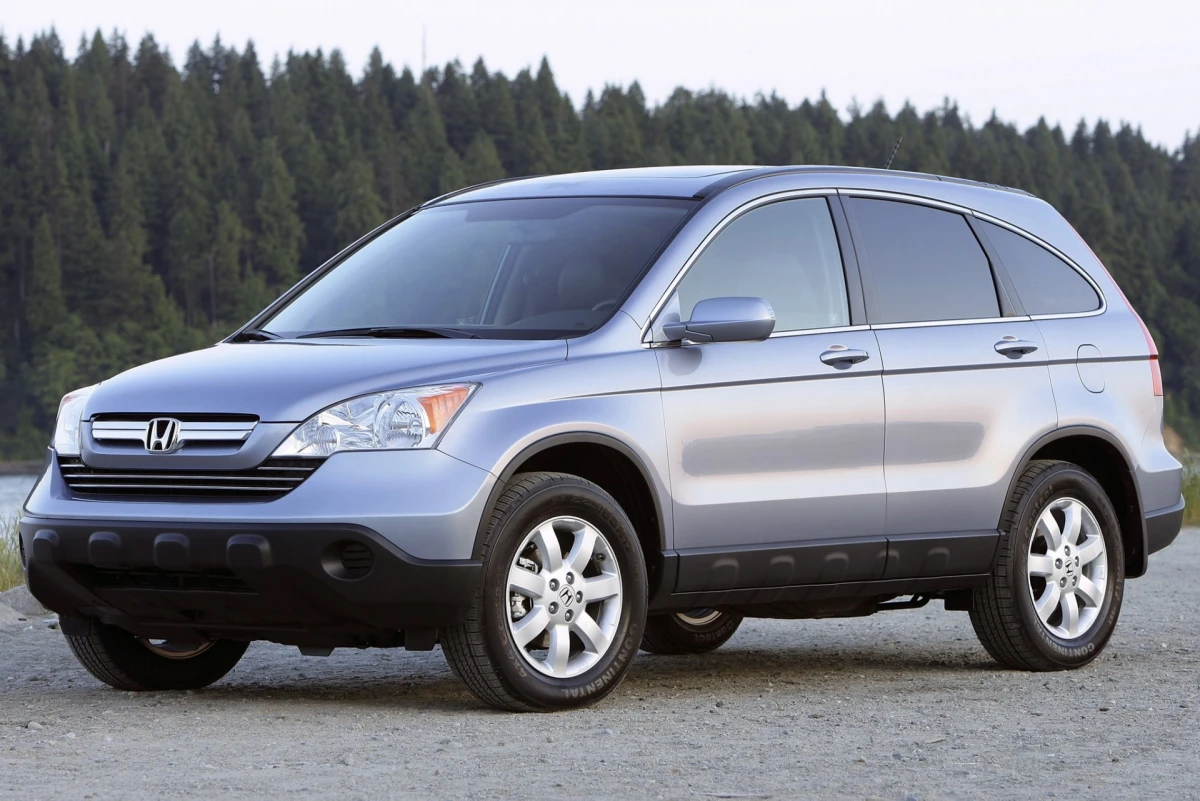



On the US used market, the interior often becomes a key deciding factor when shopping for a 13–18-year-old vehicle.
Overall Cabin Overview
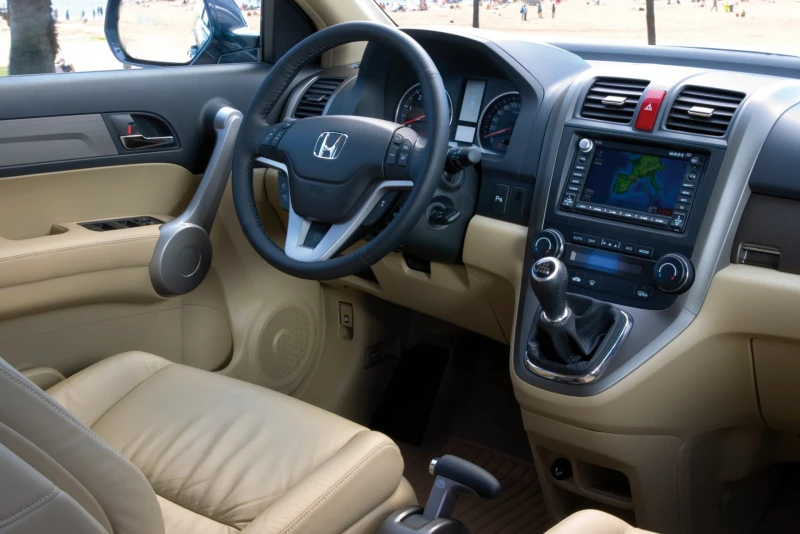
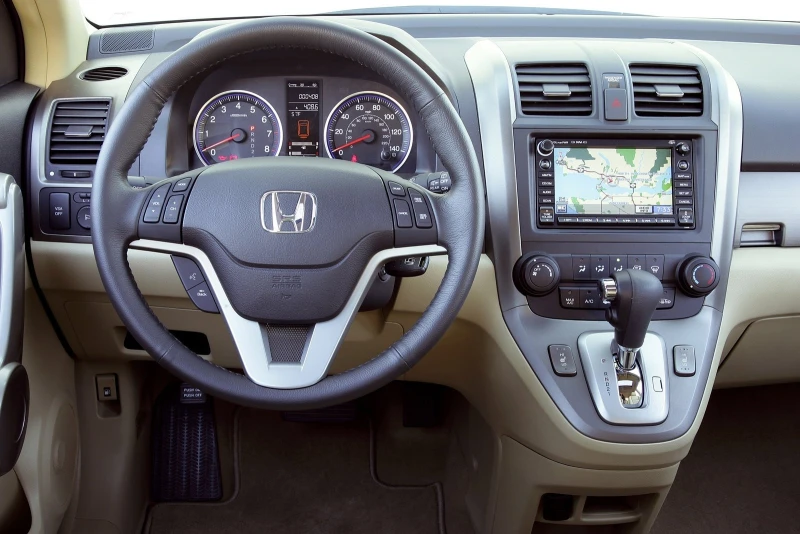
The third-generation Honda CR-V interior follows Honda's signature style from that period: horizontal dashboard layout, lots of straight lines, and a strong focus on functionality over luxury. The center console is angled slightly toward the driver, while the instrument cluster features a classic dual-pod design with white backlighting (pre-facelift) shifting to bluish after 2009–2010.
Main materials used:
- upper dashboard and door tops — soft-touch plastic
- center console, armrests, door sides — hard plastic with a leather-like texture
- accents — silver plastic or aluminum-look trim (depending on trim level)
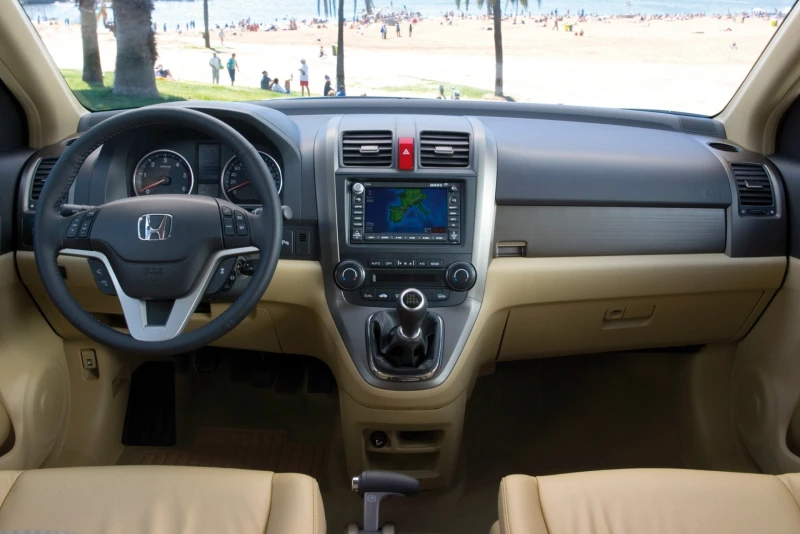
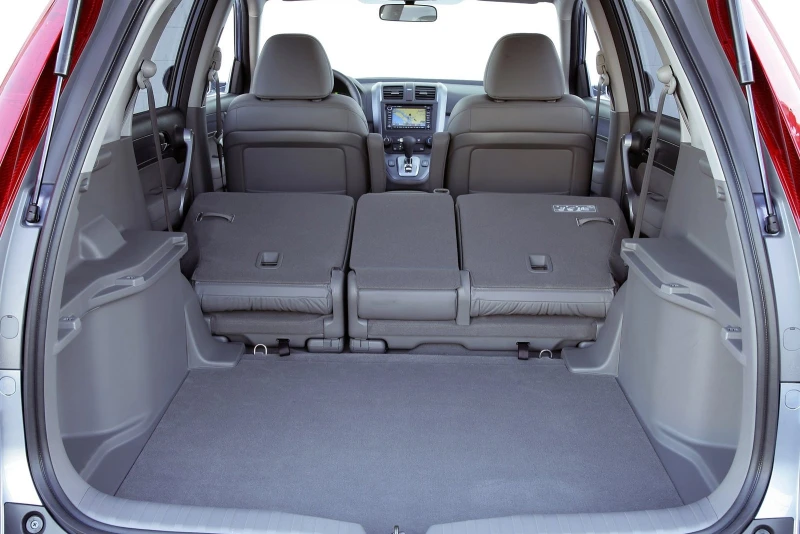
Front seats offer a solid range of adjustments (including lumbar support on higher trims), with a high, comfortable driving position ideal for long highway drives. The rear seat is one of the model's strongest points: exceptionally roomy for the class, nearly flat floor, generous legroom and headroom. The bench slides forward/back up to about 6 inches and the backrest angle is adjustable.
Cargo space starts at 556 liters (pre-facelift) / 589 liters (facelift) — among the most versatile in the segment. With rear seats folded, you get a nearly flat load floor and up to 955–1669 liters of total volume. A compact spare is standard under the floor, with a full-size spare in some configurations.
Trim Levels Available on the US Market
On the American used market, the most common trim levels (names may vary slightly by year and origin) include:
| Trim Level | Years | Seat Material | Climate Control | Audio | Key Features |
|---|---|---|---|---|---|
| LX | 2007–2011 | cloth | single-zone A/C | CD/MP3 + 4–6 speakers | 6 airbags, stability control, A/C |
| EX | 2007–2011 | cloth | single-zone A/C | CD/MP3 + 6 speakers | cruise control, moonroof, alloy wheels, steering-wheel audio controls |
| EX-L | 2007–2011 | leather | dual-zone automatic climate | premium audio, CD-changer (some) | xenon headlights, power seats with memory, heated front seats, rearview camera (later models) |
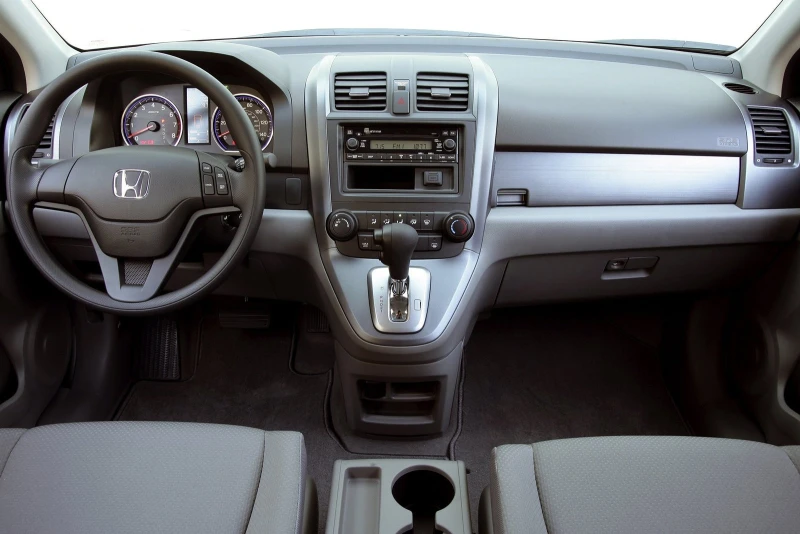
The most frequently seen used examples in the US are EX models with moonroof and alloys, followed by leather-equipped EX-L trims. Base LX versions are common but less desirable, while loaded EX-Ls with navigation or premium audio command higher prices.
Interior Changes by Year and Facelift
2007–2009 (pre-facelift):
- white instrument backlighting
- slightly rougher dashboard plastic texture
- basic audio system
2010–2011 facelift:
- bluish instrument lighting
- improved console and door panel materials
- noticeably better noise and vibration insulation (especially wheel wells and floor)
- updated steering wheel and shifter design
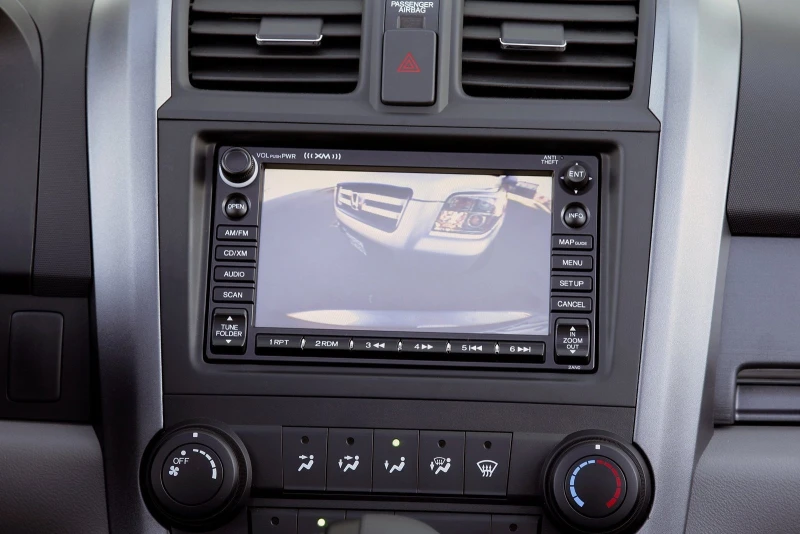
- rearview camera added on top trims
Post-facelift models (2010–2011) feel significantly more modern and quieter inside — the difference is especially noticeable on highways or rough pavement.
Common Interior Questions and Drawbacks
Typical issues and quirks reported on the US used market for the 2007–2011 Honda CR-V:
- Driver's seat side bolsters wear (leather cracking, cloth wearing at pressure points)
- Creaks from center console and door panels after 110,000–140,000 miles
- Steering wheel wear and silver trim fading/peeling
- Sun visor plastic cracking or fading
- Heater blower motor noise (whistling after 10–12 years)
- Rear seat holds up better than front seats
Visibility remains strong thanks to large mirrors and slim pillars. Drawbacks include thick rear pillars and relatively small rear side windows.
Conclusions and Relevance in 2026
In 2026, the third-generation CR-V cabin no longer feels modern, but it still offers outstanding practicality and user-friendliness. In terms of ergonomics, space, and material durability, it continues to hold its own against many newer entry- and mid-level competitors.
Best used buys on the US market in 2026:
- 2010–2011 models in EX or EX-L trim with leather and dual-zone climate
- Facelifted examples — noticeably quieter and more refined for daily driving
When inspecting a used example, pay special attention to:
- driver's seat condition (bolsters and upholstery)
- climate system performance (no whistling, even airflow)
- minimal console creaks or looseness
- steering wheel, armrest, and door card plastic condition
- all buttons, switches, and adjustments working properly
A well-maintained facelifted 2010–2011 CR-V can still deliver comfortable, reliable daily driving today — especially if used mainly on highways and well-paved city roads.