


For the United States, the eighth-generation Honda Accord covered the 2008–2012 model years and was sold as a four-door sedan and a two-door coupe. The U.S. lineup did not include the European Tourer wagon or Type-S trim. By 2026, this generation is a used-car proposition, so cabin condition and equipment can vary considerably from one vehicle to another.
Cabin overview
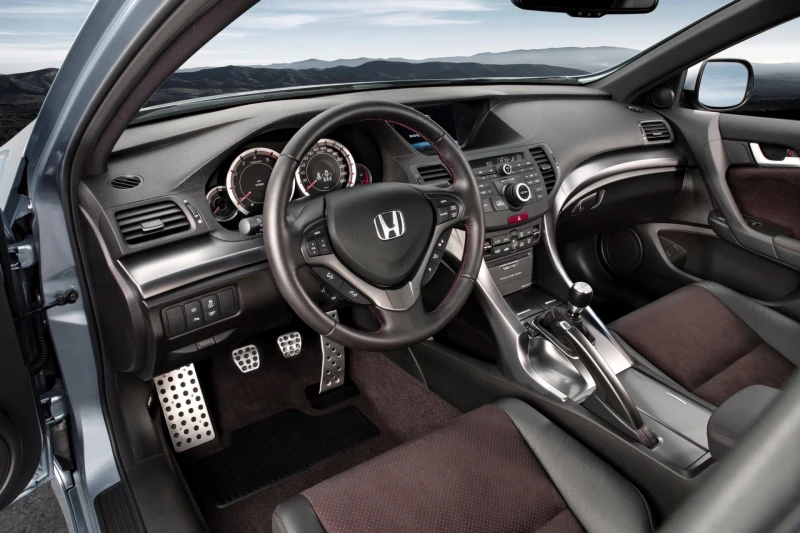
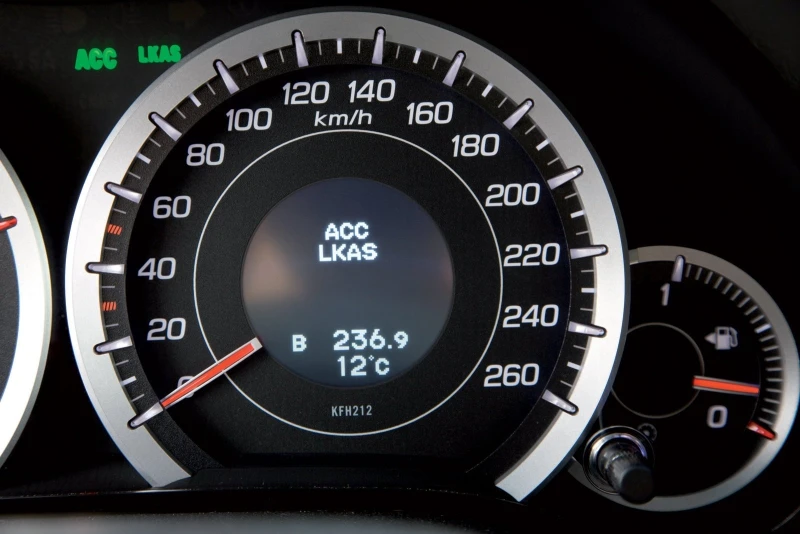
The Accord VIII uses a conventional dashboard layout with analog gauges, a center stack for audio and climate functions, and a separate information display. Higher trims could be equipped with the Honda Satellite-Linked Navigation System, which used an 8-inch screen and a central interface dial. The design is button-heavy by modern standards, but the major functions are physically separated and easy to identify.
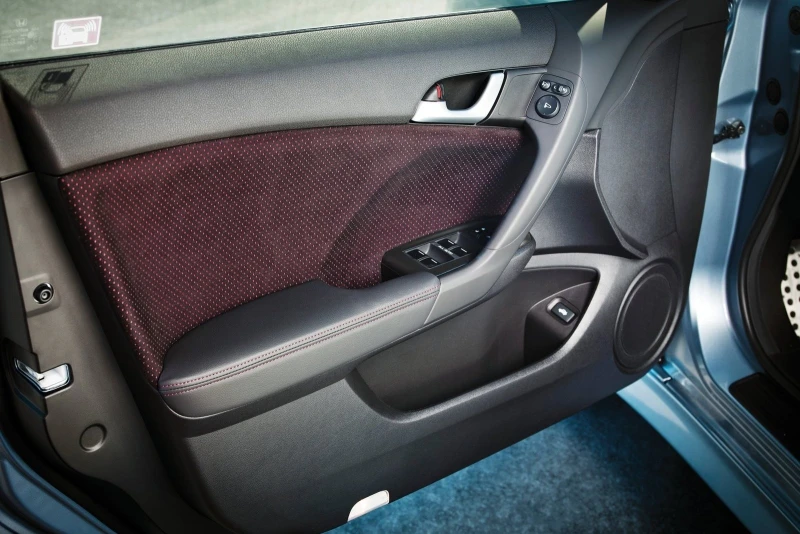
Interior materials vary by trim. Cloth upholstery was standard on most lower and mid-level versions, while leather-trimmed seating was offered on SE and EX-L models in later model years. The cabin combines padded and textured surfaces with harder plastics in lower areas, reflecting the mainstream midsize segment of the period.
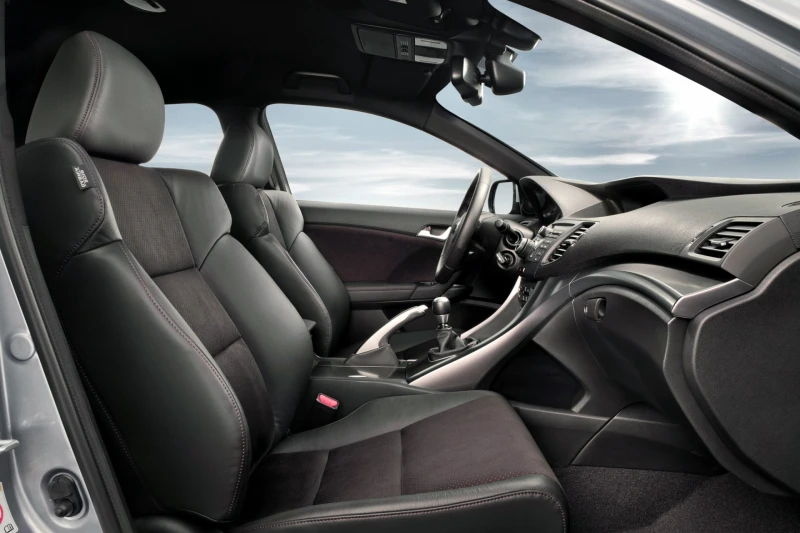
The driving position is straightforward, with a tilt-and-telescoping steering column and steering-wheel audio and cruise controls across the lineup. Power-seat availability depended on trim: LX-P added an 8-way power driver's seat, while upper versions offered additional power adjustment, lumbar support and, on selected EX-L V-6 sedans, two-position driver-seat memory.
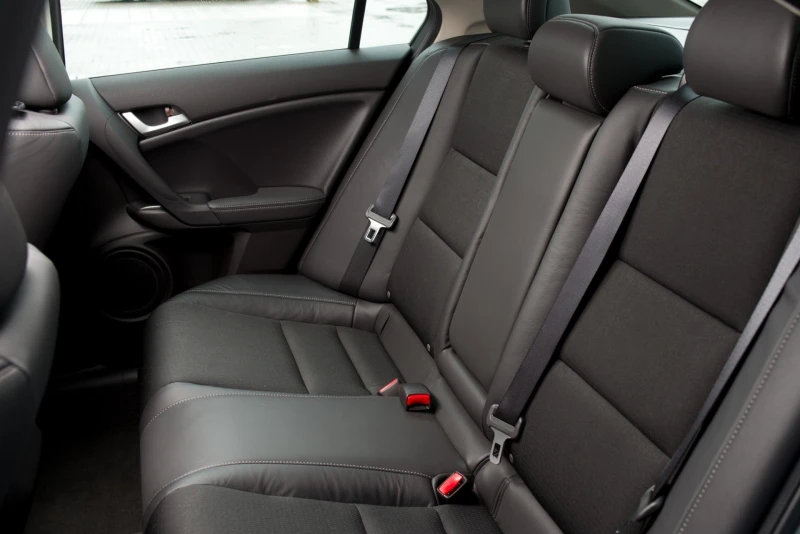
The sedan is the roomier body style. Its 110.2-inch wheelbase and 37.2 inches of rear legroom give adults useful second-row space, while the coupe has a shorter 107.9-inch wheelbase and roughly 33.1 inches of rear legroom. Both body styles seat five, but the coupe's lower roofline and tighter rear compartment make the back seat less accommodating.
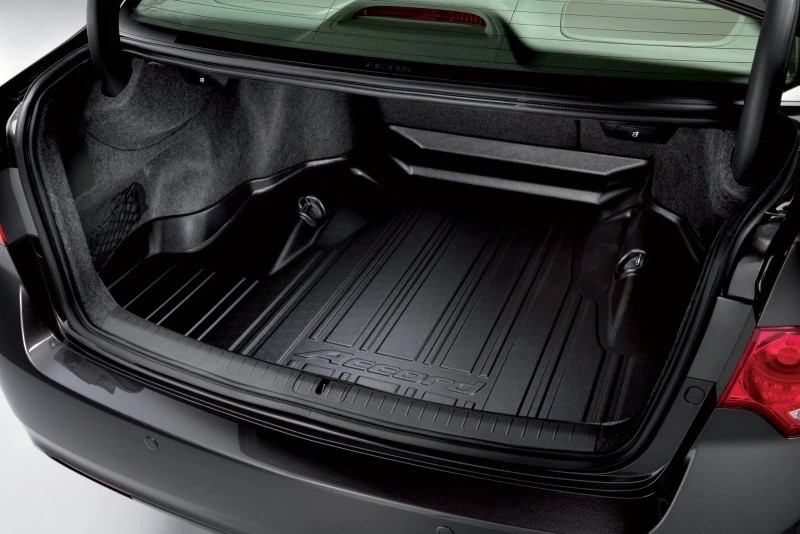
Trunk capacity also differs by body style and model year. Early eighth-generation sedans were rated at about 14.0 cu ft, while later sedans reached 14.7 cu ft; the coupe provides 11.9 cu ft. The rear seatback folds down for longer cargo, but the sedan uses a one-piece folding backrest rather than the 60/40 split common on many newer cars. A center pass-through is available on the sedan.
U.S. trims and interior equipment
The U.S. sedan lineup began with LX and LX-P, followed by EX and EX-L, with V-6 versions offered on upper trims. For 2011, Honda added the SE sedan. By 2012 the sedan range consisted of LX, LX-P, SE, EX and EX-L, while the coupe used LX-S, EX and EX-L. The U.S. market did not use the European Elegance, Executive or Type-S grade names.
In the 2012 sedan, LX included air conditioning, cruise control, a tilt-and-telescoping steering wheel, a six-speaker audio system, auxiliary input and steering-wheel controls. LX-P added an 8-way power driver's seat and alloy wheels. Equipment changed somewhat across model years, so an individual used car should be checked against its VIN and original specification.
The SE sedan, introduced for 2011, added leather-trimmed seating, heated front seats, driver's power lumbar support and a leather-wrapped steering wheel. EX models moved toward a more upscale specification with a power moonroof, 17-inch alloy wheels, upgraded interior accents and additional audio features.
EX-L was the comfort-focused trim, with leather-trimmed seats, heated front seats, dual-zone automatic climate control, a 270-watt seven-speaker audio system with subwoofer, XM satellite radio and Bluetooth HandsFreeLink. Navigation was optional, and navigation-equipped sedans gained a rearview camera. On the 2012 brochure, USB audio connectivity was listed across the lineup.
Interior changes by model year and the 2011 refresh
The basic cabin architecture remained recognizable throughout the 2008–2012 run. The 2008 redesign introduced a larger interior than the previous U.S. Accord, along with a wider center console, larger front seats and a more spacious rear compartment in the sedan.
The 2011 update brought the most relevant interior changes. Honda introduced new seat fabrics on cloth-equipped cars, revised the instrument-panel design and refined several trim accents. USB audio connectivity was added to EX and EX-L sedans and was already available across the coupe range, while navigation-equipped sedans received a rearview camera. The new SE sedan also broadened access to leather upholstery and heated front seats.
For 2012, the interior remained broadly similar to the refreshed 2011 design. The official 2012 equipment list shows USB audio connectivity across all models, while EX-L continued to combine leather, heated front seats, dual-zone climate control and available navigation. For a used-car buyer, 2011–2012 examples therefore have several convenience upgrades over the earliest cars without fundamentally changing the dashboard layout.
Common cabin concerns on used cars
At this age, condition matters more than trim names alone. High-touch areas such as the steering wheel, seat bolsters, center armrest, door pulls and frequently used buttons should be checked for wear. Leather can show creasing or surface damage, while cloth interiors may show staining or compression depending on how the car was used.
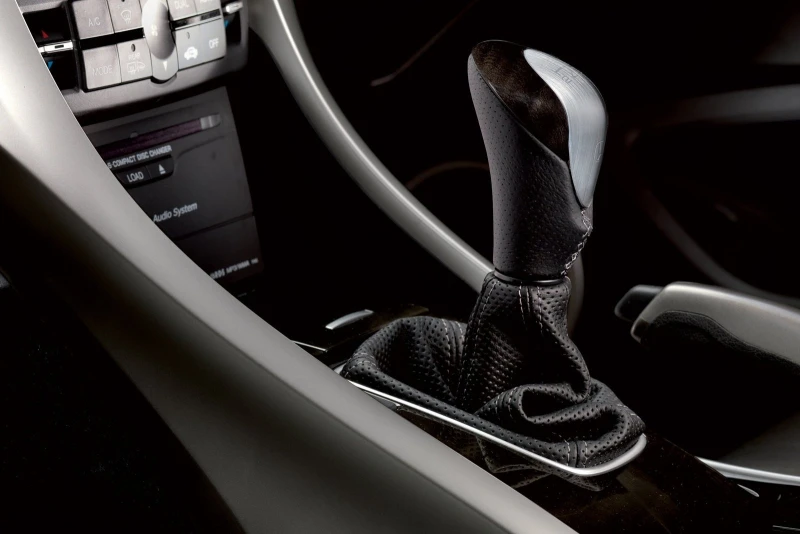
The center stack contains many physical buttons and, on navigation-equipped cars, an older display and control interface. During an inspection, it is worth testing the audio system, climate controls, steering-wheel switches, power-seat functions, seat heaters, Bluetooth connection and navigation controls where fitted.
Rearward visibility is less generous in the coupe than in the sedan, and early cars generally lack the camera assistance found on later navigation-equipped sedans. If a used car has an aftermarket head unit or other interior modifications, check that climate functions, steering-wheel controls and any factory audio features still operate correctly.
Cabin noise is also worth evaluating on a test drive. Tire choice, worn suspension components, door seals and previous repairs can all affect how quiet an older Accord feels. Rather than assuming that one model year will always be quieter than another, compare the actual vehicle on both smooth pavement and rougher roads.
Interior verdict and current relevance
By 2026 standards, the eighth-generation Accord interior clearly belongs to an earlier era: analog gauges, small displays and a dense center stack contrast with the large touchscreens and digital clusters common in newer midsize cars. Its strengths are conventional controls, useful sedan space and a broad range of comfort equipment on higher U.S. trims.
For buyers focused on interior features, the SE and EX-L trims are the versions to compare most closely. SE brings leather and heated front seats without requiring the highest trim, while EX-L adds dual-zone climate control, premium audio, Bluetooth and available navigation. The 2011–2012 cars also include the most significant interior updates of the generation.
Before buying, inspect upholstery wear, seat operation, switches, audio and climate functions, the navigation system and rearview camera if fitted. Also confirm the exact factory equipment for the specific model year, because Honda changed standard and optional features during the 2008–2012 production run.