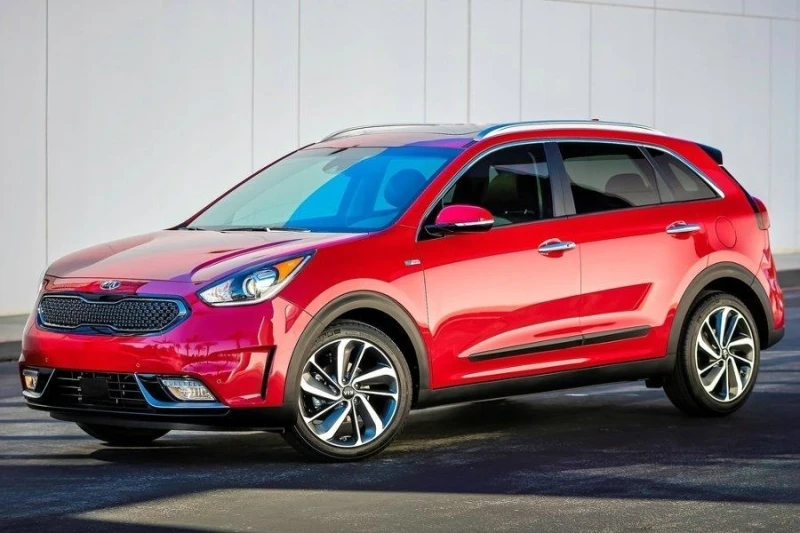
The hybrid and plug-in hybrid use a 6-speed dual-clutch transmission, while the Niro EV has a single-speed reduction gear. Every first-generation U.S.-market Niro is front-wheel drive; all-wheel drive was not offered.
The main U.S. powertrain configurations for the 2017–2022 model years were:
| Powertrain | Engine / battery | Combined output | Combined torque | Transmission | Drive | U.S. model years | Notes |
|---|---|---|---|---|---|---|---|
| 1.6 GDI Hybrid (HEV) | 1.6-liter gasoline engine + 1.56-kWh hybrid battery | 139 hp | 195 lb-ft | 6-speed DCT | FWD | 2017–2022 | EPA combined fuel economy varies by trim and model year, generally 43–50 mpg |
| 1.6 GDI Plug-in Hybrid (PHEV) | 1.6-liter gasoline engine + 8.9-kWh battery | 139 hp | 195 lb-ft | 6-speed DCT | FWD | 2018–2022 | EPA-rated electric range of 26 miles; 46 mpg combined in hybrid operation |
| Niro EV 64 kWh | Battery-electric | 201 hp | 291 lb-ft | Single-speed reduction gear | FWD | 2019–2022 | EPA-rated range of 239 miles |
The smaller 39.2-kWh electric version sold in some overseas markets was not part of the official U.S. lineup. American buyers received only the 64-kWh Niro EV, marketed under that name rather than as the e-Niro. It uses a 7.2-kW onboard AC charger and standard CCS DC fast-charging capability. Kia originally quoted approximately 100 miles of added range in 30 minutes or an 80% charge in about 75 minutes under specified fast-charging conditions.
Dimensions and weight
The basic footprint remained consistent throughout the generation, although the Niro EV is slightly longer and lower to the ground than the hybrid models. Figures below reflect representative late-production U.S.-market specifications; curb weight varies by trim and equipment.
| Measurement | Specification | Notes |
|---|---|---|
| Overall length | 171.5 in. (HEV/PHEV) / 172.2 in. (EV) | The EV uses unique front and rear styling |
| Overall width | 71.1 in. | Excluding mirrors |
| Overall height | About 60.8–61.4 in. | Varies by powertrain and roof-rail specification |
| Wheelbase | 106.3 in. | Shared across the first-generation lineup |
| Minimum ground clearance | 6.3 in. (HEV/PHEV) / 6.1 in. (EV) | The battery-electric model sits slightly lower |
| Curb weight | About 3,106–3,287 lb (HEV) / 3,391–3,450 lb (PHEV) / 3,854 lb (EV) | Exact weight depends on model year, trim and equipment |
| Gross vehicle weight rating | About 4,079–4,255 lb (HEV) / 4,409 lb (PHEV) / 4,916 lb (EV) | Check the certification label for the individual vehicle |
| Cargo volume, seats up / folded | 19.4 / 54.5 cu. ft. (HEV/PHEV) / 18.5 / 53.0 cu. ft. (EV) | SAE figures with the underfloor cargo tray in place |
The Niro EV is roughly 570–750 lb heavier than comparable hybrid versions because of its high-voltage battery. Despite that extra mass, cargo capacity remains close to that of the HEV and PHEV.
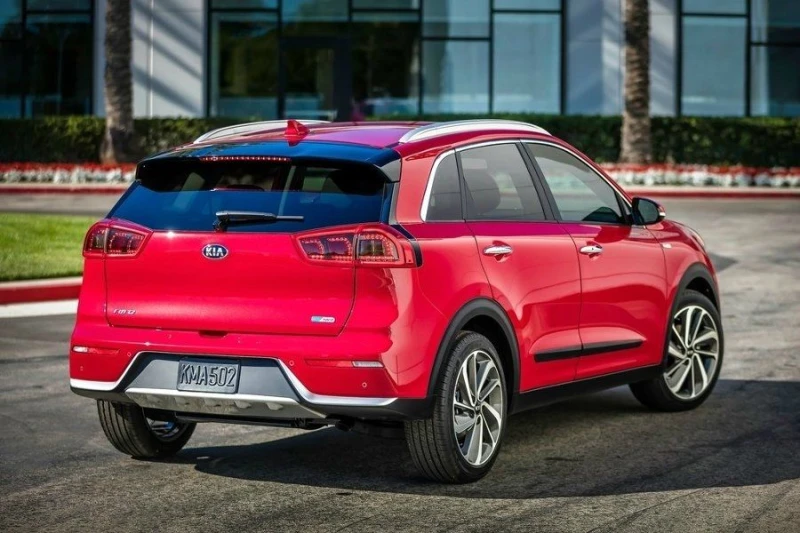
Model-year changes and refresh
This generation is no longer sold new in the United States. Its major U.S.-market milestones were:
- 2017: The Niro Hybrid launched in FE, LX, EX and Touring-oriented trims with a 139-hp hybrid system, 6-speed DCT and front-wheel drive.
- 2018: The Niro Plug-in Hybrid joined the lineup with an 8.9-kWh battery and an EPA-rated 26 miles of electric range.
- 2019: The Niro EV arrived with a 64-kWh battery, 201 hp and an EPA-rated 239-mile range.
- 2020: A mid-cycle update brought revised exterior details, an 8-inch standard touchscreen on many versions and an available 10.25-inch navigation display. The PHEV received matching updates, while the EV added revised lighting and upgraded displays.
- 2021–2022: Changes were largely limited to equipment, connectivity, trim packaging and the adoption of Kia's updated badging for 2022.
When comparing used examples, equipment matters as much as model year. Higher trims may include the 10.25-inch navigation screen, upgraded audio, additional driver-assistance features, a sunroof or larger wheels, while base trims prioritize efficiency and lower running costs.
Efficiency, charging and technical checks
EPA ratings provide a consistent basis for comparing the three U.S. powertrains, but actual results depend on trim, speed, temperature, terrain, tire choice and driving style:
- HEV — approximately 43–50 mpg combined, depending on trim and model year
- PHEV — 105 MPGe combined, 46 mpg combined after the usable battery charge is depleted, and 26 miles of EPA-rated electric range
- Niro EV — 112 MPGe combined and 239 miles of EPA-rated range
These are EPA figures rather than owner-reported averages. Cold weather, sustained highway speeds and cabin heating can reduce electric range, while urban driving and mild temperatures may produce different results.
For the HEV and PHEV, service history should show that maintenance was performed according to the applicable Kia schedule. A pre-purchase inspection should include the gasoline engine, cooling systems, 6-speed DCT operation, brakes and hybrid warning history. For the Niro EV, verify DC and AC charging, inspect the reduction-gear area for abnormal noise or leaks, and obtain a high-voltage battery state-of-health report when possible. Battery condition should be measured rather than estimated from mileage alone.
Used vehicles are commonly listed on Autotrader, CarGurus and Cars.com, but availability varies sharply by region. The Niro EV was originally concentrated in selected states, so shoppers outside major EV markets may need to search farther from home. Parts and qualified high-voltage service can also be less convenient in areas with limited Kia EV support.
Best version for U.S. used-car buyers
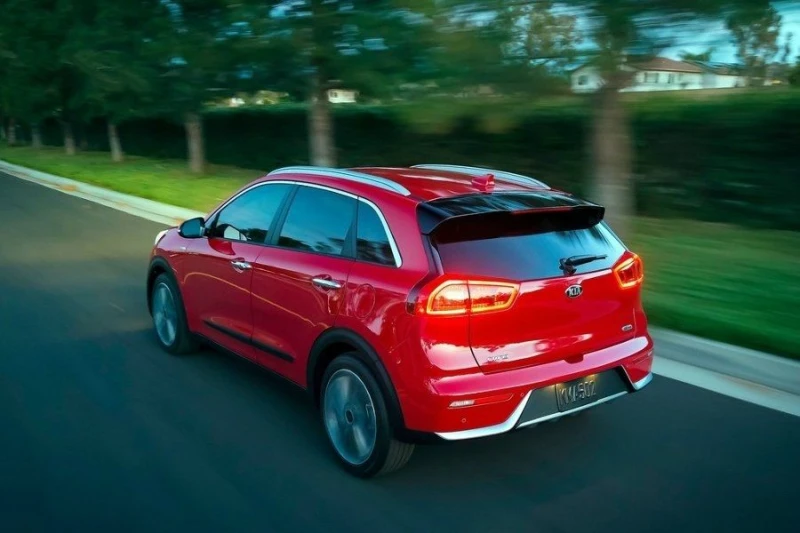
The Niro Hybrid is the broadest fit for buyers who want strong fuel economy without charging, and it is generally the easiest version to find nationwide. The PHEV makes the most sense when regular home or workplace charging can cover a meaningful share of daily driving; without frequent charging, its additional battery weight and complexity provide less benefit. The Niro EV offers the quickest response and fully electric driving, but buyers should confirm charging access, winter-range needs and local service support.
Before purchasing any first-generation Niro, check the VIN for open recalls, review maintenance and collision history, test every charging function where applicable, and verify battery condition through a qualified diagnostic scan. Separate articles in this series cover the exterior, interior, trim levels and common ownership concerns in greater detail.