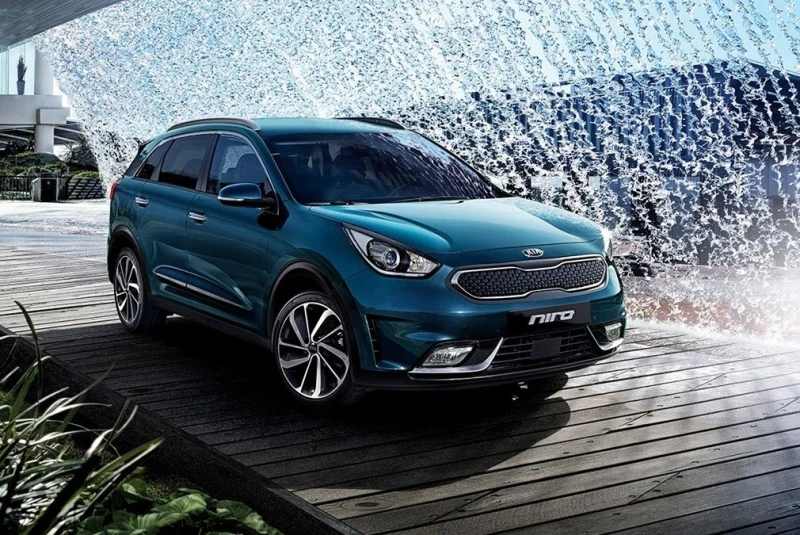
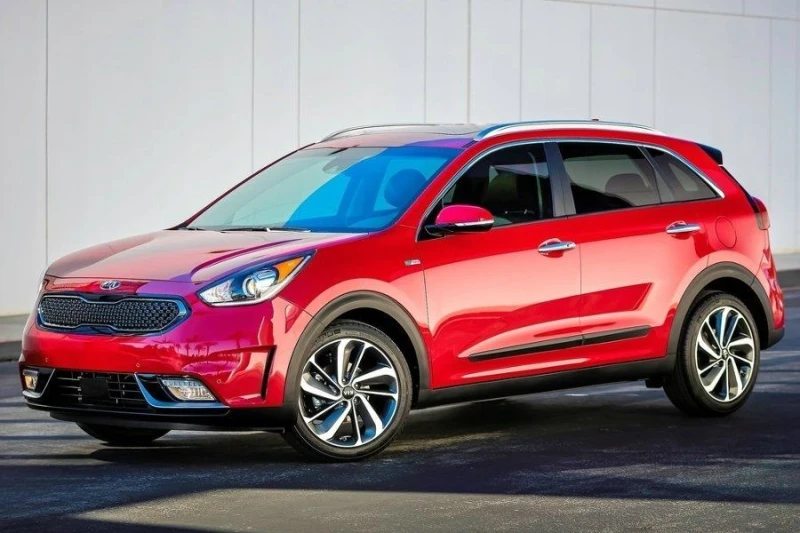
The first-generation Kia Niro (internal code DE) is a small electrified crossover built on a Hyundai-Kia architecture developed specifically for hybrid, plug-in hybrid, and battery-electric vehicles.
The production model made its global debut at the 2016 Chicago Auto Show and reached U.S. dealerships as a 2017 model. The Niro Plug-In Hybrid joined the American lineup for 2018, followed by the Niro EV for 2019. First-generation models remained on sale through the 2022 model year before the redesigned second generation arrived for 2023.
In the United States, the Niro occupied a distinctive space between a conventional hatchback and a subcompact SUV. Depending on the powertrain, its closest alternatives included the Toyota Prius and Prius Prime, Hyundai Ioniq, Chevrolet Bolt EV and Bolt EUV, Hyundai Kona Electric, and larger hybrid crossovers such as the Ford Escape Hybrid.
Key features included front-wheel drive across the range, a 106.3-inch wheelbase, a six-speed dual-clutch transmission in the hybrid models, available Kia Drive Wise driver-assistance technology, and infotainment screens ranging from 7.0 to 10.25 inches over the model cycle.
What Was New Compared With the Previous Generation
The first-generation Niro had no direct predecessor in Kia's U.S. lineup. It was the brand's first purpose-built electrified crossover and represented a major step beyond adapted gasoline models such as the contemporary Soul and Sportage.
Its main distinctions included:
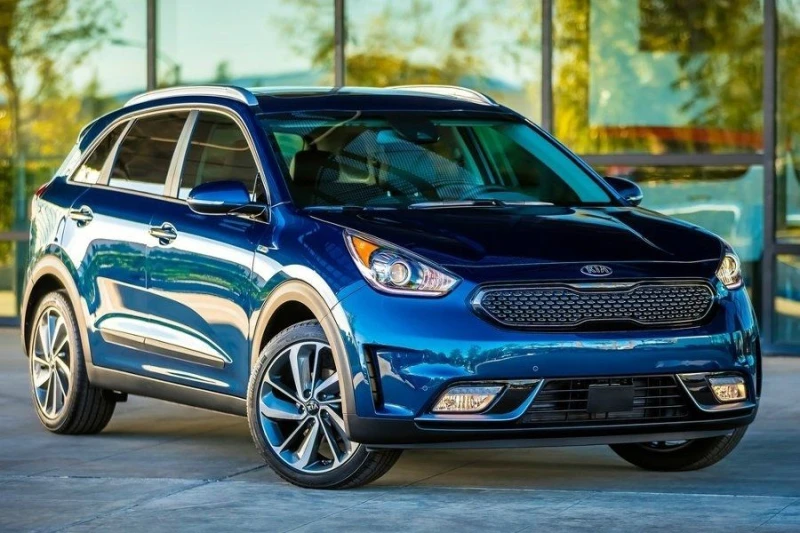
- Design: A low-roof crossover profile, a drag coefficient of approximately 0.29, Kia's signature tiger-nose grille, and aerodynamic details intended to improve efficiency.
- Architecture: A dedicated electrified platform with the high-voltage battery positioned to preserve passenger space and maintain a relatively low center of gravity.
- U.S. powertrains: A 1.6-liter GDI hybrid, a 1.6-liter GDI plug-in hybrid, and a 64-kWh Niro EV. Smaller 39.2-kWh EV versions and lower-output electric motors sold in some overseas markets were not part of the U.S. lineup.
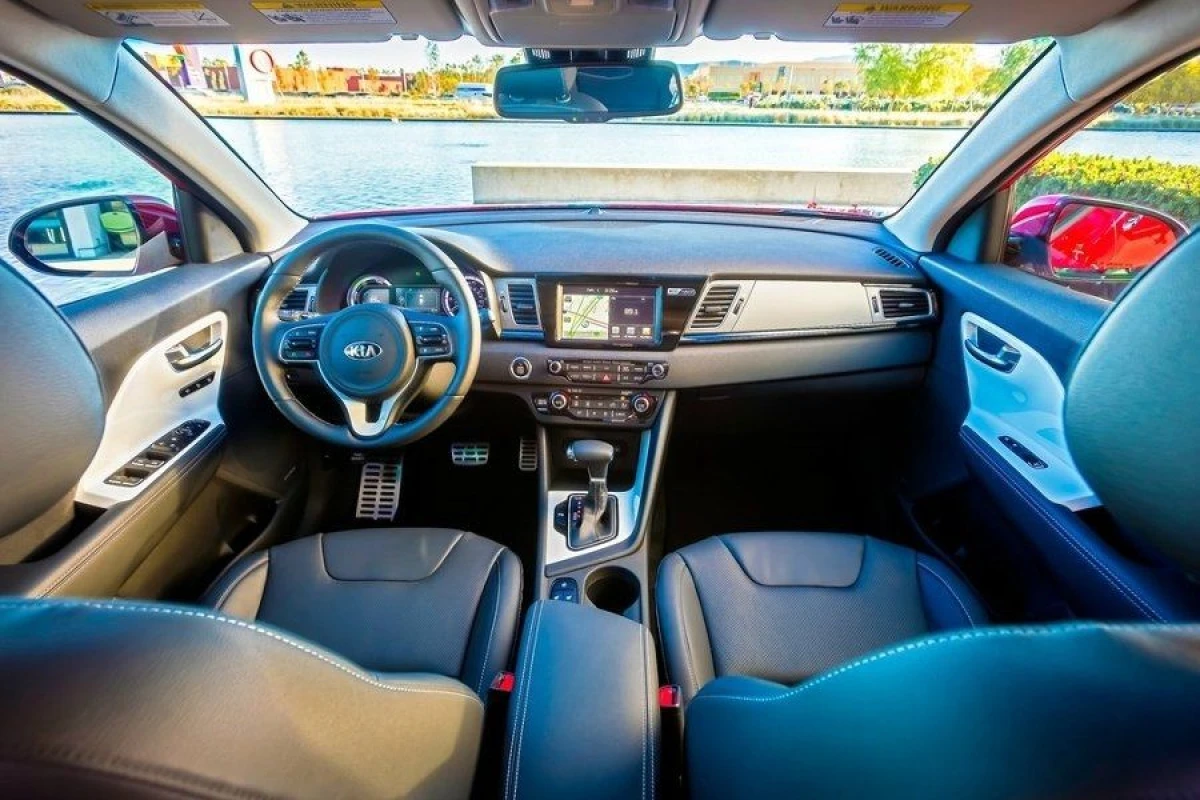
- Cabin technology: Early models used a 7.0-inch touchscreen, while the 2020 refresh introduced an 8.0-inch standard display and an available 10.25-inch navigation screen.
- Driver assistance: Depending on model year and trim, available features included forward collision avoidance, lane-keeping assistance, blind-spot monitoring, rear cross-traffic warning, and adaptive cruise control.
- Practicality: Hybrid versions offered useful rear-seat space and up to 63.2 cu ft of cargo capacity with the rear seats folded and the removable cargo-floor tray excluded.
Current Status of the Generation
The first-generation Niro ended its U.S. run after the 2022 model year. The final American powertrain lineup consisted of:
- Niro Hybrid: 1.6-liter GDI engine and electric motor, 139 hp and 195 lb-ft combined, six-speed DCT, front-wheel drive.
- Niro Plug-In Hybrid: 1.6-liter GDI engine and electric motor, 139 hp and 195 lb-ft combined, 8.9-kWh battery, six-speed DCT, front-wheel drive, and an EPA-estimated 26 miles of electric range.
- Niro EV: 201-hp electric motor, 291 lb-ft of torque, 64-kWh battery, front-wheel drive, and an EPA-estimated 239 miles of range.
Major U.S. milestones included:
- 2017: Niro Hybrid launched in the United States.
- 2018: Niro Plug-In Hybrid added to the lineup.
- 2019: Niro EV introduced with a 64-kWh battery and 239-mile EPA range.
- 2020: Mid-cycle update brought revised exterior styling, updated displays, and broader availability of driver-assistance features.
- 2021–2022: Packaging and technology updates continued until the end of the generation.
For used-car shoppers, 2020–2022 examples are often attractive because they combine the updated styling and infotainment with the mature version of the first-generation platform. Condition, service history, battery health, and trim-specific equipment remain more important than model year alone.
U.S. Used-Car Market
First-generation Niro models are now available only as used or certified pre-owned vehicles in the United States. Listings are commonly found on Autotrader, CarGurus, Cars.com, franchised-dealer websites, and local marketplaces. Availability varies considerably by region, especially for the Niro EV, which was originally concentrated in states with stronger EV sales.
Hybrid models are the easiest to find nationwide. Plug-in hybrids are less common, while the Niro EV can offer strong value but requires closer attention to battery condition, charging compatibility, climate-related range variation, and local fast-charging access.
Typical nationwide asking-price ranges in July 2026 are shown below. These are broad market estimates rather than official valuations; mileage, accident history, battery condition, trim, location, and dealer fees can move an individual vehicle outside the range.
| Version | Model Years | Typical Mileage | Typical Asking Price |
|---|---|---|---|
| Niro Hybrid | 2017–2022 | 40,000–120,000 miles | $8,000–$22,000 |
| Niro Plug-In Hybrid | 2018–2022 | 30,000–100,000 miles | $12,000–$24,000 |
| Niro EV | 2019–2022 | 25,000–90,000 miles | $12,000–$23,000 |
Main U.S. Versions and Trim Levels
Trim names changed during the generation, so equipment should be verified by model year and VIN rather than inferred from the badge alone.
- Niro Hybrid: Early U.S. trims included FE, LX, EX, Touring, and Touring Graphite Edition. Later lineups used names such as LX, LXS, LXS Special Edition, Touring Special Edition, and EX Premium.
- Niro Plug-In Hybrid: The lineup generally included LX or LXS, EX, and EX Premium, depending on model year.
- Niro EV: Most 2019–2021 vehicles were sold as EX and EX Premium; the 2022 lineup also included an S trim.
Common equipment included wired Apple CarPlay and Android Auto, dual-zone automatic climate control on many trims, a rearview camera, heated front seats on selected versions, and available Harman Kardon audio, navigation, a heated steering wheel, ventilated front seats, and a cold-weather package. The chassis used MacPherson struts in front and an independent multi-link rear suspension.
Verdict and Relevance Today
The first-generation Kia Niro remains a practical used-car option for buyers who prioritize fuel economy, easy urban dimensions, and a conventional cabin layout. The Hybrid is the simplest choice for drivers without regular charging access, the Plug-In Hybrid can cover short commutes electrically when charged consistently, and the Niro EV offers the strongest electric-only performance and range.
Later 2020–2022 models benefit from the mid-cycle update, but they should not automatically be considered better purchases. A well-maintained earlier vehicle with complete records may be preferable to a newer example with accident damage, neglected maintenance, or an uncertain high-voltage battery history.
Before buying a used first-generation Niro in the United States, check:
- High-voltage battery condition on PHEV and EV models, including a state-of-health diagnostic when available.
- Charging-port operation, included charging cable, and DC fast-charging performance on the Niro EV.
- Open recalls and service campaigns using the vehicle identification number.
- Accident history, especially repairs involving the underbody, battery enclosure, front radar, or cameras.
- Low-speed clutch engagement and transmission behavior on Hybrid and Plug-In Hybrid models.
- Operation and calibration of driver-assistance systems after windshield or collision repairs.
- Condition of the 12-volt battery, tires, brakes, suspension, and complete service records.
With the correct powertrain for the owner's charging routine and a thorough pre-purchase inspection, the first-generation Niro continues to offer a useful mix of efficiency, passenger space, and everyday versatility on the U.S. used-car market.