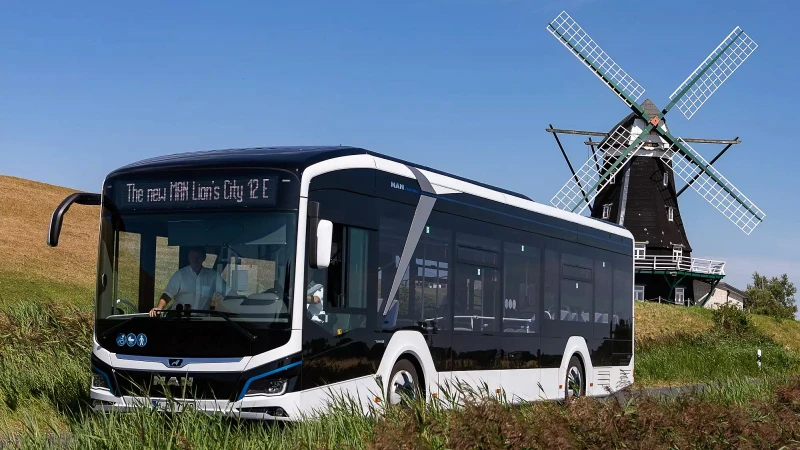
That's exactly how it was pitched to the public in recent years. Many U.S. cities have aggressively pushed public transit fleets toward electric power — today, electric buses make up a growing share of urban fleets, with ambitious targets for phasing out diesel entirely in the coming years. But in practice, things have proven far more complicated.
The Issue No One Talked About Openly
Let's start with a basic fact that was often overlooked: electric buses are significantly heavier than conventional ones. A typical diesel city bus weighs around 25,000–30,000 pounds, while an electric version can tip the scales at 35,000–40,000 pounds or more. That's a big difference — and it's not just numbers on a spec sheet; it's real stress on roads and surrounding infrastructure.
Many urban areas weren't prepared for this. Pavement, road bases, and older buildings along bus routes were engineered for much lighter loads.
Vibrations Instead of Silence
Ironically, instead of the promised "quiet and peaceful" rides, residents in some neighborhoods have reported increased vibrations. These aren't occasional — they're often ongoing. The effect is especially noticeable over speed bumps or any road imperfections.
The heavy battery pack creates impact loads when hitting those spots, transmitting shocks into the ground and nearby structures. It feels almost like living next to a rail line — without the tracks. And unlike lighter vehicles, these buses can accelerate wear on road surfaces.
Cities Where the Problems Became Clear
A notable example comes from communities in states like Indiana and New York, where heavier electric buses have raised concerns about accelerated road damage and structural impacts on nearby homes. In some areas, residents noted a clear difference when routes temporarily switched back to lighter diesel models — the vibrations eased, only to return with the electrics.
Studies and reports in places like Los Angeles and Chicago have highlighted how these buses can disrupt residential quiet, especially at night — an issue taken seriously in noise-sensitive urban settings.
Official Responses — and the Questions They Raise
In certain cities, authorities have downplayed concerns, noting that vehicles in general are getting heavier and that this is nothing out of the ordinary. On paper, that sounds reasonable — but in reality, it can feel like sidestepping the issue.
Yes, passenger vehicles are gradually gaining weight. But they don't add thousands of pounds overnight. With buses, that's exactly what happened — the result of policy mandates rather than gradual technological evolution.
The Conclusion That Suggests Itself
The core issue isn't electric propulsion itself. It can be a strong option — where it fits well. The problem lies in a one-size-fits-all mindset: "electric means better, always and everywhere."
Experiences across U.S. cities clearly show that ignoring side effects and real-world operating conditions can create new challenges to replace old ones. Sometimes the smarter move is to pause, acknowledge missteps, and adjust course. The question is whether decision-makers are willing to do that — or if they'll keep insisting everything is fine.