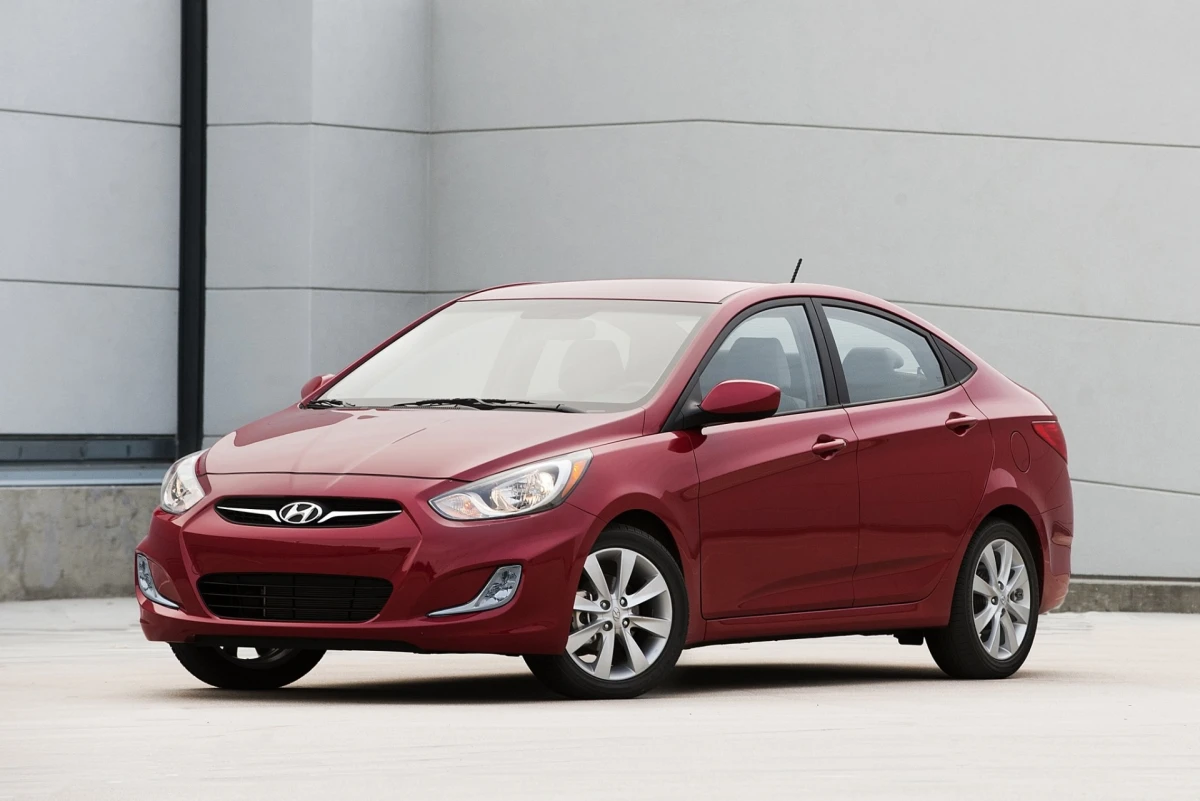
The third-generation Dacia Sandero (BJI) was introduced in 2020 on the Renault-Nissan-Mitsubishi Alliance's CMF-B architecture. For U.S. readers, the key point is that Dacia does not officially sell the Sandero in the United States, so there is no U.S.-spec engine range, EPA fuel-economy rating, U.S. trim structure, or official U.S. MSRP. The specifications below therefore describe factory European versions, with U.S.-familiar units added where useful. Exact powertrain availability varies by country and model year.
Exterior design, interior equipment, trim differences and common used-car inspection points are covered in separate articles in this series.
Engines and transmissions
Since its 2020 launch, the third-generation Sandero has primarily used three-cylinder gasoline and gasoline/LPG engines. Early European versions included the naturally aspirated 1.0 SCe 65, turbocharged 1.0 TCe 90 and 1.0 Eco-G 100 LPG. Depending on the country, the TCe 90 could be paired with a six-speed manual or CVT, while the Eco-G used a six-speed manual. The later model-year update introduced the TCe 100 and a substantially revised 1.2-liter Eco-G 120, with the latter available with either a six-speed manual or six-speed dual-clutch automatic in selected markets. Sandero Stepway has also been offered with the 1.0 TCe 110. By 2026, selected European markets list the Hybrid 155 as well. All of these versions are front-wheel drive; none represents an official U.S.-market specification.
| Engine type | Displacement | Power | Transmission | Drive | Notes / Availability |
| Gasoline SCe 65 | 1.0L | 65 hp | 5-speed manual | FWD | Naturally aspirated entry engine offered in selected European markets; no official U.S. version |
| Gasoline TCe 90 / TCe 100 | 1.0L turbo | 90–100 hp | 6-speed manual; CVT on some earlier TCe 90 versions | FWD | TCe 90 was widely used earlier in the generation; TCe 100 arrived with the later update |
| Gasoline TCe 110 | 1.0L turbo | 110 hp | 6-speed manual | FWD | Used primarily on Sandero Stepway in selected European markets |
| Gasoline/LPG Eco-G 100 / Eco-G 120 | 1.0L turbo / 1.2L turbo | 100–120 hp | 6-speed manual; 6-speed dual-clutch automatic with Eco-G 120 in selected markets | FWD | Factory bi-fuel gasoline/LPG powertrain; Eco-G 120 replaced the earlier 100-hp specification in the updated range |
| Hybrid 155 | 1.8L gasoline hybrid | 155 hp system output | Automatic multimode transmission | FWD | Listed in selected European Sandero markets during 2026; availability depends on country and version |
Dimensions and weight
The Sandero III remained a compact five-door hatchback throughout the generation, although dimensions changed slightly with the later styling update. Current European specifications list an overall length of about 161.5 inches (4,102 mm) and a 102.5-inch (2,604 mm) wheelbase. Stepway uses the same basic architecture but has crossover-style body details, roof rails and a taller overall profile. Weight varies significantly by engine, transmission and equipment, so the figures below use representative factory specifications rather than a single value for every version.
| Parameter | Sandero hatchback | Sandero Stepway | Notes |
| Length | 161.5 in (4,102 mm) | 161.5 in (4,102 mm) | Current updated European body specification |
| Width | 73.0 in (1,853 mm) | 73.0 in (1,853 mm) | Excluding extended side mirrors |
| Height | 58.9 in (1,496 mm) | About 62.4 in (1,586 mm) with roof rails | Stepway has a taller crossover-style body configuration |
| Wheelbase | 102.5 in (2,604 mm) | 102.5 in (2,604 mm) | Shared CMF-B architecture |
| Representative curb weight | About 2,335 lb (1,059 kg) | About 2,533 lb (1,149 kg) | Example MY2026 UK TCe 100 and TCe 110 specifications; other versions differ |
| Representative gross vehicle weight | About 3,461 lb (1,570 kg) | About 3,472 lb (1,575 kg) | Varies with engine, transmission and equipment |
| Ground clearance | Earlier factory specification: 6.4 in (162 mm) unladen / 5.2 in (133 mm) loaded | Earlier factory specification: 7.9 in (201 mm) unladen / 6.9 in (174 mm) loaded | Ground-clearance measurements depend on load and model year |

Model-year updates and refresh
The 2022 change should not be confused with a conventional mechanical facelift. Dacia rolled out its new visual identity across the range, including the Dacia Link emblem, redesigned grille details, new badging and revised colors. The more substantial Sandero update was announced in October 2025 and reached the market for the 2026 model year. It brought a new inverted-T lighting signature, revised front and rear styling, updated interior technology including an available 10-inch multimedia display, and changes to the powertrain range.
The updated European lineup introduced the 1.0 TCe 100 in place of the earlier TCe 90 in several markets and replaced the previous 1.0 Eco-G 100 with the 1.2 Eco-G 120. The latter also introduced a six-speed dual-clutch automatic option alongside the six-speed manual. Sandero Stepway continues to use market-specific powertrains such as the TCe 110, while selected European Sandero listings in 2026 also include the Hybrid 155. There is no equivalent U.S. model-year range because Sandero is not officially marketed in the United States.
Ownership and technical considerations
For an American owner or enthusiast, Sandero III should be treated as a European-market vehicle rather than a conventional U.S. used car. There is no Dacia dealer network or factory U.S. parts catalog for the model. Although many mechanical components come from the wider Renault Group parts ecosystem, compatibility should be checked by VIN and exact engine or transmission code rather than assumed from another Renault or Dacia model.
Fuel-economy figures also require careful interpretation. There are no EPA ratings for Sandero III. For example, current European factory data for the TCe 100 lists approximately 5.3 L/100 km on the WLTP combined cycle, mathematically equivalent to about 44 mpg US. A current Eco-G 120 Stepway specification lists approximately 5.7 L/100 km on gasoline and 7.1 L/100 km on LPG, equivalent by volume to roughly 41 and 33 mpg US respectively. These remain WLTP results and should not be presented as EPA estimates or directly compared with EPA-tested U.S. vehicles without that distinction.
The same caution applies to maintenance. The earlier CVT, later dual-clutch automatic, manual transmissions and hybrid drivetrain have different service requirements, and there is no single U.S. maintenance schedule for the Sandero. Service intervals and fluid specifications should be taken from the documentation for the vehicle's original market and exact powertrain. Claims about fixed transmission-fluid intervals, guaranteed engine life or universal repair costs should therefore be avoided unless supported by the corresponding factory documentation.
Bottom line for the United States
There is no technically correct way to name an "optimal U.S.-market" Sandero III engine or trim because Dacia has never offered this generation through an official American retail lineup. For comparison purposes, the TCe 100 with a six-speed manual represents one of the straightforward current European gasoline configurations, while the Eco-G 120 adds factory LPG capability and, in some markets, a dual-clutch automatic. Those choices should be understood as European specifications rather than recommendations for a U.S.-spec vehicle.
Import status is also a major consideration. Every Sandero III built since 2020 is still younger than 25 years, so the standard U.S. 25-year exemption from Federal Motor Vehicle Safety Standards does not apply. A vehicle that was not originally certified to U.S. standards can face additional NHTSA, EPA and import-eligibility requirements before permanent road use. Anyone evaluating a Sandero III for the United States should therefore verify the vehicle's build date, original-market specifications, certification status and import documentation rather than relying only on generic model data.