


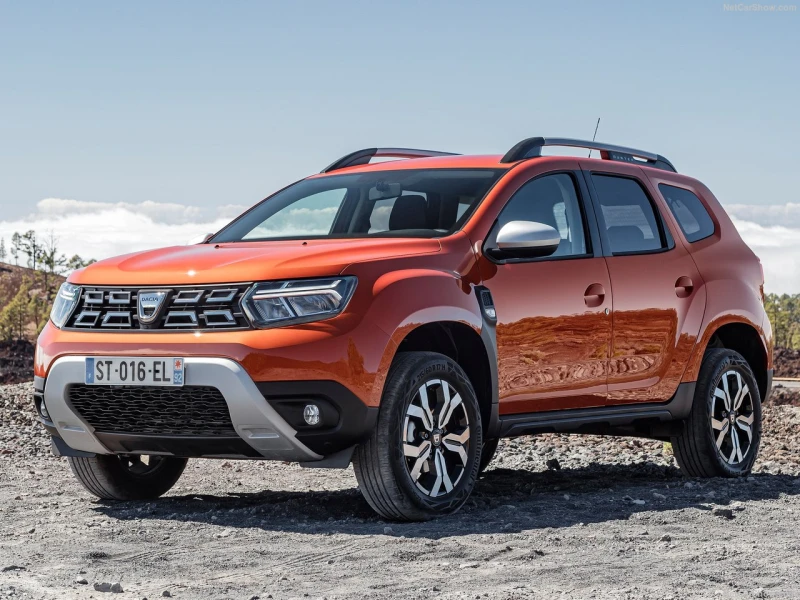
The second-generation Dacia Duster made its official debut at the Frankfurt Motor Show in September 2017, with sales beginning in European markets from late 2017 and early 2018. Dacia did not establish an official U.S. sales program for this generation, so there was no American dealer lineup, U.S.-market MSRP, or factory U.S. trim structure.
Unlike the third-generation Duster introduced for 2024, the Duster II was not built on the CMF-B architecture. It used an updated B0-derived platform, commonly identified as B0+, with front-wheel drive or selectable four-wheel drive depending on version.
Within Dacia's lineup, the Duster served as the brand's compact SUV above models such as the Sandero. Its appeal centered on straightforward packaging, useful ground clearance, available 4x4 hardware, and a relatively simple range of gasoline, diesel, and LPG powertrains for European and nearby markets.
What changed from the first generation
The first-generation Duster had built its reputation around price and off-road ability. The second generation kept nearly the same footprint but received a completely redesigned exterior and interior. Overall length increased to about 170.9 inches (4,341 mm), compared with roughly 169.9 inches (4,315 mm) for the earlier model, while the windshield, dashboard, seats, controls, and storage layout were substantially reworked.
Mechanically, the second generation evolved the existing B0-based architecture rather than switching to CMF-B. At launch, European versions included the naturally aspirated 1.6 SCe 115, the 1.2 TCe 125 turbo gasoline engine, and 1.5-liter dCi diesels rated at 90 or 110 PS. Depending on engine and market, buyers could get front- or four-wheel drive, manual transmissions, and an EDC dual-clutch automatic on selected front-wheel-drive diesel versions. Later in the lifecycle, the range shifted to engines including the 1.0 TCe 100, 1.3 TCe 130 and 150, Blue dCi 95 and 115, plus ECO-G LPG versions.
Ride and cabin refinement also improved. The Duster II gained electric power steering, a redesigned interior, better sound insulation, a multi-view camera system, blind-spot warning, available automatic climate control, and keyless entry on higher specifications. Front-wheel-drive versions used a torsion-beam-style rear axle, while 4x4 models used a more complex independent rear layout. Euro NCAP awarded the Duster II three stars under its 2017 test protocol.
Lifecycle and facelift
By the end of its production run, the Duster II was offered in different combinations depending on country. Common late-cycle European powertrains included TCe 130 and TCe 150 gasoline engines, the Blue dCi 115 diesel, and the ECO-G 100 LPG version. Both 2WD and 4WD configurations remained available, while the EDC dual-clutch transmission returned on selected front-wheel-drive versions.
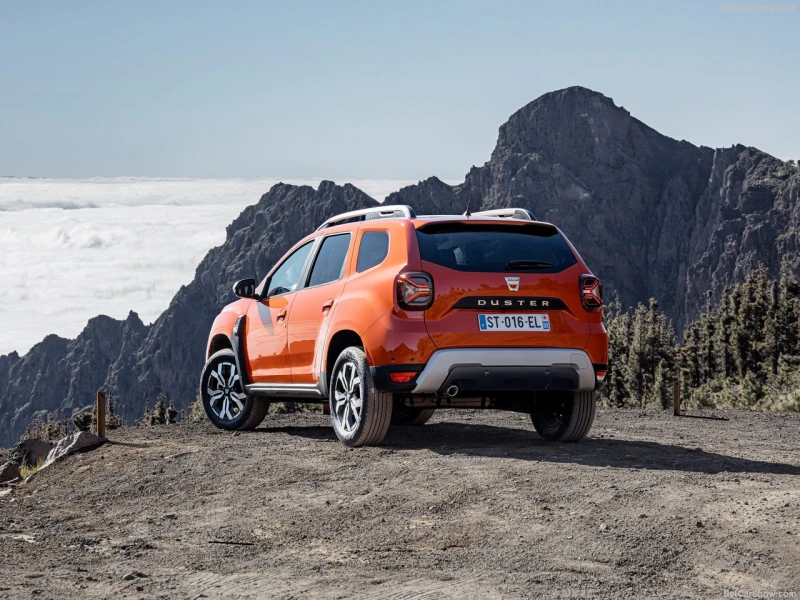
The main facelift arrived in 2021. It introduced revised lighting and grille details, an updated center console, new 8-inch multimedia systems, and a simplified range in several European markets. Dacia's 2021 launch material listed Essential, Comfort, and Prestige trims for France, although trim names changed by country and later model year. Production of the second generation wound down as the third-generation Duster moved onto the CMF-B platform for 2024.
For used-car shoppers in markets where the model was officially sold, the later 2021–2024 cars are often the easiest versions to distinguish because of their facelifted lighting and infotainment. Powertrain choice should be judged by the actual market specification, service history, drivetrain, and transmission rather than by assuming that every country received the same engine and trim combinations.
U.S. market availability
The Dacia Duster II was not officially sold in the United States. That means there is no normal U.S. dealer history, EPA window-sticker fuel-economy rating, U.S.-market trim walk, or established nationwide used-price curve comparable with vehicles that were sold here new.
In 2026, all Duster II examples are still less than 25 years old. Under NHTSA rules, a vehicle of that age that was not originally manufactured and certified to comply with applicable U.S. Federal Motor Vehicle Safety Standards is not automatically eligible for unrestricted permanent import. Depending on the specific vehicle, permanent import can require a formal eligibility path and work through a Registered Importer unless another legal exemption applies.
| Model period | Typical non-U.S. specification | Official U.S. status | U.S. pricing reference |
| 2018–2019 | SCe 115, TCe 125, dCi 90/110; 2WD or 4x4 depending on version | Not officially sold | No official MSRP or broad U.S. used-market benchmark |
| 2019–2021 | TCe 100, TCe 130/150, Blue dCi 95/115, ECO-G depending on market | Not officially sold | Imported examples must be evaluated individually |
| 2021–2022 facelift | TCe 130/150, Blue dCi 115, ECO-G 100; selected EDC and 4x4 versions | Not officially sold | No standardized U.S. price guide for the model |
| 2023–2024 | Late-production European-market versions; specification varied by country | Not officially sold | Any U.S. asking price largely reflects import circumstances and condition |
Because there was no American Duster II lineup, trim names such as Access, Essential, Comfort, Prestige, Journey, or Extreme should be treated as market-specific European designations rather than U.S. equivalents.
Main versions and equipment outside the United States
Early second-generation European ranges commonly used trim names such as Access, Essential, Comfort, and Prestige, while later markets also used names including Journey and Extreme. Exact equipment varied by country, model year, and engine.
Lower trims focused on basic transportation and could use 16-inch steel wheels and simpler infotainment. Mid-range versions added equipment such as air conditioning, cruise control, upgraded audio or navigation, and alloy wheels, depending on market.
Higher trims could include Media Nav infotainment, heated seats, a multi-view camera, blind-spot monitoring, automatic climate control, and keyless entry. The 2021 facelift introduced new 8-inch multimedia systems and simplified the trim structure in several markets.
Four-wheel-drive models are mechanically distinct from front-wheel-drive cars and use different rear suspension hardware. Engine, transmission, trim, and drivetrain therefore need to be checked against the VIN and the original country specification when evaluating an imported vehicle.

Conclusion and relevance today
For a U.S. reader, the Dacia Duster II is best understood as a European-market compact SUV rather than a normal domestic used-car purchase. Its combination of simple construction, available 4x4 hardware, compact dimensions, and multiple small-displacement engines explains its popularity in the markets where Dacia officially sold it.
The generation also matters historically because it represents the final Duster architecture before the model moved to CMF-B for its third generation. The 2021 facelift brought the most visible late-cycle updates, especially in lighting, infotainment, and trim organization.
There is no single “best” Duster II specification for an American buyer because there was no official U.S. range. Any example should be judged first by whether it can be legally imported and registered, then by its original-market specification, service history, drivetrain, and parts support.
When inspecting a used Duster II, pay particular attention to:
- documented service history and correct maintenance for the specific engine and transmission;
- suspension, wheel bearings, and 4x4 driveline condition on all-wheel-drive versions;
- accident history and evidence of poor body repairs;
- underbody and corrosion condition, especially on vehicles from harsh-winter regions;
- operation of the infotainment, cameras, climate system, warning lights, and engine during a road test.
The Dacia Duster II remains a relevant used SUV in the regions where it was officially sold, but in the United States it is primarily an import-interest vehicle rather than a mainstream used-car choice.