The Sportage leans into bold, futuristic styling and advanced tech, while the Tucson prioritizes refined elegance and impressive fuel efficiency. In this comprehensive comparison, we'll break down design, performance, interior comfort, technology, off-road capability, and pricing to help you decide which one fits your lifestyle best.
Design and Exterior
These compact SUVs stand out with distinctly different aesthetics.
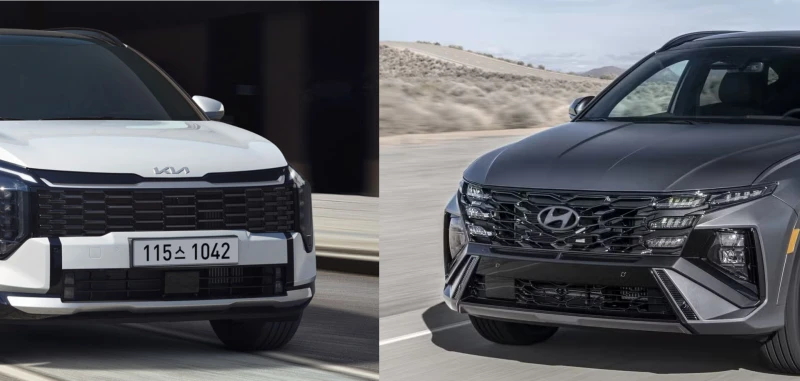
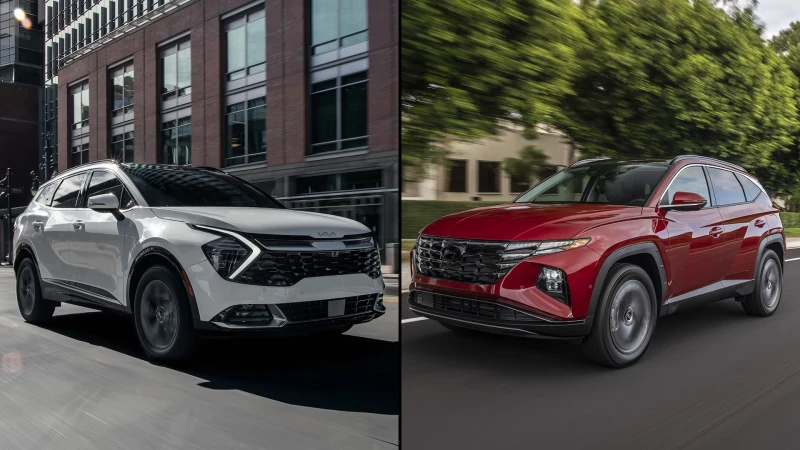
- Kia Sportage: The 2025 Sportage boasts a futuristic look with its signature "tiger nose" grille, C-shaped LED daytime running lights, and sharp body lines. It's a bold, modern crossover designed to turn heads.
- Hyundai Tucson: Following its recent refresh, the 2025 Tucson features a more refined style with an updated grille and sleek lines. It looks contemporary and sophisticated, especially with the available 19-inch wheels on higher trims.
Additional notes: The Sportage appeals to younger buyers with its edgy, futuristic vibe, while the Tucson attracts those who prefer understated elegance.
Verdict: Sportage for bold and modern; Tucson for refined and elegant.
Performance Specs
Both offer hybrid options, but they differ in power delivery and efficiency.
| Model | Horsepower | Fuel Economy (combined MPG) | 0-60 mph (sec) | Drivetrain |
|---|---|---|---|---|
| Kia Sportage (hybrid) | 227 | 38-42 | 8.2 | AWD |
| Hyundai Tucson (hybrid) | 231 | 35-38 | 8.0 | AWD |
- Kia Sportage: The hybrid setup (1.6L turbo + electric motor) delivers 227 hp with smooth acceleration. The standard gas engine (2.5L, 187 hp) is great for everyday driving but less efficient.
- Hyundai Tucson: Its hybrid (1.6L turbo + electric motor) produces 231 hp and leads in fuel economy. The gas version (2.5L, 187 hp) matches the Sportage's power but feels smoother.
Additional notes: The Tucson uses a 6-speed automatic in hybrid form for seamless shifts, while the Sportage's setup has a slightly sportier feel.
Verdict: Tucson edges out in efficiency and smoothness; Sportage offers more engaging drive feel.
Comfort and Space
Family-friendly space and ride quality are key in this segment.
- Kia Sportage: Cargo volume measures 39.6 cubic feet (up to 74.1 with seats folded). Rear legroom of 41.3 inches makes it a leader for passenger comfort. The suspension is comfortable but can feel firm on rough roads.
- Hyundai Tucson: Offers more cargo at 41.2 cubic feet (up to 80.3 folded). Rear legroom is similar at 41.3 inches, but the refreshed suspension provides a smoother ride.
Additional notes: Tucson excels in cargo capacity and ride comfort on uneven surfaces; Sportage wins for rear passenger space.
Verdict: Tucson for cargo; Sportage for passengers.
Technology and Safety
Both are loaded with modern features, but priorities differ.
- Kia Sportage: Features a 12.3-inch touchscreen, Kia Drive Wise suite (adaptive cruise, lane keeping, auto emergency braking), and wireless Apple CarPlay/Android Auto. Premium options include Harman Kardon audio and 360-degree camera.
- Hyundai Tucson: Standard 12.3-inch screen with Hyundai SmartSense (adaptive cruise, lane keeping, traffic sign recognition). Unique features like Hyundai Digital Key and optional heads-up display set it apart.
Additional notes: Tucson offers more standard tech, including Digital Key; Sportage shines with premium upgrades like Harman Kardon. Both earn top safety ratings.
Verdict: Tucson stronger in base tech; Sportage richer in top trims.
Off-Road Capability
Primarily urban SUVs, but how do they handle light trails?
- Kia Sportage: Ground clearance of 8.3 inches, available AWD with terrain modes. The X-Pro trim adds all-terrain tires and multi-terrain settings for dirt roads and snow.
- Hyundai Tucson: Slightly lower at 8.2 inches, with HTRAC AWD and drive modes. The XRT trim includes underbody protection but is less trail-focused than Sportage X-Pro.
Additional notes: Sportage X-Pro is better equipped for off-road with tires and modes; Tucson XRT provides confidence on slippery surfaces via HTRAC.
Verdict: Sportage slightly better off-road; Tucson more versatile overall.
Pricing and Ownership
Cost is a major decision factor.
- Kia Sportage: Starting around $28,785; hybrid from about $35,000. Industry-leading warranty: 5 years/60,000 miles basic, 10 years/100,000 miles powertrain.
- Hyundai Tucson: Starting around $30,155; hybrid from about $36,000. Similar warranty: 5 years/60,000 miles basic, 10 years/100,000 miles powertrain. Better resale value.
Additional notes: Sportage offers lower entry price and more trim choices; Tucson saves more long-term with better efficiency.
Verdict: Sportage better upfront value; Tucson stronger long-term.
Final Thoughts: Which to Choose?
The 2025 Kia Sportage is ideal for buyers wanting bold design, spacious rear seating, and premium features at a competitive price. The 2025 Hyundai Tucson suits those prioritizing fuel efficiency, refined styling, and extra cargo room. Both are excellent compact SUVs with different focuses—test drive them to find your perfect match!